
 FAQs
FAQs Factory Tour



Procuring industrial equipment for surface processing, architectural frosting, and precision glass profiling requires a granular understanding of capital expenditure versus long-term operational output. For manufacturing plant directors, engineering leads, and procurement specialists, evaluating the actual glass etching machine cost involves more than looking at initial sticker prices. Glass processing machinery operates under rigorous mechanical loads, requiring continuous water filtration, precision motion control, and heavy diamond tooling to maintain micro-millimeter tolerances on brittle substrates.
Understanding equipment valuation demands an engineering-first perspective. Pricing disparities across the market stem directly from gantry rigidity, dynamic drive systems, controller interpolation capabilities, and spindle construction. Selecting the appropriate automated system determines production throughput, scrap rates, and downstream processing cycle times for flat glass, mirrors, decorative panels, and structural architectural sheets.
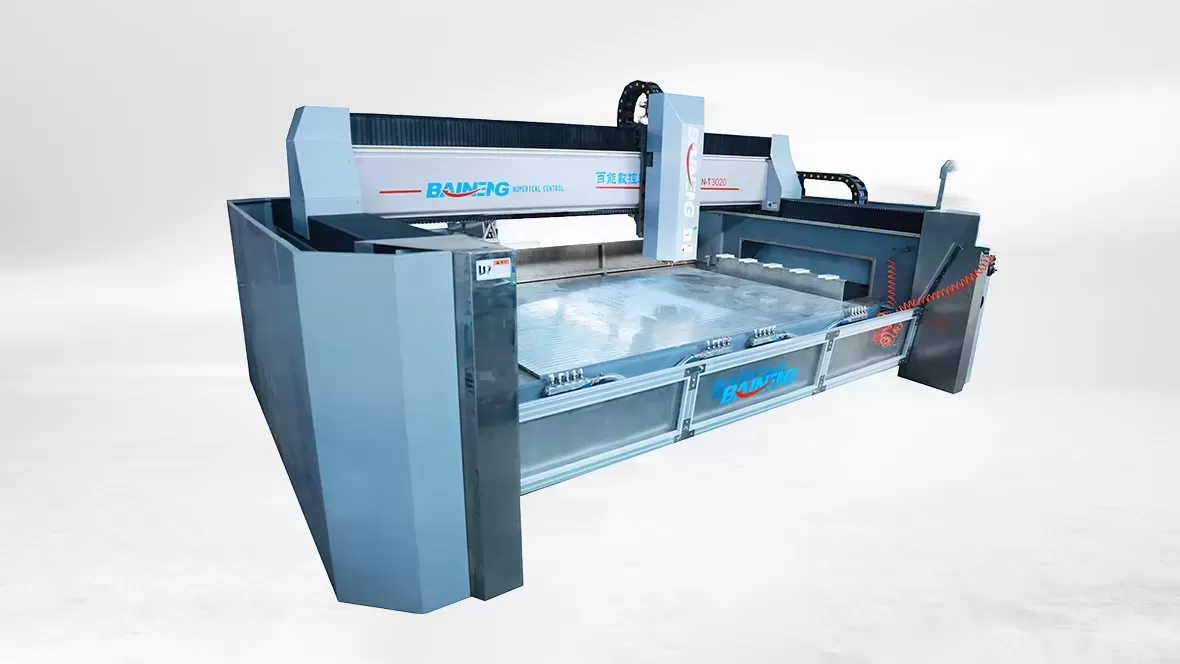
Primary Machinery Types Influencing Glass Etching Machine Cost
Glass processing covers multiple fabrication technologies, each designed for specific surface treatments, engraving depths, and production volumes. Machinery categorization defines the baseline machinery investment.
Heavy-Duty CNC Glass Working Centers
CNC glass machining centers engineered for engraving, edge deletion, and deep V-grooving utilize high-torque electric spindles, multi-axis interpolation, and automated tool changers. Pricing for standard 3-axis to complex 5-axis systems ranges between $35,000 and $160,000, depending on bed dimensions, spindle power, and structural casting mass. Heavy bridge-type frame designs absorb the high harmonics generated when cutting hard silica surfaces, ensuring smooth decorative lines without micro-chipping along the edges.
Industrial CO2 and UV Laser Systems
Galvo-driven and gantry-style laser marking machines range from $12,000 for compact surface marking units to over $85,000 for large-format flatbed systems. Laser systems provide non-contact processing, eliminating diamond tool wear and mechanical cutting forces. However, they are generally limited to shallow surface micro-fracturing and frosting rather than deep dimensional carving, making them suited for serialization, architectural privacy patterns, and barcode tracing.
Automated Abrasive Sandblasting Stations
Enclosed, multi-gun automated sandblasting lines generally range between $20,000 and $70,000. These systems rely on high-pressure abrasive media streams (typically aluminum oxide or silicon carbide) directed through reciprocating nozzles. Pricing correlates with chamber size, dust extraction capacity, cyclone abrasive recycling efficiency, and conveyor automation. While sandblasting produces uniform matte textures over wide areas, continuous media degradation increases utility and consumable overhead.
Chemical and Acid Etching Processing Lines
Automated conveyorized acid immersion and spray lines can require capital outlays from $50,000 to over $250,000. These systems demand specialized corrosion-proof polymers, dedicated acid scrubbing scrubbers, and strict wastewater neutralization stations. While ideal for high-volume satin finish sheet production, the regulatory burdens and auxiliary chemical infrastructure significantly expand the initial factory setup expense.
Structural Engineering Specifications That Drive Equipment Pricing
Evaluating machinery proposals requires inspecting the core mechanical components that dictate machine longevity, cycle repeatability, and vibration dampening under load.
Chassis Rigidity and Machine Mass: High-end machinery uses stress-relieved, heavy tubular steel or cast iron beds weighing between 3,000 kg and 8,000 kg. Premium structural designs prevent machine deflection during high-speed directional changes, protecting fragile glass sheets from point-load stresses that cause catastrophic breakage during processing.
Spindle Construction and Tool Interface: Industrial glass processing relies on electro-spindles featuring ceramic bearings, internal water-cooling circuits, and ISO40 or BT40 tool holders. Spindle power ratings from 5.5 kW to 12 kW dictate feed rates and maximum grooving depths per pass, directly impacting daily production volume.
Motion Control and Drive Systems: High-precision helical rack-and-pinion or preloaded ground ball screws paired with absolute AC servo motors (such as Yaskawa or Siemens) ensure positioning accuracy within ±0.02 mm. Precision drive systems command higher upfront pricing but eliminate mechanical backlash and surface wave defects.
Industrial CNC Controllers: Open-architecture controllers (such as Syntec, Siemens, or OSAI) integrated with specialized CAM post-processors allow seamless DXF and DWG file conversions. Software packages capable of automatic tool path optimization, tool wear compensation, and look-ahead trajectory planning represent a notable portion of baseline equipment value.
Build Integrity Standards: Advanced engineering standards, such as those implemented by BAINENG CNC, integrate automated central lubrication systems, stainless steel water collection trays, and protected linear guides that guard mechanical linkages against highly abrasive glass slurry.
Hidden Operating Expenses Behind the Glass Etching Machine Cost
Procurement teams must separate initial capital expenditure (CAPEX) from operational expenditure (OPEX). Over a five-year operational lifecycle, secondary tooling and maintenance expenses frequently exceed the original machine acquisition price.
Diamond tooling represents a continuous operational expense. Roughing wheels, V-grooving profiling discs, and resin-bonded polishing wheels require steady monitoring and dressing. Aggressive feed rates cut machining times but accelerate diamond grain detachment, while conservative speeds reduce tooling wear at the expense of factory throughput. Calculating the actual glass etching machine cost requires evaluating continuous tooling replenishment schedules alongside the initial capital quote.
Coolant and water management systems introduce ongoing facility overhead. Glass fines suspended in coolant act as an abrasive compound that deteriorates water seals, spindle bearings, and pump impellers. Implementing centralized closed-loop filtration stations, dynamic centrifuges, or chemical flocculation tanks protects machine hardware, though these secondary fluid systems add to capital requirements.
Factory electrical utility loads, compressed air availability (requiring clean, dry air at a minimum of 0.6 to 0.8 MPa for pneumatic clamping and tool changing), and routine replacement of rubber vacuum suction cups constitute continuous line items in daily manufacturing operations.
Comparison of Industrial Glass Etching Technologies
Selecting appropriate equipment requires balancing production geometry, decorative depth, and operational parameters against capital allocation constraints.
3-Axis to 5-Axis CNC Center: Delivers 0.5 mm to 15 mm engraving depth with high edge clarity and deep 3D V-grooves; investment level is moderate to high; tool wear requires ongoing diamond wheel management; primary applications include architectural facades, premium furniture, and framed mirrors.
Industrial Laser System: Delivers surface micro-fracturing (0.01 mm to 0.1 mm) with sharp text and complex geometric shading; investment level is moderate; tooling wear is near zero with periodic optical and diode replacement; primary applications include cosmetic packaging, automotive glazing, and decorative signage.
Automated Sandblaster: Delivers uniform matte textures across expansive surfaces; investment level is low to moderate; operating costs include nozzle wear and abrasive media replacement; primary applications include interior privacy partitions, frosted shower doors, and industrial panels.
Industrial Application Scenarios and ROI Calculation
Equipment investment returns depend on cycle time efficiency and value addition across diverse market sectors.
In architectural glass fabrication, demand for decorative balustrades, patterned partitions, and low-emissivity glass edge deletion requires continuous machining without surface micro-fractures. CNC machining centers from BAINENG CNC allow fabricators to process jumbo-sized float glass sheets, replacing multiple manual processing steps with a single automated cycle. Fabricators handling thick structural glass (8 mm to 19 mm) capture premium market margins by delivering custom surface relief patterns that command significant surcharges over basic flat glass sheets.
Home appliance and furniture manufacturing demands high dimensional repeatability for oven door glass, refrigerator shelving, and decorative tabletop beveling. Automated positioning systems, pneumatic pop-up alignment pins, and multi-station vacuum zones allow rapid loading and unloading. When continuous operation runs across two eight-hour shifts per day, standard production operations typically recover capital investments within 9 to 14 months through labor consolidation and reduced substrate scrap rates.
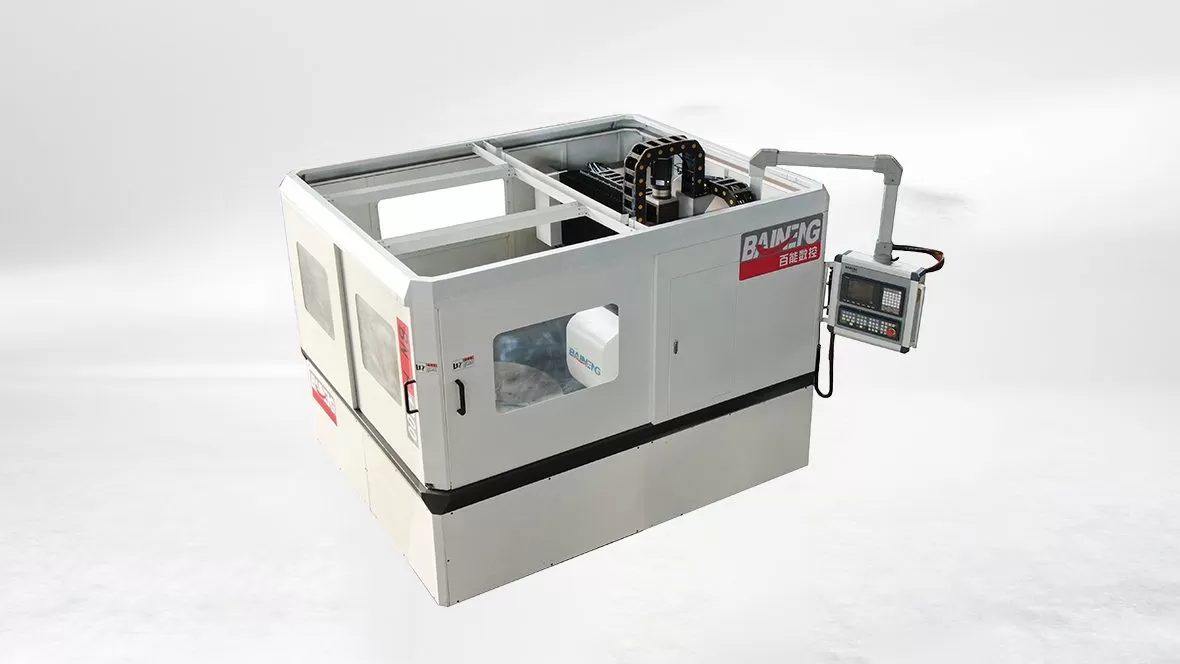
Procurement Considerations: Sourcing the Right Equipment
Specifying the proper machinery configuration prevents overpaying for unnecessary axis capabilities or under-specifying structural integrity for heavy industrial processing.
Substrate Dimensions and Weight Loadings: Verify that the working envelope matches maximum sheet dimensions with sufficient clearance for tooling change sweeps. Heavy-load machine beds must support monolithic sheets exceeding 500 kg without mechanical sagging.
Vacuum Clamping Efficiency: High-flow vacuum pumps paired with independently zoned aluminum suction grids ensure secure workholding under heavy lateral cutting forces, preventing sheet displacement during aggressive profile carving.
Software Integration and Operator Training: Intuitive operator interfaces reduce reliance on specialized programming personnel. Platforms that accept standard industrial vector formats directly minimize operational downtime during design transitions.
Manufacturer Service Support: Sourcing from established engineering firms like BAINENG CNC ensures access to component inventories, replacement spindle services, remote diagnostic assistance, and documented maintenance schedules.
Frequently Asked Questions
What is the typical entry-level versus industrial glass etching machine cost range?
Entry-level flatbed laser or manual sandblasting setups range between $8,000 and $20,000, suitable for small-scale studios or light marking. Heavy-duty industrial CNC glass engraving and etching machines range from $35,000 to over $150,000, built for 24/7 industrial fabrication, large architectural panels, high structural rigidity, and automated multi-tool cycles.
How does mechanical CNC diamond engraving differ from laser etching on glass?
Mechanical CNC engraving utilizes high-speed rotating diamond tooling to physically mill distinct geometric profiles, V-grooves, and deep architectural contours into the substrate, allowing for optical light refraction and polished grooves. Laser systems use thermal energy to create micro-cracks on the surface, producing a flat frosted appearance without physical groove depth.
What routine maintenance keeps an automated glass etching machine operating accurately?
Daily maintenance involves cleaning the vacuum bed and clearing glass sludge from linear guide seals and water collection channels. Weekly inspections should focus on automatic lubricator levels, spindle chiller fluid temperatures, and pneumatic pressure regulators. Monthly procedures include verifying ball screw pre-tension, checking axis squareness, and inspecting diamond tool holders for runout.
How does substrate thickness impact machine selection?
Processing thin glass (2 mm to 4 mm) requires ultra-flat vacuum workholding surfaces and vibration-dampened spindles to avoid shattering the glass under tool pressure. Thick architectural glass (10 mm to 25 mm) requires higher spindle torque, rigid structural chassis designs, and high-pressure flood coolant delivery to clear cutting debris from deep grooves.
Can a standard CNC glass etching machine handle polishing within the same cycle?
Yes. Machining centers equipped with automatic tool changers can sequence rough diamond milling wheels, fine diamond smoothing profiles, and resin or cerium oxide impregnated polishing wheels in a continuous automated operation. This eliminates manual secondary handling and delivers high-clarity transparent finishes on cut patterns.
Request a Machining Solution and Factory Pricing Proposal
Selecting the correct machinery configuration requires matching your production capacity, target glass dimensions, and surface finish specifications with appropriate mechanical engineering. Contact our engineering sales team to receive a detailed glass etching machine cost assessment, complete with dynamic cycle time calculations, factory footprint layouts, and tooling consumption estimates tailored to your production facility.