
 FAQs
FAQs Factory Tour



Flat glass processing requires an uncompromising balance of dynamic rigidity, high-torque spindle rotation, and micro-precision motion control. In decorative architectural processing, high-end furniture manufacturing, and automotive glazing, producing intricate surface patterns, deep V-grooves, and polished linear reliefs demands dedicated computer numeric control machinery. Industrial buyers searching for a high-performance glass engraving machine for sale require deep insight into structural kinematics, diamond tooling interfaces, and fluid management systems to secure high operational throughput.
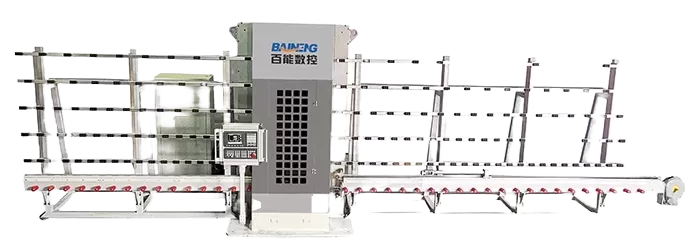
Mechanics of High-Speed Glass Milling and Engraving
Glass is a brittle, non-ductile material that behaves under mechanical stress through micro-fracturing rather than plastic deformation. Successful surface shaping and carving depend heavily on diamond grain interaction with the silica matrix. Milling without chipping demands a steady spindle speed, precise coolant delivery, and structural damping.
Rotational stability governs the quality of the cut. Electro-spindles on industrial glass processing machinery operate within a wide RPM band, typically ranging from 6,000 to 24,000 RPM, depending on whether the process involves coarse diamond grinding or fine cerium oxide polishing. Spindle runout must remain below 0.003 mm to prevent premature tool wear and micro-cracking along the edge of the groove.
Spindle Interfaces: Standard systems utilize ISO40 or BT40 tool holders fitted with internal water feed channels to deliver continuous hydrostatic cooling directly to the diamond contact zone.
Torque Dynamics: Constant-torque motors ensure the cutting edge maintains its angular velocity even when plunging into dense, thick laminated or float glass panels.
Thermal Control: Closed-loop liquid chilling circuits stabilize spindle temperature during prolonged multi-pass engraving cycles, preventing axial thermal expansion.
Key Structural Features to Inspect When Reviewing a Glass Engraving Machine for Sale
Machine stability directly dictates the precision of deep engraving, surface relief milling, and decorative grooving. Evaluating a glass engraving machine for sale involves looking beyond nominal axis travel dimensions to inspect the structural mass and motion transmission elements.
1. Base Frame Construction and Vibration Attenuation
The bed must absorb the high-frequency harmonics generated by high-speed diamond grinding wheels. Heavy, stress-relieved tubular steel weldments or electro-welded frames filled with structural mineral casting provide the necessary mass damping. Without proper mass distribution, harmonics travel through the gantry to the cutting tool, producing visible chatter marks on transparent glass surfaces.
2. Linear Motion and Drive Systems
High-capacity linear guide ways paired with precision-ground ball screws or dual-drive helical rack-and-pinion systems dictate contouring accuracy. Preloaded runner blocks on oversized linear rails eliminate backlash along the X and Y axes, ensuring that closed-loop decorative contours, continuous waves, and sharp geometric angles close without visible junction steps.
3. Workpiece Clamping and Vacuum Worktable Distribution
Rigid holding of thin and thick glass lites requires segmented vacuum zones. Phenolic or aluminum vacuum beds fitted with repositionable suction pods allow operators to clamp complex shapes while clearing toolpaths for deep perimeter grooves or through-cuts. High-flow liquid-ring vacuum pumps maintain continuous hold-down pressure, compensating for minor vacuum leaks caused by porous rubber gaskets or contoured glass surfaces.
Evaluating Motion Kinematics and Tool Management
Modern glass fabrication operations balance complex custom jobs with continuous industrial batch runs. Motion systems must support variable geometries while maintaining high feed rates.
Axis configurations vary based on production needs. Standard 3-axis CNC centers manage flat panel grooving, surface tracing, and line work. Advanced 4-axis and 5-axis systems introduce aggregate rotating heads, enabling undercut decorative engraving, complex 3D surface sculpting, and multi-angle edge beveling in a single setup.
Automatic Tool Changers (ATC) streamline the sequence from rough diamond grinding to multi-stage polishing. Linear or rotary tool magazines shield tool holders from slurry contamination while providing rapid tool transitions.
Roughing Stages: Coarse diamond-plated or sintered tools remove bulk glass stock rapidly, carving the baseline geometry of the groove.
Refining Stages: Medium-to-fine resin-bonded diamond wheels smooth the profile, eliminating subsurface micro-fissures.
Polishing Stages: Synthetic rubber or compressed cerium wheels restore optical transparency to the engraved channels.
When selecting a glass engraving machine for sale, verifying the ATC speed, magazine capacity, and automatic tool length measurement mechanisms ensures uninterrupted multi-stage finishing.
Water Filtration and Coolant Management
Glass grinding generates fine abrasive particulate matter, commonly termed glass slurry. Without adequate separation, recirculated glass dust acts as an abrasive compound, damaging spindle seals, linear bearings, and diamond tool matrices.
Industrial CNC machinery integrates dedicated multi-stage filtration setups. Centrifugal separators, automatic flocculant dosing units, and continuous belt-type paper filters extract particulate down to 5 microns. Delivering clean water through both internal spindle channels and external directional nozzles keeps tool contact surfaces cool, clears glass chips instantly, and prolongs tool life.
Industrial Use Cases for Advanced CNC Glass Profiling
High-precision milling systems serve diverse sectors within the architectural, commercial, and interior glass fabrication markets:
Architectural Facades and Interior Dividers: Producing deep decorative V-grooves, U-grooves, and matte surface textures on oversized monolithic or laminated panels.
High-End Furniture and Mirrors: Carving polished borders, stylized perimeter patterns, and custom artistic details on table tops, vanity mirrors, and retail display cases.
Appliance and Electronic Display Glass: Machining precise edge steps, mounting recesses, and surface patterns on oven doors, refrigerator panels, and control interfaces.
Shower Enclosures and Doors: Milling functional hinge cutouts and designer surface patterns on heavy tempered glass plates.
Software Integration: CAD/CAM Workflows and Machine Code Execution
The mechanical execution of an industrial CNC is driven by its software environment. Converting vector designs into smooth, collision-free G-code requires specialized CAM software configured specifically for glass tooling parameters.
Toolpath algorithms calculate entry and exit ramp profiles to eliminate shock loads when diamond wheels first make contact with the glass edge. Continuous feed-rate control automatically modulates travel speed across tight radii, preventing tool burning or edge chipping. Advanced CNC controllers feature automatic wheel radius and profile wear compensation, adjusting axis depth coordinates systematically as polishing wheels diminish in diameter over long shifts.
Manufacturers like BAINENG CNC build machine control interfaces that integrate seamlessly with widespread industrial CAD platforms, standardizing file conversions and accelerating operational setup.
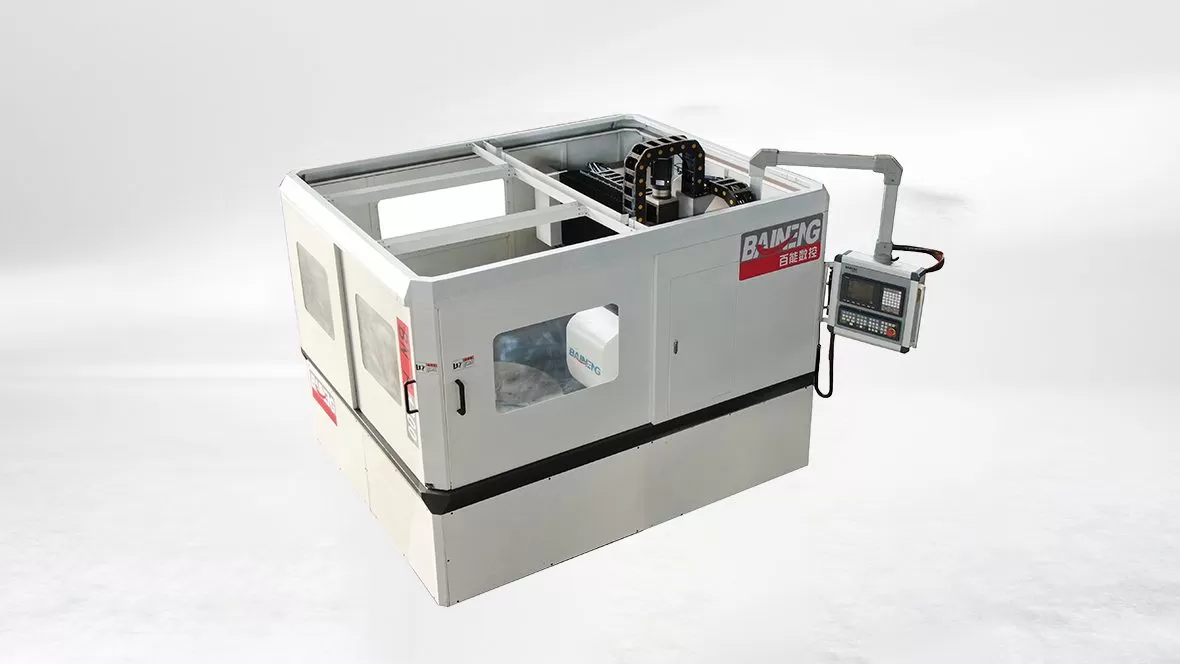
Procurement Considerations for a Glass Engraving Machine for Sale
Investing in heavy industrial machinery requires careful alignment between factory requirements and equipment specifications. Sourcing a dependable glass engraving machine for sale demands evaluating long-term reliability factors.
Build quality standards direct operating efficiency. Heavy-duty chassis engineering from trusted builders, including BAINENG CNC, incorporates precision-machined reference surfaces, IP65-rated electrical cabinets, and high-flex cabling designed for wet environments. Sourcing machines built with recognized motion components, such as Japanese or European servo motors and high-grade planetary gearboxes, simplifies future maintenance and parts sourcing.
Operational safety features must match production realities. Fully enclosed guarding, interlocked access doors, pneumatic safety brakes on vertical axes, and perimeter safety mats protect operators from projectile slurry, broken glass fragments, and rapid gantry movements during cycle execution.
Frequently Asked Questions
What spindle speed is suitable for decorative glass engraving?
Operating speeds depend on tool diameter and bond matrix. Coarse sintered diamond wheels typically run between 6,000 and 12,000 RPM, while smaller polishing and detailing tools run at 15,000 to 24,000 RPM. Maintaining correct surface feet per minute (SFM) ensures smooth material removal without generating excess heat.
How does a machine compensate for glass thickness variations?
Commercial glass plates often display slight thickness tolerances across their surface. Advanced CNC machines employ mechanical surface-sensing probes or laser measurement systems before initiating a toolpath. The software adjusts the Z-axis profile dynamically, maintaining a uniform groove depth across the entire workpiece.
Can a glass engraving machine also handle edge profiling and drilling?
Yes. Multi-function CNC glass processing centers execute surface carving, perimeter edge grinding, flat polishing, beveling, countersinking, and hole drilling in a single clamping cycle, provided the machine is equipped with an adequate tool magazine and water delivery setup.
What type of water coolant is recommended for CNC glass milling?
Recirculated industrial water treated with rust inhibitors and synthetic grinding coolants is recommended. Maintaining neutral pH levels and keeping water free from large abrasive particulates preserves diamond tooling and prevents internal staining on coated glass panels.
How long do diamond engraving wheels last before needing dressing or replacement?
Tool lifespan depends on groove depth, feed speed, glass hardness, and coolant quality. Sintered diamond tools typically process thousands of linear meters before requiring re-profiling or replacement, while cerium polishing wheels require frequent automatic dressing to maintain their geometric profile.
Request a Machining Solution and Equipment Quotation
Selecting the optimal CNC platform depends on your glass sheet dimensions, daily throughput requirements, and the complexity of your decorative profiles. BAINENG CNC designs and manufactures heavy-duty glass processing centers built to maintain sub-millimeter tolerances under high production volumes.
To receive engineering drawings, full machine specifications, or a direct price quote on a high-grade glass engraving machine for sale, submit your project details and target glass processing dimensions to our technical team today.