
 FAQs
FAQs Factory Tour



In modern industrial glass manufacturing, the requirements for precision, cycle efficiency, and structural integrity have reached unprecedented levels. As architectural designs demand larger, heavier, and more complex glass panes with intricate cutouts, processing facilities must adapt their machinery to handle these specifications without compromising yield rates. Traditional horizontal processing methods, while effective for basic cutting and tempering preparation, often struggle with heavy load deflection, extensive physical footprints, and complex mechanical setups. To address these challenges, the integration of a vertical glass drilling and milling machine has become a common standard in factories aiming to improve production efficiency and throughput.
Engineering innovations from specialized equipment manufacturers like BAINENG CNC have developed vertical configurations that resolve many of the physical limitations inherent in horizontal systems. By aligning the glass panel closer to a vertical axis during processing, fabricators can achieve a more stable support structure, reduce mechanical footprint, and improve the consistency of drilling, milling, and edging operations.
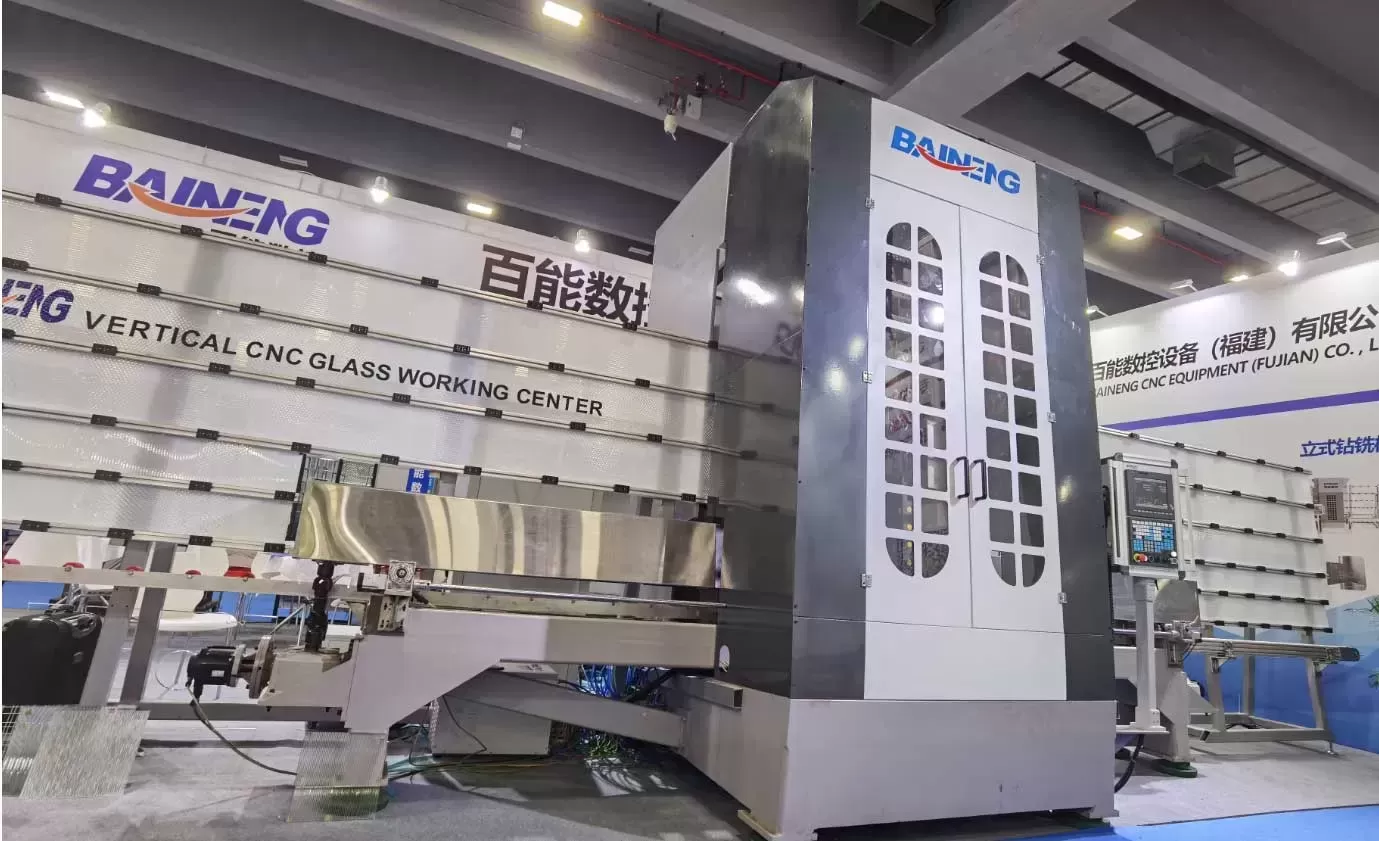
Key Advantages of a Vertical Glass Drilling and Milling Machine
The transition from horizontal to vertical machinery is driven by several fundamental mechanical and spatial advantages. Understanding these differences is helpful for production managers seeking to scale their operations or replace outdated machinery.
1. Footprint Reduction and Spatial Efficiency
Horizontal glass processing centers require significant floor space, not only for the machine bed itself but also for the extensive entry and exit conveyor tables. A horizontal machine processing a 3-meter glass sheet requires at least 7 to 8 linear meters of factory floor space in a wide configuration. Conversely, a vertical system supports the glass on a slightly tilted vertical plane (typically around 6 to 8 degrees from the true vertical). This design drastically reduces the width footprint of the machinery, allowing factories to install multiple units in the same area that would otherwise be occupied by a single horizontal line.
2. Gravitational Deflection Mitigation
Large, thin glass panels are highly susceptible to sagging under their own weight when laid flat on a horizontal conveyor or bed. This gravitational deflection introduces micro-stresses and alters the physical geometry of the glass during drilling and milling operations, increasing the risk of edge chipping or complete structural failure. In a vertical machine, gravity acts along the plane of the glass rather than perpendicular to it. The sheet is continuously supported by a series of back-rollers and vacuum suction cups, ensuring the glass remains perfectly flat relative to the spindle axes throughout the machining cycle.
3. Simplified Loading and Unloading
Handling large sheets of glass horizontally presents notable ergonomic and safety risks for operators. Vertical loading lines integrate seamlessly with standard overhead cranes, suction lifters, and automatic glass storage systems. Operators can load glass sheets directly onto the machine's inlet conveyor with minimal tilting maneuvers, reducing handling times and lowering the risk of accidental breakage or surface scratching before processing begins.
Anatomy of Core Components and Subsystems
The operational precision of a vertical CNC system relies on the synchronization of several high-precision subsystems. Machinery engineered by BAINENG CNC incorporates robust structural designs and advanced control loops to maintain tolerances within fractions of a millimeter.
Dual-Spindle System: To execute drilling operations without causing exit-side blowout or chipping, modern vertical machines utilize opposing spindles positioned on the front and rear sides of the glass plane. The front spindle drills halfway through the glass thickness, retracts, and the rear spindle completes the hole from the opposite side. This synchronous dual-axis operation ensures a clean, professional finish on both glass faces.
Automatic Tool Changer (ATC): Efficiency is highly dependent on continuous operation. Vertical glass processing centers feature automatic rotary tool carousels containing multiple tool slots. This enables rapid transitions between drilling bits, milling cutters, countersinks, and polishing wheels without requiring manual operator intervention, maintaining consistent cycle times.
Linear Guide Rails and Ball Screws: Precision movement along the X, Y, and Z axes is achieved using hardened linear guide rails and preloaded ball screws. These mechanical components are sealed against glass dust and highly corrosive cooling water to prevent premature wear and maintain long-term positional accuracy.
Closed-Loop CNC Controller: The CNC system coordinates axis movements, spindle speeds, tool feed rates, and water pressure. By utilizing high-resolution servo motors with encoder feedback, the controller continuously monitors and adjusts tool positioning in real-time to compensate for external forces.
Key Processing Capabilities of the Vertical Glass Drilling and Milling Machine
The versatility of a vertical glass drilling and milling machine allows it to perform multiple complex operations in a single glass positioning cycle, eliminating the need to transfer workpieces between separate dedicated drilling, milling, and edging machines.
High-Precision Drilling and Countersinking
Drilling holes in structural glass for point-fixed facades, glass balustrades, and spider fittings requires exact dimensional accuracy. The dual-spindle mechanism can execute clean holes of varying diameters. Additionally, the system can perform precise countersinking, allowing hardware fittings to sit flush with the glass surface for a clean aesthetic finish.
Complex Routing and Cutout Milling
Interior glass applications, such as frameless shower doors and commercial glass partitions, frequently require complex cutouts to accommodate hinges, locks, and handles. The continuous-path milling capabilities of vertical CNC systems allow for the rapid execution of rectangular, circular, or custom-shaped cutouts. The interpolation of the X and Y axes, combined with optimized spindle feed rates, ensures smooth interior edges and minimizes micro-cracks that could propagate during the subsequent tempering process.
Edge Grinding, Arris, and Polishing
In addition to drilling and milling, these vertical centers can perform edge processing. By using peripheral grinding wheels, the machine can execute flat edges, arris (chamfering), and polishing operations on both rectilinear and shaped glass panels. This multifunctional capability makes the vertical processing center a highly versatile asset for glass fabrication shops.
Industrial Application Scenarios
The operational features of vertical CNC systems make them suitable for a wide range of glass fabrication sectors, particularly where high throughput and tight dimensional tolerances are standard requirements.
Architectural and Facade Glass
Modern architectural designs heavily feature structural glass systems, curtain walls, and point-supported canopies. These applications utilize thick, laminated, or tempered glass panels that require precise positioning of mounting holes. The mechanical stability of vertical systems ensures that even heavy, oversized architectural sheets are processed with minimal geometric deviation, facilitating flawless installation on construction sites.
Interior Fit-Outs and Shower Enclosures
The demand for custom shower enclosures, glass balustrades, office partitions, and sliding doors has increased. These products frequently require complex hinge cutouts, corner notches, and polished edges. A vertical CNC center handles these diverse tasks efficiently, enabling quick transitions between different panel designs in high-mix, low-volume production environments.
Commercial Refrigeration and Appliance Glass
Glass panels used in commercial display cases, oven doors, and beverage coolers must meet rigorous safety and tolerance standards. The capability to drill, mill, and grind glass surfaces rapidly without marking or scratching delicate low-emissivity (low-E) coatings makes the vertical machine an excellent choice for appliance component manufacturing.
Sustained Reliability: Preventive Maintenance Protocols
To ensure long-term operational accuracy and prevent costly production downtime, processing facilities must implement structured maintenance routines. The harsh environment of glass fabrication, characterized by fine abrasive glass dust and high-pressure water cooling, demands diligent care of mechanical components.
Daily Cleaning and Lubrication: Accumulations of glass slurry must be washed down from the working area, linear guides, and tool holders at the end of every shift. Automatic lubrication systems should be checked daily to ensure guide rails and ball screws receive a continuous film of protective grease.
Spindle Water Quality Inspection: High-speed spindles rely on internal water cooling to dissipate heat and flush out glass particles during drilling and milling. Fabricators must monitor the filtration system regularly, checking water pressure, temperature, and filtration quality to prevent spindle overheating or abrasive wear.
Tool Wear Monitoring: Dull or damaged tooling increases mechanical stress on the spindles and can lead to edge chipping or glass breakage. Operators must inspect diamond wheels and drill bits regularly, dressing or replacing them when feed resistance rises or cut quality begins to degrade.
Vacuum Cup and Seal Verification: The suction cups used to secure the glass during processing must be inspected for wear, cracks, or embedded glass chips. Damaged seals can result in vacuum pressure loss, causing glass movement and potential positioning errors during milling.
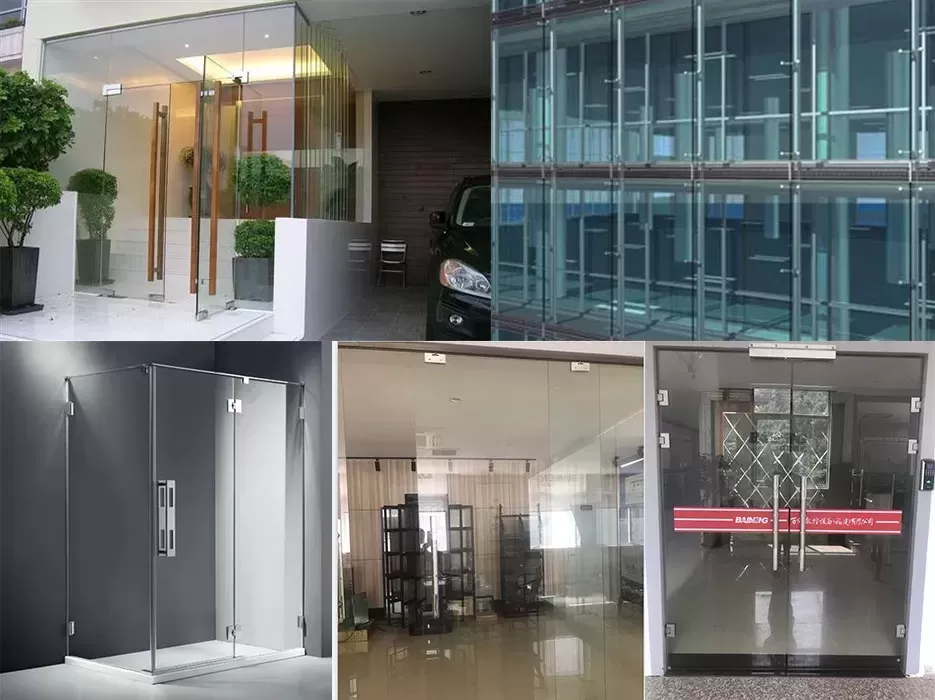
Factors to Consider When Selecting a Vertical CNC Center
When looking to invest in a vertical glass drilling and milling machine, several key parameters should be analyzed to align the equipment with your production requirements:
Maximum Glass Processing Dimensions: Ensure the machine's workspace height and length capacities can accommodate your largest architectural or structural glass specifications.
Spindle Power and Speed Range: High-torque spindles with variable speed controls are necessary to handle different glass thicknesses and specialized tool diameters.
Tool Magazine Capacity: A larger tool changer reduce manual setup times, especially when processing complex panels that require multiple drilling, milling, and polishing stages.
Software Integration and Usability: The CAD/CAM interface should be user-friendly, supporting standard DXF imports and offering rapid simulation capabilities to verify toolpaths before physical machining begins.
Frequently Asked Questions
Q1: What are the main differences between horizontal and vertical glass processing machines?
A1: Horizontal machines require a larger physical footprint and can suffer from glass sagging due to gravity on large sheets. Vertical machines utilize a tilted vertical frame, which reduces the required floor space, prevents gravitational deflection, simplifies the loading of heavy glass sheets, and improves water drainage during processing.
Q2: How does the double-spindle system prevent glass chipping during drilling?
A2: The dual-spindle design mounts drills on both sides of the glass plane. The front spindle drills halfway through the glass thickness first, then retracts. The rear spindle then enters from the opposite side to complete the hole. This method prevents the exit-side blowout and micro-chipping common with single-sided drilling.
Q3: What software formats are supported by modern glass CNC centers?
A3: Modern vertical CNC centers typically support standard industrial CAD/CAM software formats, with DXF files being the most common. This allows designers to import precise drawings directly from architectural or engineering software to generate toolpaths quickly.
Q4: What cooling methods are employed during high-speed glass drilling?
A4: Water is used as both a coolant and a flushing agent. It is delivered externally through adjustable nozzles and internally through the center of the spindle directly to the cutting zone. This continuous flow dissipates frictional heat, flushes out abrasive glass slurry, and prolongs tool life.
Q5: How does a vertical glass drilling and milling machine prevent scratching on low-E glass coatings?
A5: The machine supports the glass on rubber-coated rollers and uses non-marking vacuum suction cups to hold the glass firmly in place during machining. Since the glass does not slide across a flat bed while under pressure, the sensitive low-E coatings on the surface are protected from abrasion and scratching.
Contact BAINENG CNC for Industrial Solutions
As a professional manufacturer of high-precision glass processing equipment, BAINENG CNC offers robust, high-performance machinery designed to meet the demands of modern fabrication facilities. Our systems are engineered to provide consistent reliability, operational safety, and excellent accuracy for architectural, interior, and appliance glass applications.
If you are looking to integrate a vertical glass drilling and milling machine into your production line or require a custom solution tailored to your operational specifications, our engineering team is ready to assist you. Contact us today to receive detailed technical specifications, request a product catalog, or obtain a personalized quotation for your next machinery investment.