
 FAQs
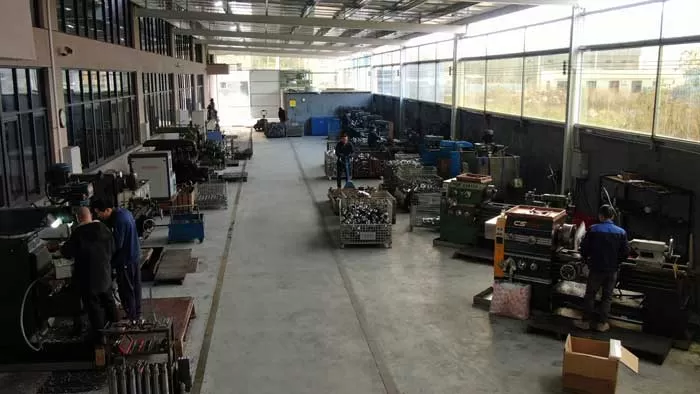
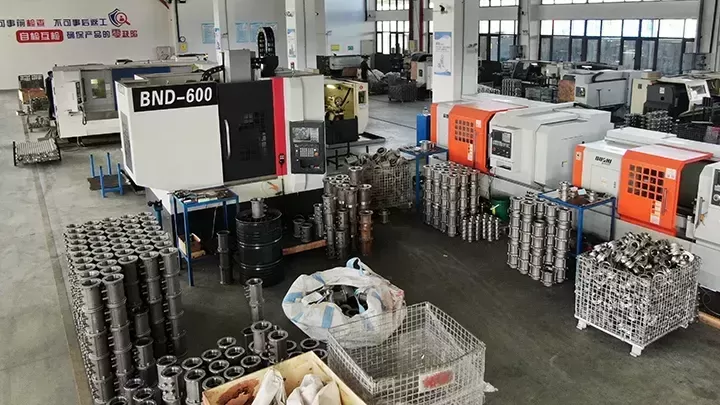
 Factory Tour



Flat glass fabricators face an ongoing challenge. Brittle materials crack easily when exposed to mechanical tool pressure. Conventional diamond core drills wear down quickly, generate micro-fissures, and require constant coolant management. At the same time, manual sandblasting creates irregular surface textures and inconsistent hole profiles.
Industrial machinery manufacturers like BAINENG CNC have resolved this bottleneck by merging photonics with abrasive technology. The hybrid glass laser drilling sandblasting machine combines high-energy pulsed laser optics with precision micro-abrasive blasting in a single computerized platform.
If your facility seeks to eliminate edge chipping, reduce cycle times, and automate complex hole-making tasks, exploring this dual-action equipment is critical. Contact our engineering team today to review custom machine configurations and request an industrial quotation.
The Core Concept: Why Combine Laser Processing and Sandblasting?
Glass is a brittle dielectric material with low thermal conductivity. Traditional drilling exerts localized mechanical shear stresses, which produce micro-cracks along the perimeter of the hole. These micro-cracks severely reduce the mechanical strength of tempered and laminated panels.
A hybrid glass laser drilling sandblasting machine circumvents mechanical impact entirely. The laser handles the structural hole generation or surface weakening, while the sandblasting module shapes, finishes, or expands the cavity.
This dual arrangement addresses the shortcomings of using either method alone:
- Lasers provide non-contact, high-speed energy delivery without tool deflection.
- Sandblasting removes residual thermal recast layers and frost-finishes selected zones rapidly.
- The integrated CNC system coordinates both tools within one coordinate setup, eliminating re-clamping inaccuracies.
Fundamental Physics: Laser-Glass Interaction
To understand how the laser module drills holes, we must analyze how glass absorbs optical energy. Depending on the laser source—typically CO2 (10.6 µm), UV (355 nm), or ultrafast picosecond lasers—the material removal occurs through distinct physical pathways.
Longer wavelengths, such as those from industrial CO2 lasers, rely on photothermal ablation. The silica network absorbs the infrared energy directly at the surface. Rapid localized heating vaporizes the glass or reduces its viscosity to a molten state, which pressurized assist gas then blows out.
Short-pulse UV and picosecond systems employ photochemical ablation and non-linear multi-photon absorption. The peak power density strips electrons from silica bonds directly, bypassing significant heat transfer. This process, often referred to as cold ablation in scientific literature at SPIE Digital Library, limits the heat-affected zone (HAZ) to sub-micron dimensions.
The machine projects this concentrated beam via a high-speed galvo scan head or multi-axis CNC gantry. The beam trepans the perimeter of the target hole, cutting the circle layer by layer from top to bottom.
The Mechanical Side: Precision Micro-Sandblasting Principles
Once the laser completes the rough bore or marks the pattern, the abrasive sandblasting module activates. This station relies on solid particle erosion dynamics, governed by air velocity, particle hardness, and impingement angle.
Dry compressed air carries sharp abrasive grains—typically high-grade aluminum oxide (corundum) or silicon carbide—through tungsten carbide or boron carbide nozzles. The abrasive jet impacts the glass at regulated pressures, usually between 0.2 MPa and 0.7 MPa.
The particles chip away the glass surface via micro-fracturing. Because the grain size is minute (often between 120 and 320 mesh), the fractures remain microscopic and uniform. This action accomplishes three goals:
- It deburrs the sharp cut edge produced during laser drilling.
- It eliminates thermal tension zones around the hole perimeter.
- It produces a uniform, frosted, matte surface roughness ($Ra$) compliant with architectural standards.
Material testing standards, such as those maintained by ASTM International for flexural and impact testing, show that glass treated to remove thermal micro-fissures demonstrates significantly higher structural retention during thermal tempering.
Step-by-Step Working Process of the Machine
An automated glass laser drilling sandblasting machine runs through an integrated operational sequence managed entirely by an industrial CNC interface. Below is the operational sequence during standard production.
Step 1: Workpiece Positioning and Calibration
The operator or robotic loading arm places the raw glass sheet onto an air-cushion or felt-covered loading table. Vacuum suction pods lock the glass in position. Pneumatic positioning pins align the reference edges against fixed machine stops.
High-resolution vision cameras scan the sheet to detect the precise corner coordinates and check for pre-cut edge variations. The control software translates the DXF or DWG design file directly to the calculated glass coordinate system.
Step 2: Laser Piercing and Trepanning
The CNC activates the laser generator and optical delivery system. An assist gas nozzle directs clean, dry air, nitrogen, or oxygen coaxially with the laser beam. The assist gas cools the upper glass surface and clears vaporized silica particulates away from the focus lens.
The laser executes a trepanning path. Rather than punching a massive single spot, the focused beam traces expanding concentric circles or a spiral trajectory. This progressively mills through the material thickness, which generally ranges from 3 mm up to 19 mm in standard glass processing plants.
Step 3: Immediate Particulate Extraction
Silica vapor and shattered micro-debris represent severe contamination risks to linear guide rails and optical assemblies. As the laser drills, high-volume localized vacuum hoods continuously extract dust directly at the cutting point.
These hoods run the evacuated air through high-efficiency particulate air (HEPA) filters and cyclonic separators, maintaining a clean operational envelope and protecting downstream optical coatings.
Step 4: Micro-Abrasive Edge Finishing and Surface Etching
After the laser completes its pass, the multi-axis gantry shifts the sandblasting nozzle assembly over the hole coordinates. In some BAINENG CNC hybrid units, both tool heads sit on a shared carriage with a fixed offset distance, enabling instant changeovers without tool swaps.
The nozzle fires the abrasive stream at the hole boundary. The CNC interpolates the nozzle path along the hole edge, applying a controlled bevel or a uniform frost finish. The system modulates blasting duration and pressure according to glass thickness and specific surface roughness targets.
Step 5: Final Surface Washing, Air Blowing, and Unloading
The machine shuts off abrasive flow and directs high-pressure air knives across the worked zone to dislodge loose grit. Optical sensors confirm hole clearance and roundness tolerances. The pneumatic locating pins retract, the vacuum pods release, and the air flotation table aids transfer to the unloading station.
Key Internal Components and Subsystems
Achieving micron-level repeatability in a heavy industrial setting requires robust engineering. A modern glass laser drilling sandblasting machine relies on several synchronized hardware modules:
1. High-Stability Structural Bed
The machine bed uses thick-walled welded steel tubes or cast iron, stress-relieved via annealing. This rigidity prevents thermal distortion and absorbs dynamic vibrations induced by high-speed gantry accelerations.
2. Laser Source and Optical Beam Delivery
Manufacturers integrate industrial-grade sealed RF CO2 laser tubes, green lasers, or solid-state UV oscillators. Water chillers with precision temperature regulation (±0.5 °C) stabilize the laser cavity, preventing beam mode degradation and power drift during long production shifts.
3. Blast Delivery and Recovery Loop
This closed-loop system includes pressurized blast pots, vibrating abrasive sieves, and precise metering valves. The metering valves maintain an exact air-to-media ratio to prevent nozzle clogging. Reclaim cyclones separate reusable grit from spent dust, reducing consumable costs.
4. Multi-Axis CNC System and Software
Specialized CAM software handles path generation. Operators do not need to program laser frequencies or abrasive dwell times manually. The software automatically applies tuned parameter sets based on glass thickness and hole diameter.
For more details on industrial CNC motion architecture and laser-material coupling standards, consult technical literature hosted by the National Institute of Standards and Technology (NIST).
Addressing Technical Challenges in Glass Fabrication
Combining heat and abrasive force against brittle glass presents physical hurdles that machine builders must solve through intelligent design.
Mitigating Thermal Fracture
Excessive thermal accumulation causes soda-lime glass to fracture along stress lines. Advanced machines use pulsed laser profiles with high peak power but low duty cycles. This configuration vaporizes a micro-layer and then allows a brief thermal relaxation period before the next pulse hits.
Controlling Hole Taper
Natural laser beams converge to a waist and then diverge, which tends to yield conical or tapered holes in thick glass. Modern machines counteract taper using dynamic z-axis beam focusing and dedicated optical trepanning heads. Adjusting the secondary sandblasting angle also cleans up the reverse-side exit taper.
Preventing Sandblast Overspray
Abrasive particles bounce violently off flat surfaces. If left unshielded, stray grains will frost the clear glass areas surrounding the target hole. Machines combat this using localized urethane or vulcanized rubber masking collars that press against the glass around the nozzle during blasting.
Primary Industrial Applications
The adaptability of the glass laser drilling sandblasting machine makes it valuable across sectors where precision and edge durability matter:
- Architectural and Structural Glass: Fabricating countersunk holes, patch fittings, and hinge cutouts for frameless shower doors, balustrades, and structural facades.
- Home Appliance Glass: Drilling holes for control knobs, handles, and hinge pins on oven doors, gas cooktops, and refrigerator shelving.
- Automotive and Transportation Glass: Drilling curved or flat windshield panes for wiper mounts, antenna pass-throughs, and sensor apertures before lamination.
- Consumer Electronics: Micro-drilling chemically strengthened glass covers, camera lens bezels, and fingerprint sensor apertures with zero micro-fracturing.
- Solar and Renewable Energy: Processing photovoltaic front
glass, busbar pass-through holes, and specialized textured collector
plates.
Comparison: Hybrid Laser-Blasting vs. Traditional CNC Core Drills
Plant managers often compare these hybrid units against traditional double-sided mechanical drilling machines. The table below illustrates the mechanical differences.
| Performance Parameter | Conventional Mechanical Core Drill | Glass Laser Drilling Sandblasting Machine |
|---|---|---|
| Tooling Wear and Consumables | Diamond core drill bits wear out, requiring frequent redressing and replacement. | Non-contact laser beam has zero wear; abrasive grit is recycled automatically. |
| Edge Quality and Micro-Cracks | Mechanical stress consistently generates micro-fractures; requires post-drill countersinking. | Controlled ablation and blast deburring leave uniform, micro-crack-free boundaries. |
| Process Coolants | Requires continuous recirculating water lubrication and slurry filtration. | Dry process; uses clean compressed gas and solid media with dry vacuum extraction. |
| Complex Shapes | Limited to circular holes; cannot efficiently produce slots, notches, or frosted boundaries. | CNC optics easily produce circles, ovals, complex slots, and decorative matte finishes. |
| Yield Rate on Thin Glass (<4mm) | Lower yield rates due to punch-through blowout on exit edges. | Extremely high yield rate; no downward mechanical thrust to rupture thin substrates. |
FAQ: Frequently Asked Questions
Q1: What types of glass can a glass laser drilling sandblasting
machine process?
A1: The machine handles float soda-lime glass,
borosilicate glass, fused silica, quartz, ultra-thin electronic display glass,
and patterned architectural glass. It works on annealed glass prior to the
thermal tempering phase, as well as un-tempered specialty glass.
Q2: Can this machine drill holes in already-tempered
glass?
A2: No. Once glass undergoes standard thermal tempering,
internal tensile stresses balance outer compressive forces. Piercing the surface
balance with any tool—laser, drill, or heavy blast—releases this internal
tension and shatters the entire pane. You must perform all cutting, drilling,
and blasting before tempering.
Q3: How often does the sandblasting abrasive need
replacement?
A3: The machine recirculates abrasive media through a
cyclonic separation system. The media typically lasts for hundreds of cycles.
The system discards spent, pulverized particles into an exhaust bin. Facilities
check and replenish the media reservoir periodically depending on operating
hours and blast pressures.
Q4: How does the equipment prevent laser lenses from getting damaged
by abrasive dust?
A4: Optical pathways sit inside sealed,
positive-pressure enclosures fed by filtered clean air. High-pressure air
curtains blow across the external optical window during operations. Furthermore,
the sandblasting module only discharges inside an isolated, vacuum-scavenged
work shroud offset from the laser head.
Q5: What is the maximum glass thickness this system can
process?
A5: Most standard industrial platforms easily handle glass
panels from 2 mm up to 19 mm. Processing thicker glass simply requires
adjustments to laser focal position tracking, pulse repetition rates, and
sandblast cycle times.
Conclusion and Next Steps for Your Facility
Integrating a modern glass laser drilling sandblasting machine transforms industrial glass fabrication. By uniting thermal laser precision with the micro-mechanical surface finishing of sandblasting, fabricators eliminate drill bit tooling costs, boost production yields, and deliver chip-free, ready-to-temper panels.
Whether you manufacture architectural structural panels, appliance covers, or industrial glass components, selecting the right machine platform determines your long-term operating costs. BAINENG CNC builds durable, automated CNC glass processing equipment engineered to run continuous shifts in demanding production environments.
Contact the technical sales department at BAINENG CNC today to discuss your project requirements, submit test materials, or request a complete quotation tailored to your operational floor plan.