
 FAQs
FAQs Factory Tour



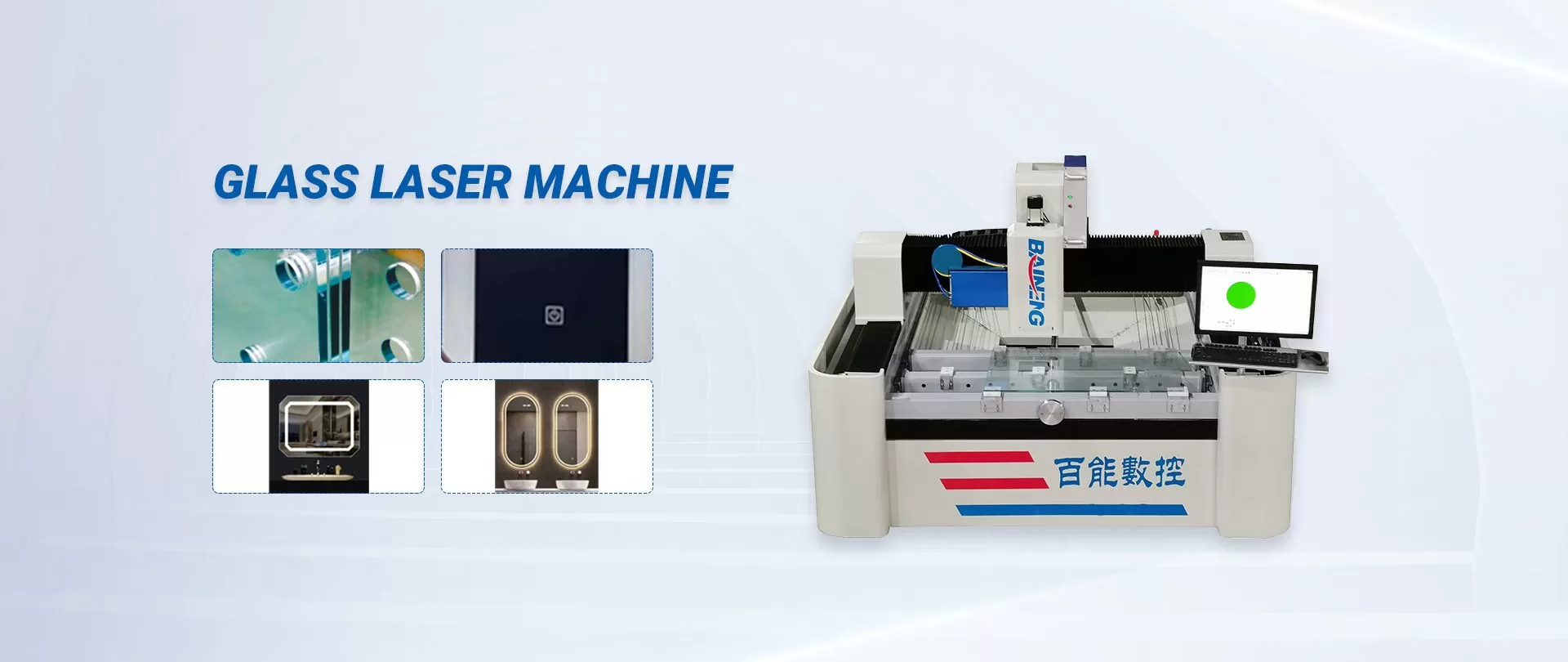
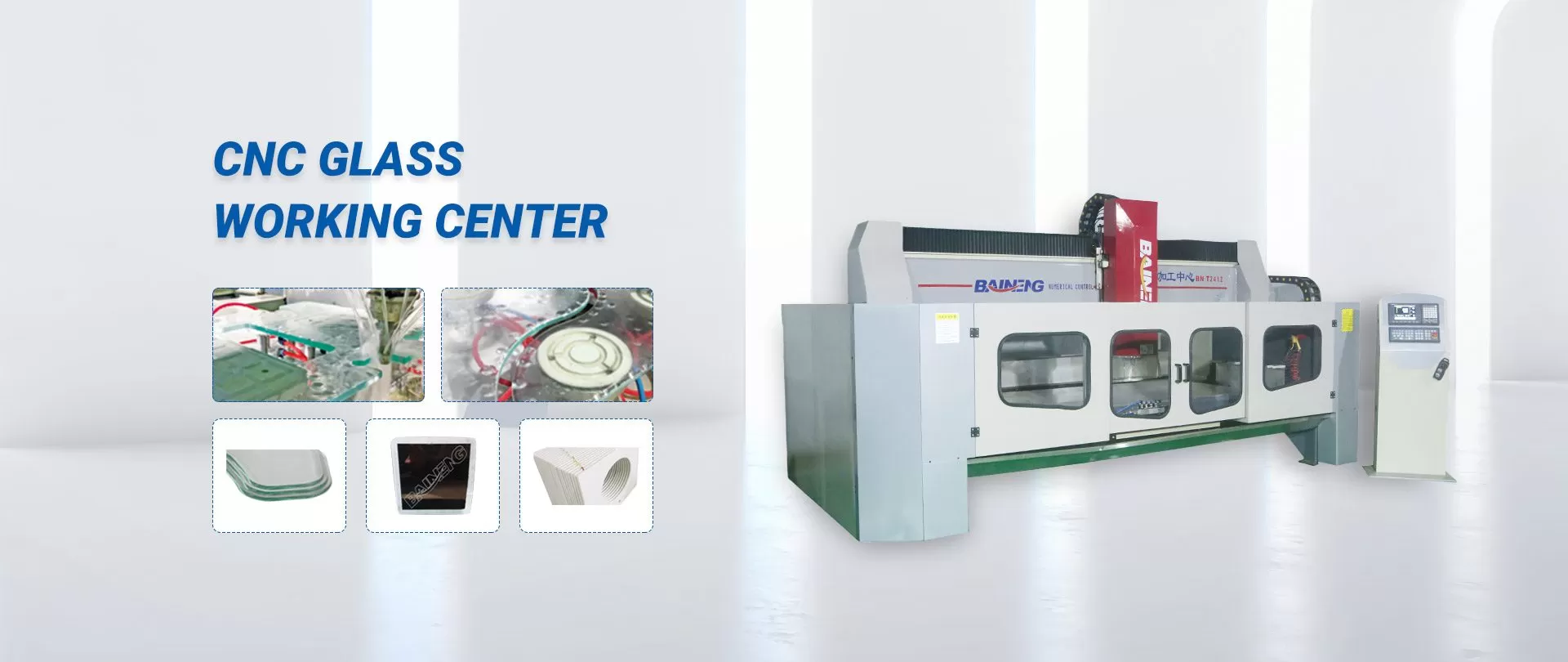
Glass processing has transitioned from manual craftsmanship to automated, high-precision manufacturing. Industrial requirements for precise margins, complex geometries, and defect-free edges have made computer-controlled machinery standard in modern factories. Among these systems, the cnc glass carving machine plays a central role in transforming flat glass panels into highly detailed architectural elements, home appliances, and custom interior components. BAINENG CNC designs and manufactures equipment built to meet these rigorous specifications, providing stable platforms for intricate carving, grooving, engraving, and polishing.
Achieving clean, micro-crack-free grooves on a brittle substrate like glass requires a deep understanding of machine structural stiffness, spindle dynamics, tooling materials, and coolant dynamics. This guide analyzes these key mechanical elements, offering industrial processors the insights needed to refine their production lines, minimize material wastage, and maintain high surface finish quality.
1. Structural Integrity and Frame Engineering
The performance of a cnc glass carving machine depends heavily on its physical construction. Glass is a brittle, non-yielding material that reacts poorly to mechanical vibrations. Any structural instability during the machining process can cause micro-fractures along the cut path, leading to immediate glass breakage or delayed structural failure under thermal stress.
To address this challenge, heavy-duty cast iron beds or thick-walled welded steel structures are utilized. These frames undergo thermal stress-relief annealing during manufacturing to eliminate residual internal stresses. This process ensures that the machine bed remains geometrically stable over years of operation, resisting the structural warping that can occur from continuous load changes and temperature fluctuations in the factory environment.
The motion control system must deliver highly synchronized movement across all axes. High-precision linear guideways, combined with preloaded ball screws on the X, Y, and Z axes, ensure smooth and accurate tool positioning. For larger machines, dual-drive systems on the Y-axis are often utilized to prevent bridge skewing during high-speed movements. The motion control card processes commands with high interpolation rates, ensuring that complex curves and diagonal paths are executed smoothly without micro-stuttering, which is a common cause of edge chipping.
2. Spindle Dynamics and Tooling Systems
At the heart of the machining process is the spindle motor. Unlike wood or metal machining, glass carving requires high rotational speeds coupled with moderate torque. Typical spindles for these applications operate in the range of 0 to 12,000 RPM, depending on the tool diameter and the specific operation. Water-cooled spindles are standard, as they maintain stable operating temperatures during extended production runs, preventing thermal expansion of the spindle shaft which could compromise depth accuracy.
The selection of tooling is a vital operational parameter. The process relies on diamond-impregnated tools that grind away the glass rather than cutting it in the traditional sense. These tools fall into three primary categories:
Sintered Diamond Tools: Used for primary material removal and deep carving. These tools consist of diamond particles mixed with a metallic binder, which wears away gradually to expose new sharp diamond edges, maintaining cutting efficiency.
Electroplated Diamond Tools: Used for fine engraving and intricate detailing where tool geometry must be maintained precisely during the initial stages of carving.
Polishing Wheels: Typically made of polyurethane or felt impregnated with cerium oxide. These wheels restore transparency and gloss to the carved grooves, turning a ground finish into a polished finish.
Tool holder systems must feature high runout accuracy. Spindle runout of even a few microns can cause uneven chip load on the diamond particles, leading to premature tool wear and a rough surface finish on the glass. Automatic tool changers (ATC) are integrated to transition between rough grinding, fine grinding, and polishing stages without manual intervention, saving cycle time and keeping tool alignment consistent.
3. Coolant Management and Slurry Filtration
Coolant delivery is another mechanical requirement of a cnc glass carving machine. Glass dust (silica particles) is highly abrasive and poses severe health risks if it becomes airborne. A continuous, high-pressure flow of water must be directed exactly at the tool-workpiece interface.
This coolant system serves three functions:
It cools the glass to prevent thermal shock and localized cracking.
It lubricates the contact zone to reduce friction and extend diamond tool life.
It flushes away the glass slurry, preventing the ground silica from re-entering the cut path and causing secondary wear.
Effective filtration systems are mandatory for maintaining water quality in closed-loop systems. Centrifugal separators, paper band filters, or settling tanks are used to remove glass fines from the recycled water. If glass slurry is allowed to recirculate, it can damage the coolant pumps, clog the spindle cooling channels, and wear down the diamond wheels prematurely.
4. The Mechanics of Glass Material Removal
To achieve high-quality results on a cnc glass carving machine, operators must understand the two regimes of glass cutting: brittle fracture and ductile regime machining.
In the brittle fracture regime, material is removed by the propagation of micro-cracks under the diamond abrasive. While this allows for rapid material removal, it leaves a rough, frosted surface that requires extensive polishing. In contrast, the ductile regime occurs when the depth of cut is kept extremely small (often in the micrometer range), allowing the glass to deform plastically and peel away almost like metal shavings. This results in a much smoother surface finish directly from the grinding tool.
By balancing the feed rate, spindle RPM, and depth of cut, operators can navigate these regimes. For instance, rough grooving is performed in the brittle regime to quickly establish the groove profile, followed by a finishing pass in or near the ductile regime to prepare the surface for polishing. BAINENG CNC machines are engineered to provide the structural rigidity and micro-step precision necessary to control these fine parameters reliably.
5. Common Industrial Pain Points and Solutions
Manufacturers in the glass fabrication sector face several recurring operational challenges. Understanding these pain points is key to selecting the appropriate machinery and setting correct parameters.
Edge Chipping and Micro-Cracking
Edge chipping occurs when the mechanical stress exerted by the tool exceeds the local strength of the glass. This is often caused by incorrect feed rates, worn tools, or spindle vibration.
Solution: Implementing variable feed rate control, especially when entering or exiting the glass surface. Using a rigid machine base and precise spindle calibration minimizes the vibration that triggers micro-cracks.
Tool Wear and Inconsistent Carving Depths
Diamond tools wear down over time, altering their profile and cutting depth. If not monitored, this leads to inconsistent carving depths across a single glass sheet, especially on large-format panels.
Solution: Automated tool-wear compensation systems. Modern machines can perform automated tool-wear measurements using mechanical touch probes or laser sensors, adjusting the Z-axis coordinate system to account for tool degradation without operator intervention.
Software Integration and G-Code Compatibility
Converting design drawings (often in DXF or DWG formats) into executable toolpaths can be a bottleneck. Incompatibility between design software and machine controllers often leads to errors in curve interpolation, resulting in faceted cuts instead of smooth curves.
Solution: Compatibility with standard industrial CAD/CAM software. BAINENG CNC provides control interfaces that accept standard G-code, streamlining the transition from design to physical production.
6. Key Application Scenarios
The versatility of the cnc glass carving machine allows it to serve multiple high-value sectors:
Architectural Glass: Carving decorative patterns, borders, and functional grooves on partitions, shower doors, balustrades, and structural facades.
Furniture Manufacturing: Mirror engraving, tabletops with polished V-grooves, and glass shelving.
Home Appliances: Precision engraving of control panels, refrigerator shelving, oven doors, and cooktops where accurate dimensions are required for fitting gaskets and mounts.
Interior Design: Customized art panels, hotel lobbies, and high-end retail displays that require precise artistic patterns on laminated or monolithic glass.
7. Operational Parameters and Maintenance Protocols
To maintain consistent output quality, operators must adhere to strict parameters and maintenance schedules. The table below outlines typical starting parameters for standard glass carving operations:
| Operation Type | Typical Spindle Speed (RPM) | Feed Rate (mm/min) | Depth per Pass (mm) | Recommended Tooling |
|---|---|---|---|---|
| Rough Carving (V-Groove) | 6,000 - 8,000 | 1,500 - 2,500 | 0.8 - 1.5 | Sintered Diamond Wheel |
| Fine Carving (U-Groove) | 8,000 - 10,000 | 1,000 - 1,800 | 0.2 - 0.5 | Electroplated Diamond Wheel |
| Polishing | 2,500 - 3,500 | 500 - 1,200 | 0.05 - 0.1 | Cerium-infused Felt/Resin Wheel |
Daily maintenance is indispensable. Linear guides must be cleaned and lubricated to prevent abrasive glass slurry from entering the bearing blocks. Vacuum suction cups on the worktable must be checked for wear and blockages, as a secure hold is necessary to prevent workpiece movement during heavy grinding passes.
8. Frequently Asked Questions
Q1: What is the main cause of glass breakage during the carving process?
A1: Glass breakage is primarily caused by mechanical vibration, excessive feed rates, or inadequate coolant flow. If the coolant does not reach the tool-workpiece interface, localized thermal expansion occurs, leading to immediate cracking due to thermal shock. Ensuring a stable machine frame and proper coolant positioning minimizes this issue.
Q2: How do you choose between a 3-axis and a 4-axis cnc glass carving machine?
A2: A 3-axis machine is suitable for flat glass carving, engraving, and grooving on standard sheets. A 4-axis machine introduces rotational capabilities, allowing for more complex profiling on shaped glass, beveled edges, and specialized industrial components that require variable tool angles.
Q3: Can tempered glass be processed on a cnc glass carving machine?
A3: No, tempered glass cannot be carved, engraved, or cut. Any mechanical alteration of tempered glass will disrupt the internal stress balance, causing the entire sheet to shatter immediately. All carving, grinding, and polishing operations must be performed on annealed or float glass prior to the tempering process.
Q4: How long do diamond carving tools typically last?
A4: Tool lifespan depends on the material hardness, spindle speed, feed rate, and coolant quality. Under normal operating conditions with clean, filtered coolant, a high-quality sintered diamond wheel can process several thousand meters of glass before requiring replacement or dressing.
Q5: What software formats are compatible with these machines?
A5: Most industrial machines are compatible with standard CAD/CAM software that outputs G-code. Commonly used formats include DXF, DWG, and AI, which are converted into toolpaths using post-processors configured for the specific machine controller.
9. Inquiry and Collaboration
Selecting the appropriate configuration for a cnc glass carving machine requires a detailed assessment of your production requirements, including glass thickness, processing speed, and the complexity of the designs. BAINENG CNC provides customized machinery configurations designed to improve production efficiency and edge quality for glass fabricators worldwide.
If you are looking to update your glass processing facility or have technical questions regarding specific machine configurations, contact our engineering team today. Please submit an inquiry with your production specifications, and we will provide a detailed proposal tailored to your manufacturing requirements.