
 FAQs
FAQs Factory Tour



Controlled abrasion has become the preferred method for permanent marking, frosting, and deep carving on flat or curved glass surfaces. Unlike chemical etching, glass etching sandblasting machines offer repeatable surface removal rates, variable etch depth, and compatibility with various mask materials. For production environments ranging from architectural glass finishing to automotive component marking, selecting the correct blasting platform requires understanding nozzle dynamics, media flow consistency, and CNC integration. This guide examines core technologies, application-specific configurations, and engineering solutions to common manufacturing challenges.
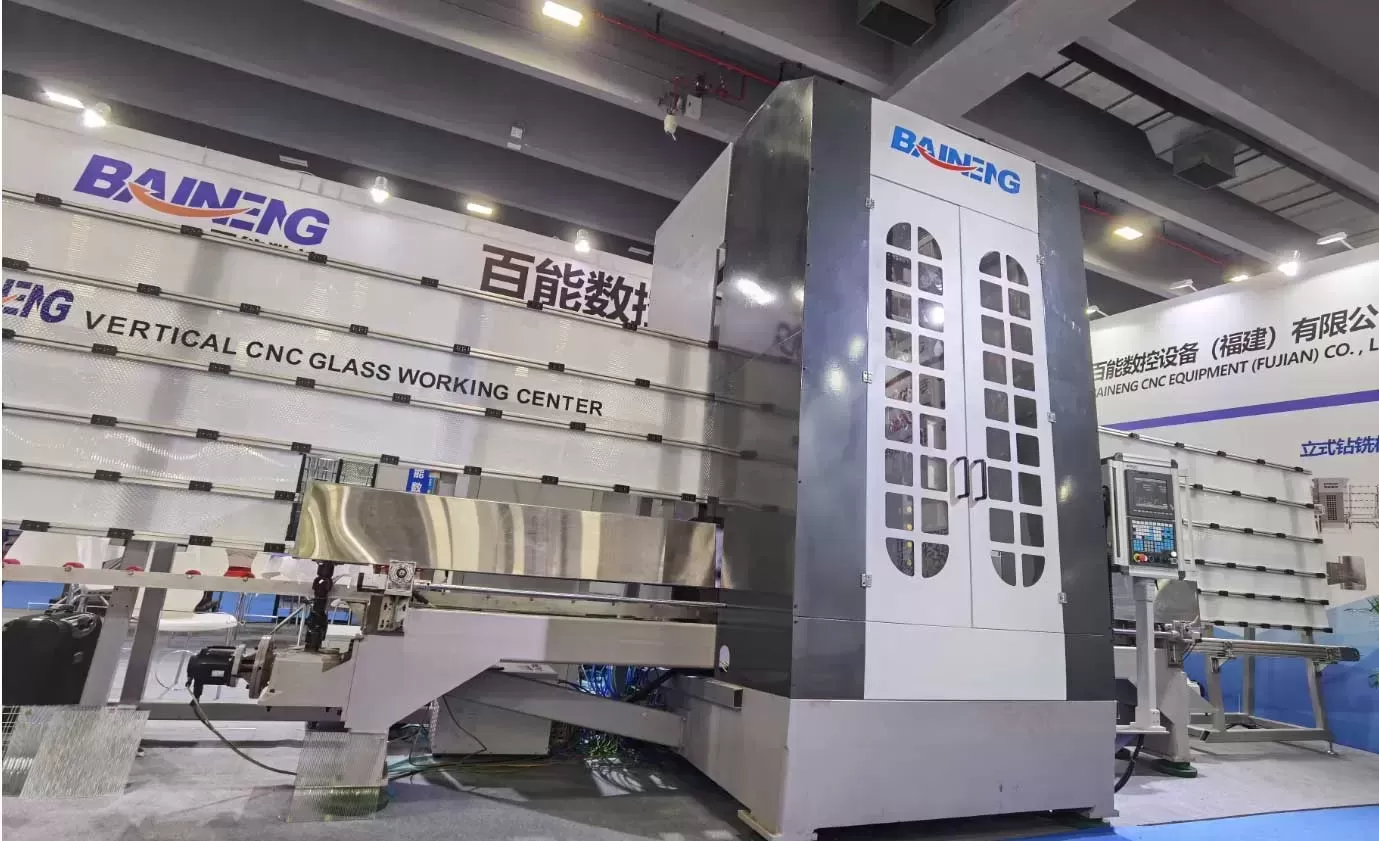
Understanding the Core Technology of Glass Etching Sandblasters
How Abrasive Blasting Works on Glass Surfaces
A high-velocity stream of abrasive particles (aluminum oxide, silicon carbide, or glass beads) impacts the glass surface through a controlled nozzle. The kinetic energy fractures microscopic layers of glass, producing a frosted appearance or deeper cavity depending on particle size, impact angle, and exposure time. Parameters that directly affect etch results include:
Nozzle pressure (typically 40–100 PSI for soda-lime glass)
Abrasive mesh size (ranging from 60 to 220 grit for fine to coarse textures)
Standoff distance between nozzle and workpiece (critical for edge sharpness)
Nozzle traverse speed and overlap patterns
Production environments require consistent media feed and minimal pressure fluctuation to avoid uneven frosting or breakthrough on thin glass substrates (3mm to 19mm thickness).
Pressure Systems vs. Suction Systems – Selecting the Right Configuration
Industrial glass etching sandblasting machines typically employ one of two abrasive delivery architectures:
Suction (siphon) systems: Abrasive is drawn into the air stream by venturi effect. Suitable for lighter frosted effects and low to medium production volumes. Lower initial investment but reduced etch speed for deep carving.
Direct pressure systems: A pressure vessel forces abrasive into the nozzle at controlled rates. Delivers higher kinetic energy, deeper cuts, and faster material removal—preferred for serial production of textured glass, anti-slip glass floors, or engraved logos.
For high-mix, high-precision applications, direct pressure systems with automatic media recycling provide better consistency over eight-hour shifts.
Key Components and Specifications for High-Throughput Operations
Reliable industrial glass etching equipment integrates several subsystems that directly influence uptime and etch quality:
Blast cabinet or walk-in booth: Sealed enclosures with view windows, glove ports, and rotary tables for large glass panels up to 2m x 3m.
Abrasive reclaimer (cyclonic separator): Removes fractured particles and dust, allowing reusable media to return to the pressure tank.
Cartridge dust collector: Maintains negative pressure within the cabinet, capturing silica dust and meeting OSHA/NIOSH exposure limits.
Nozzle oscillation mechanism: Uniformly distributes abrasive across wide workpieces, eliminating streaking.
CNC motion controller: Interpolates multiple axes for complex vector patterns from DXF or AI files.
When specifying a system for 24/7 operations, consider the duty cycle of the abrasive metering valve and the nozzle’s wear-resistant liner material (tungsten carbide or boron carbide).
Industry Applications Demanding Precision Sandcarving
The shift from manual sandblasting to automated glass etching sandblasting machines has enabled new product categories and tighter tolerances across sectors:
Architectural and Decorative Glass
Frosted partitions, back-painted glass with etched patterns, staircase balustrades, and shower enclosures. Uniform satin finishes with 10–50 micron etch depths require consistent nozzle overlap and media flow. CNC-controlled machines replicate intricate geometries on panels up to 3m without operator fatigue.
Automotive and Transportation Glass
Etched VIN codes, defroster grid edge deletion, and decorative bands on laminated side lites. Glass etching sandblasting machines equipped with rotary fixtures handle curved surfaces, while mask cutting integration reduces setup time between batches.
Household Appliance and Electronics Glass
Oven control panels, washing machine portholes, and touchscreen cover glass. Fine etching (120–220 grit) produces non-glare surfaces and haptic markings. Production lines benefit from inline conveyor systems and multi-nozzle arrays to etch 500+ parts per hour.
Common Production Challenges and Engineering Solutions
Even with advanced machinery, fabricators encounter specific issues when processing glass. Below are typical failure modes and how current equipment design addresses them.
Inconsistent Etch Depth Across Large Panels
Uneven media distribution or pressure drop at the nozzle tip leads to visible banding. Modern glass etching sandblasting machines incorporate closed-loop pressure transducers and real-time nozzle velocity compensation. BAIENG CNC implements adaptive feedrate modulation based on abrasive flow feedback, ensuring uniformity within ±0.02mm across 2.5m sheets.
Mask Tearing and Edge Chipping
When blasting through stencil film (photoresist or polyurethane), overly aggressive parameters undercut the mask, producing ragged lines. Solutions include reducing standoff distance, using smaller particle sizes (120–180 mesh), and lowering pressure to 45–60 PSI. Additionally, oscillating nozzles at a 15-degree angle minimizes direct impact stress on mask edges.
Dust Migration and Cross-Contamination
Fine glass dust affects worker safety and can settle on unblasted areas, causing surface defects. High-efficiency cartridge dust collectors with pulse-jet cleaning maintain cabinet visibility and reduce airborne particulate concentration to below 0.5mg/m³. For facilities processing both clear and coated glass, dedicated media hoppers prevent cross-contamination.
Low Throughput on Complex Patterns
Manual indexing of small parts reduces overall equipment effectiveness (OEE). Automation platforms from BAIENG CNC integrate rotary index tables and part-present sensors, allowing continuous blasting while the operator loads the next component. Multiple guns operating simultaneously can reduce cycle times by 60% compared to single-nozzle systems.
Integrating CNC Technology for Repeatable Etch Patterns
Computer numerical control (CNC) turns a conventional sandblaster into a programmable fabrication cell. CAD/CAM workflow begins with vector artwork, which is converted to toolpaths specifying nozzle speed, pressure modulation, and dwell time. Key benefits for glass etching include:
Gradient etching: Variable-pressure profiles produce 3D relief effects (e.g., logos fading into a frosted background).
High-resolution text and barcodes: Minimum line width of 0.3mm achievable using 220-grit abrasive and fine nozzle movements.
Automatic mask alignment: Vision registration corrects for panel placement variance, reducing waste on pre-coated glass.
Industrial controllers also log process parameters for traceability, meeting ISO 9001 requirements. BAIENG CNC offers proprietary software that predicts etch depth based on abrasive wear, compensating for media degradation over production runs.
Selecting the Appropriate Abrasive Media for Glass Etching
The choice of blasting media directly affects surface roughness (Ra value), etch rate, and nozzle wear. Below is a technical comparison for glass processing:
Aluminum oxide (brown or white): Sharp, angular particles. High etch rate, leaves a matte finish. White aluminum oxide provides finer, more consistent frosted appearance for decorative glass.
Silicon carbide: Extremely hard, fractures easily. Best for deep, aggressive carving (0.5mm+ depth) but produces more dust. Requires efficient dust extraction.
Glass beads: Spherical, softer media. Produces a satin sheen without sharp edges, used for cleaning or light frosting. Less suitable for deep etching.
Crushed garnet: Medium hardness, lower dust generation. A balanced option for medium-production architectural glass work.
For consistent results, particle size distribution should be monitored; excessive fines reduce cutting efficiency. Many operators reclaim media after 10–15 cycles, topping up with 10–15% new abrasive.
Maintenance, Safety and Environmental Compliance
Industrial glass etching sandblasting machines require scheduled servicing to maintain performance and regulatory compliance. Core maintenance tasks include:
Weekly inspection of nozzle liners for wear (replace when orifice diameter increases by 20%).
Daily emptying of dust collector bins and checking filter cartridge resistance.
Monthly calibration of pressure gauges and abrasive flow valves.
Lubrication of turntable bearings and axis drive mechanisms (for CNC systems).
From a safety perspective, operators must wear NIOSH-approved respirators (even within cabinet systems) and hearing protection. Facilities should install ambient air monitors for respirable crystalline silica. Local exhaust ventilation (LEV) testing every six months ensures capture velocities remain above 100 ft/min at cabinet openings.
.webp?t=1779441546723 "4")
Factors to Evaluate When Sourcing Industrial Sandblasting Equipment
Procurement decisions should be based on technical compatibility with your production profile rather than generic specifications. Key evaluation criteria:
Maximum workpiece dimensions and required etch area uniformity.
Batch size: single large panels vs. high-volume small parts (e.g., 200x200mm glass squares).
Integration with existing dust collection or compressed air infrastructure (CFM requirements).
Availability of spare parts and localized technical support for the control system.
Ability to upgrade from manual to semi-automatic indexing in the future.
Requesting a process validation run using your actual glass type and mask material provides the most reliable performance benchmark. Reputable manufacturers supply etch depth maps and cycle time estimates based on sample parts.
Frequently Asked Questions (FAQ)
Q1: What is the typical etch depth range achievable with glass
etching sandblasting machines?
A1: For
architectural frosting, 25–75 microns provides a uniform satin appearance
without compromising glass strength. Deep carving for signage or braille can
reach 0.5mm to 1.0mm, but requires multiple passes and careful mask selection.
Maximum depth is limited by the risk of micro-crack propagation; soda-lime glass
should not exceed 1.2mm etched depth for load-bearing applications.
Q2: Can sandblasting create smooth frosted edges without chipping on
thin glass (3mm)?
A2: Yes, with proper parameter
selection. Use 150–180 mesh aluminum oxide, pressure between 40–55 PSI, and a
standoff distance of 75–100mm. Oscillating nozzles or a rotating fixture reduces
directional stress. For fragile glass, consider a two-step process: light
etching followed by flame polishing or edge grinding if absolute smoothness is
required.
Q3: What are the performance differences between silicon carbide and
aluminum oxide for glass etching?
A3: Silicon
carbide cuts 30–40% faster due to higher hardness and sharp edges, but produces
more dust and wears nozzles quicker. Aluminum oxide offers a more consistent
frosted finish and longer media life, making it cost-effective for
moderate-depth etching. For fine detail (text, small logos), white aluminum
oxide (220 grit) is preferred because it reduces edge chipping.
Q4: How to maintain consistent etch depth on large glass panels
(exceeding 1.5m width)?
A4: Consistency across wide
panels demands a direct pressure system with closed-loop nozzle pressure control
and an oscillating gun mechanism that maintains constant traverse speed.
Additionally, the nozzle must be parallel to the glass surface within ±1mm.
Systems from BAIENG CNC use dual pressure sensors and real-time
velocity mapping to hold depth variation below ±0.03mm over 2m widths.
Q5: Is a dust collection system mandatory for industrial glass
sandblasting operations?
A5: Yes, both for worker
safety and equipment longevity. Occupational exposure limits for respirable
crystalline silica (0.05 mg/m³ over 8 hours) are enforced by agencies such as
OSHA. A cartridge dust collector with HEPA after-filter maintains visibility
inside the cabinet and prevents abrasive contamination. Without it, fine dust
accumulates on linear guides, causing premature CNC axis failure.
Q6: Can glass etching sandblasting machines process tempered glass
without causing breakage?
A6: Tempered glass has
high compressive stress; any etch deeper than 0.1mm can trigger spontaneous
breakage. Therefore, only very light frosting (shallow etching for logos or
borders) is recommended, using fine grit (180–220) and low pressure (30–40 PSI).
For safety-critical applications, always test on sample pieces from the same
production batch before full runs. For deep engraving, start with annealed glass
then temper after etching.
Q7: What is the expected nozzle life when using aluminum oxide on
glass?
A7: A tungsten carbide nozzle typically
lasts 150–300 hours of blasting time with 100-150 mesh aluminum oxide. Boron
carbide liners extend life to 500–800 hours. Nozzle wear accelerates when
pressure exceeds 90 PSI or media becomes contaminated with glass dust. Regular
inspection every 40 working hours prevents quality drift.
Request Technical Consultation or Quotation
Selecting the correct glass etching sandblasting machine requires matching your production volume, part geometry, and etch specifications with the right equipment architecture. Our engineering team provides application-specific recommendations, including abrasive media testing, nozzle configuration optimization, and ROI projections for automated systems. Share your glass types, required etch depths, and daily output targets to receive a detailed proposal tailored to your facility.
→ Send your inquiry with technical parameters to our industrial solutions desk. We will respond with CAD layouts, cycle time estimates, and configuration options for semi- or fully-automated glass sandcarving cells.