
 FAQs
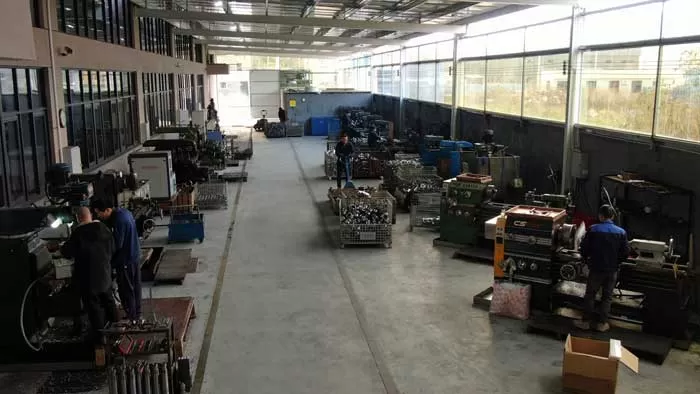
FAQs Factory Tour



Industrial glass marking and engraving have evolved beyond manual sandblasting. Two dominant automated methods now serve production environments: laser engraving (CO2, UV, or fiber lasers) and CNC engraving (mechanical spindles with diamond or carbide tools). Each technology interacts with glass substrates through fundamentally different physical mechanisms, resulting in distinct surface characteristics, etch depth capabilities, and process limitations. Production managers and process engineers evaluating glass etching sandblasting machines or alternative methods need a clear technical framework. This guide compares laser and CNC engraving based on material science, edge quality, throughput, and application-specific suitability—without marketing exaggeration.
Core Principles of Laser and Mechanical Glass Engraving
How Laser Engraving Alters Glass Surfaces
Unlike metals, glass does not readily absorb the wavelength of standard CO₂ lasers (10.6 µm) at room temperature. However, localized thermal stress creates micro-fractures that produce a frosted appearance. The process relies on rapid heating and cooling: the laser beam heats a microscopic glass volume, causing expansion; subsequent thermal contraction generates a network of tiny cracks that scatter light. This mechanism is often called “laser etching” or “laser frosting.” For deep engraving (≥0.3 mm), multiple passes with controlled power and frequency are required. UV lasers (355 nm) are absorbed more directly by glass, enabling finer marking with less heat-affected zone (HAZ).
Key parameters for laser glass engraving include:
Wavelength (CO₂, UV, or fiber – fiber unsuitable for clear glass due to transmission)
Pulse duration and repetition rate (nanosecond or picosecond for reduced micro-cracking)
Scan speed and hatch spacing (affects surface roughness)
Application of anti-reflection coating or wetting agent to improve energy coupling
Mechanical Material Removal with CNC Engraving
CNC engraving for glass uses a rotating tool (diamond burr, tungsten carbide bit, or diamond drag tip) to physically ablate material. The spindle speed, feed rate, and depth of cut determine the cutting action. Diamond drag engraving (no rotation) uses a spring-loaded diamond tip to scratch the surface, producing shallow, crisp lines. For deeper carving (grooves, 3D relief), a high-speed spindle (20,000–60,000 RPM) with a diamond-coated ball nose or V-bit removes material in successive passes. Unlike laser, mechanical engraving generates glass chips and dust, requiring effective extraction and cooling (air or water mist) to prevent tool overheating and glass thermal shock.
CNC engraving systems from BAIENG CNC integrate rigid linear guides and vibration-damping frames, maintaining tool position accuracy within ±0.01mm even when processing 10mm thick float glass.
Critical Performance Parameters Compared
Edge Quality and Micro-Cracking Risk
Laser engraving on soda-lime glass inherently creates a network of micro-cracks. While this produces a matte white appearance, the cracked layer reduces flexural strength by 20–40% compared to unmarked glass. For load-bearing applications (glass shelves, stair treads), laser-etched areas become weak points. CNC engraving with a diamond drag or abrasive bit produces a more defined groove with minimal micro-cracking if feed rates and tool sharpness are optimized. However, aggressive mechanical cuts can also cause edge chipping (conchoidal fractures) when tool pressure exceeds glass modulus of rupture.
For tempered glass, laser engraving often causes delayed breakage due to stress concentration. CNC engraving before tempering is the safer sequence. In-mold etching or sandblasting remains alternatives, but CNC offers better depth control without thermal shock.
Etch Depth and Surface Roughness Control
Laser engraving typically achieves depths of 0.05–0.3 mm per pass. Deeper cuts require 10–20 passes, with diminishing returns because the frosted layer blocks beam transmission. Surface roughness (Ra) ranges from 2–6 µm, producing a consistent matte finish. CNC engraving can achieve depths from 0.1 mm to over 2 mm in a single pass, depending on tool diameter and spindle power. Roughness varies: a sharp V-tool can produce Ra 0.8–1.5 µm (near-polished groove bottom), while a ball nose leaves a faceted texture. For deep lettering (1 mm depth), CNC is the only practical non-sandblasting method.
Pattern Resolution and Complexity
Laser systems excel at high-resolution vector and raster patterns. Minimum line width of 0.1 mm is attainable with a 60W CO₂ laser and high-quality optics, making laser ideal for 2D barcodes, serial numbers, and photographic halftone engravings. CNC engraving faces limitations: even a 0.3 mm diameter diamond burr produces line widths of 0.4–0.5 mm due to runout and glass fracture characteristics. Fine text (<2 mm height) is difficult to read when mechanically engraved because chip evacuation blurs edges. For artistic relief or 3D modeling, CNC provides true Z-axis profiling that laser cannot replicate (laser lacks depth modulation without multiple passes and power ramping).
Application-Specific Recommendations
High-Volume Marking of Barcodes and Date Codes
For marking 2D Data Matrix codes on beverage bottles, pharmaceutical glass vials, or automotive windows, laser engraving offers speed (100–200 mm/sec) and non-contact processing. No tool wear; consumables are limited to electricity and fume extraction. However, laser-marked codes on glass may lose contrast under certain lighting due to diffuse reflection. CNC dot-peen marking (a subset of mechanical engraving) uses a carbide pin to create a dot matrix, producing high-contrast readable codes even on curved glass. Throughput is slower (5–10 characters per second) but suitable for low to medium volume lines.
Deep Carving for Architectural and Signage Glass
Logos, decorative grooves, and tactile signage (e.g., braille) require etch depths >0.5 mm for visual impact or tactile feel. CNC engraving with a diamond V-bit (90° or 120°) is the efficient choice. Multi-pass strategies with increasing step-over remove material cleanly, and the engraved area can be painted or backlit. Laser deep engraving causes significant micro-cracking and often leaves a powdery residue that is difficult to remove. For large panels (2m x 3m), a gantry-type CNC glass engraver from BAIENG CNC provides the necessary stiffness and vacuum workholding to prevent vibration marks.
Thin or Tempered Glass Processing
Glass thickness under 3 mm is prone to breakage from both technologies. Laser engraving on 1–2 mm thin glass requires low power (10–15W) and high scan speed to avoid thermal fracture. Even then, edge micro-cracks can reduce handling strength. CNC engraving with a spring-loaded drag tip (zero vertical load) is safer: the diamond point scribes shallow lines without cracking the glass. For tempered glass, never laser engrave after tempering; the induced tensile stress will shatter the panel. Instead, engrave on annealed glass then temper, or use CNC drag engraving with very light pressure (0.5–1.0 N).
.webp?t=1779441895907 "ScreenShot_2026-05-15_171524_850 (1)")
Overcoming Industry Pain Points with Process Integration
Fabricators often face decision paralysis due to conflicting advice. Below are solutions to real production issues when choosing between laser and CNC engraving for glass.
Problem: Laser marking produces faint or invisible marks on clear glass.
Solution: Apply a thin layer of wetting agent (diluted dish soap or commercial marking compound) to the glass surface. This improves CO₂ laser absorption and yields dense white marks. Alternatively, use a UV laser (355 nm) which couples directly without coating.Problem: CNC engraving causes edge chipping along cut paths.
Solution: Reduce feed rate and use a down-cut spiral diamond burr. Maintain constant coolant flow (water-soluble oil) to flush chips and dampen tool vibration. Additionally, pre-scoring the contour with a spring-loaded diamond drag tool before heavy routing can prevent breakout.Problem: High throughput requirements for shallow frosting on 500+ glass panels per shift.
Solution: Laser scanning with a 200–300W CO₂ laser and a high-speed galvanometer head delivers cycle times of 2–5 seconds per A4-sized pattern. CNC engraving cannot match this speed for shallow marks. For deeper grooves, consider a combined platform: laser for quick identification markings, CNC for structural carvings on the same fixture. BAIENG CNC offers hybrid systems that switch between a laser module and a spindle toolhead, reducing part handling.Problem: Dust and debris from mechanical engraving contaminating cleanroom environments.
Solution: Enclose the CNC engraver with a sealed chamber and connect a HEPA vacuum pickup close to the tool tip. For laser engraving, despite no chips, glass nanoparticles (fume) require high-efficiency extraction below 0.1 µm filtration.
Technical Selection Framework for Glass Engraving Methods
To select between laser and CNC engraving for a specific glass product line, evaluate the following criteria in a weighted matrix:
Required etch depth: <0.3 mm → laser or drag engraving; >0.5 mm → CNC routing or diamond milling.
Edge toughness requirement: Post-engraving strength critical (e.g., glass table) → CNC shallow drag or sandblasting; laser not recommended.
Pattern complexity: High-resolution raster images, photos → laser. 3D relief, v-cut lettering → CNC.
Annual volume: >200,000 parts (small area marks) → laser (fast). Low volume, deep custom logos → CNC.
Glass geometry: Flat panels → either. Curved or cylindrical → rotary attachment for laser or CNC (laser easier for small diameters).
Masking requirements: Laser no masking needed; CNC may require protective tape to prevent edge spalling on critical surfaces.
Hybrid workflows are increasingly common: use laser for high-speed frosting of large background areas, then CNC to carve deep borders or braille dots. This reduces tool wear and maximizes overall equipment effectiveness.
Frequently Asked Questions (FAQ)
Q1: Can a standard CO₂ laser engrave glass without any
coating?
A1: Yes, but the mark is often faint or
nearly invisible on clear float glass because most of the energy is transmitted.
Lower power settings (30–40W) with slower scan speed (200 mm/s) produce some
surface crazing. For reliable legible marks, a wetting agent or a thin layer of
titanium dioxide paste is recommended. UV lasers (355nm) mark glass directly
without pre-treatment, at higher equipment cost.
Q2: Which method produces stronger glass – laser or CNC
engraving?
A2: CNC engraving with a sharp diamond
drag tool (non‑rotating) produces minimal micro-cracks and better retains
original glass strength. Laser engraving induces a network of thermally
generated micro-fractures that reduce flexural strength by 20–40%, depending on
mark density. For structural glass components, use mechanical engraving before
tempering or avoid deep marking altogether.
Q3: Is CNC engraving slower than laser for glass
etching?
A3: For shallow surface marking
(0.05–0.1mm depth), laser scanning is significantly faster – up to 10 times
higher area coverage per minute. For deep grooves (>0.5mm), CNC routing can
be faster because it removes volume in one or two passes, while laser requires
dozens of passes with progressive micro-cracking. Evaluate based on final depth,
not mark area alone.
Q4: Can I use the same CNC machine for both glass and metal
engraving?
A4: Technically yes if the machine has
variable spindle speed (5,000–60,000 RPM) and adequate dust sealing. However,
glass engraving generates highly abrasive glass dust that damages linear guides
and ball screws not protected by bellows. Metal chips are less invasive.
Dedicated glass engravers, such as those from BAIENG CNC,
feature full covers, air purge on bearings, and anti-corrosion coatings for wet
cutting. Switching materials without thorough cleaning risks cross-contamination
and tool wear.
Q5: How do I prevent glass cracking when laser engraving near
edges?
A5: Thermal stress concentrates at glass
edges. Maintain a minimum distance of 5mm from any edge. Pre-heating the glass
to 80–100°C (using a hotplate or infrared heater) reduces temperature gradient
and prevents edge fractures. Reduce laser power by 30% for perimeter passes,
then increase for central areas. For tempered glass, avoid any laser engraving;
use CNC drag engraving instead, but only if glass was pre-scored before
tempering.
Q6: What maintenance differences exist between laser and CNC glass
engravers?
A6: Laser engravers require cleaning of
optics (lenses, mirrors) every 40-60 hours of operation, periodic CO₂ tube
replacement (8,000–15,000 hours), and smoke filter changes. CNC engravers demand
daily cleaning of glass sludge, tool replacement (diamond bits last 50-200 hours
depending on depth), spindle bearing lubrication, and recalibration of zero
point after tool changes. CNC machines also need chip conveyor or manual debris
removal. Budget for consumables accordingly.
Q7: Which method produces the best edge smoothness for decorative
frosted glass?
A7: Laser engraving yields a
uniformly matte, non-directional texture that feels smooth to the touch – ideal
for shower glass or decorative panels. CNC ball-nose engraving leaves visible
tool marks (scallops) unless followed by flame polishing or sanding. Therefore,
for purely visual frosting on flat glass, laser is preferred. For tactile
tactile signs (raised or recessed lettering), CNC provides sharper groove
walls.
Request an Application Assessment for Your Glass Production
Choosing between laser engraving vs CNC engraving for glass should be based on specific material samples, required throughput, and downstream processes. Our technical team provides comparative test runs using your glass type (annealed, tempered, laminated, or borosilicate) and your vector artwork. We document etch depth profiles, edge chipping frequency, and cycle time calculations. Share your production parameters—glass thickness, target etch depth, daily part volume, and preferred engraving area—to receive a tailored recommendation including equipment specifications and integration notes.
→ Send your inquiry with drawings or sample images. We will respond with a process comparison table and configuration options for laser or CNC-based glass engraving systems.