
 FAQs
FAQs Factory Tour



Demand for high-end optical components is surging. From automotive LiDAR systems and smartphone cameras to surgical endoscopes, manufacturers face tighter tolerances than ever before. Producing these components requires processing hard, brittle substrates without inducing subsurface fractures or micro-cracks.
Selecting the wrong machine ruins tool life, drives scrap rates up, and limits your shop's throughput. Whether you run a precision optical laboratory or a mass-production glass processing line, you need equipment built specifically for brittle material kinetics. If you want to optimize your production lines or upgrade existing equipment, contact BAINENG CNC for detailed machine evaluations and custom quotes.
This technical guide reviews the best optical glass grinding machine options on the market today. We cover core mechanical metrics, application fits, and critical selection criteria to help optical production managers invest wisely.
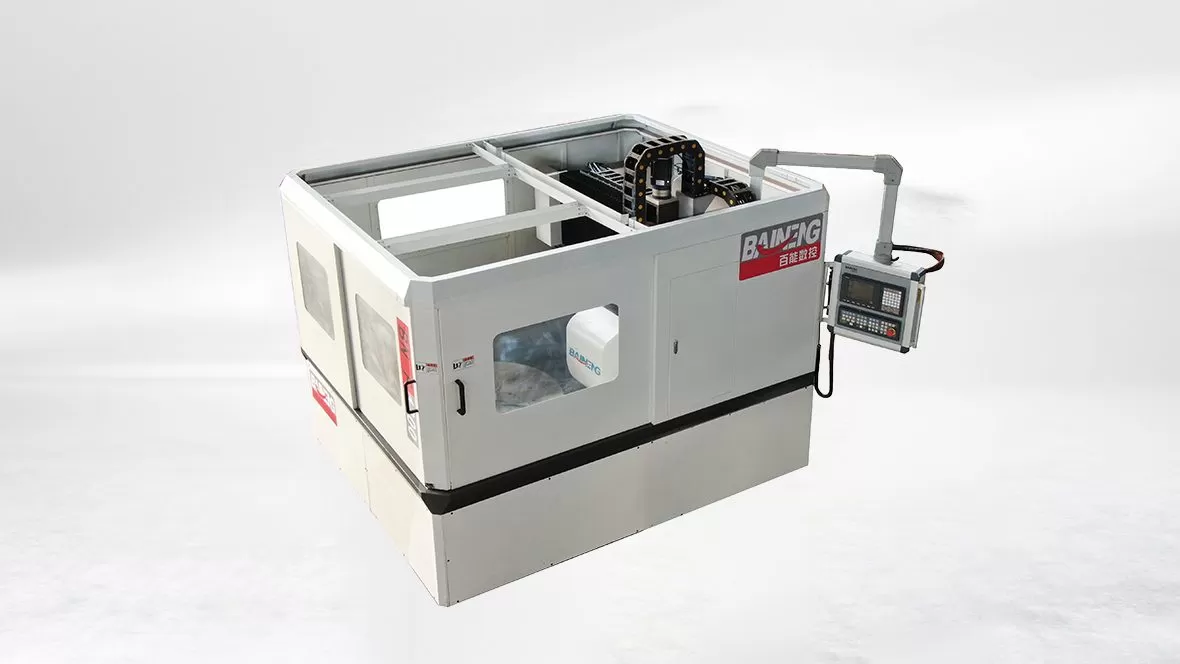
What Is an Industrial Optical Glass Grinding Machine?
An optical glass grinding machine removes material from brittle substrates like fused silica, N-BK7, quartz, and sapphire using bonded diamond abrasive wheels. Unlike standard metal cutting machines, optical grinding relies on controlled micro-fracture or ductile-regime machining. The goal is to establish precise geometric curvature, thickness, and edge profiles while minimizing subsurface damage (SSD).
Modern industrial facilities categorize these machines based on kinematic structure and target geometry:
- Spherical and Aspherical Lens Generators: These multi-axis systems use cup wheels or contour tools to generate convex and concave optical curves.
- CNC Glass Carving and Milling Centers: High-speed machines equipped with multi-axis spindles. They cut complex 2.5D and 3D geometries, drill micro-holes, and chamfer specialized glass plates.
- Precision Lens Edging and Centering Systems: Designed to align the mechanical axis with the optical axis while grinding final outer diameters and bevels.
- Planetary Double-Sided Grinders: Batch-processing machines that grind flat substrates simultaneously on both faces to achieve extreme parallelism.
Top Picks: Best Optical Glass Grinding Machines for 2024/2025
1. Best for High-Precision Optical Lens Generation
Precision spherical and aspherical surfaces demand machines with exceptional static rigidity and sub-micron positioning. The top systems in this category utilize direct-drive torque motors and hydrodynamic or aerostatic air-bearing spindles. They run diamond cup wheels designed for rapid material removal followed by fine generating passes.
These machines shine when fabricating high-index camera lenses, laser collimators, and microscope objectives. They maintain surface form accuracy (PV) under 1 micron directly after the fine grinding stage. This reduces downstream polishing times by up to 40 percent. If your plant processes steep concave curves or radical aspheric profiles, focus on machines equipped with integrated 3D tool-path compensation.
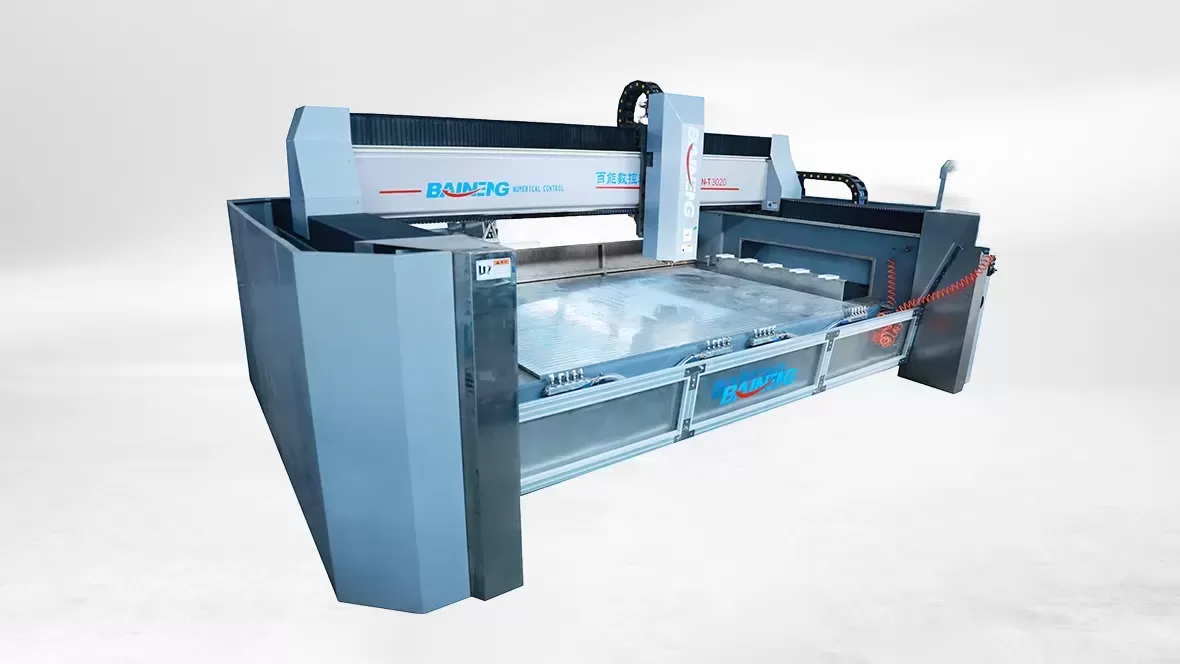
2. Best for High-Speed Glass Carving and Profiling: BAINENG CNC Series
For precision consumer electronics, optical prisms, sensor windows, and irregular optical covers, multi-axis CNC carving machines deliver the best ROI. In this category, BAINENG CNC provides robust industrial glass carving and milling centers engineered specifically for vibration dampening and rapid cycle times.
Equipped with high-speed water-cooled spindles running from 24,000 to 60,000 RPM, these machines eliminate edge chipping during heavy routing and chamfering passes. Key performance drivers include:
- High-rigidity mineral casting or stabilized cast-iron machine beds that absorb tool vibration.
- Closed-loop linear optical scales that guarantee repeatable positioning down to +/- 0.005 mm.
- Advanced tool breakage detection and automatic wheel wear compensation systems.
- High-pressure internal and external tool coolant delivery to flush glass swarf instantly.
To evaluate cycle times for your specific prism, flat optics, or curved cover designs, request an engineering sample test from the technical team at BAINENG CNC.
3. Best for Optical Centering and Lens Edging
Once a lens surface is ground and polished, it must be centered and edged. If the optical axis tilts relative to the mechanical outside diameter, the finished assembly suffers from severe optical aberration. Modern industrial lens edgers integrate optical measurement probes that automatically detect the lens tilt before the diamond wheel touches the part.
The best units feature dual-spindle designs that clamp the lens using precision brass or bell-clamping chucks. High-volume factories producing mobile phone lens elements or spectacle optics rely on these automated units. They feature integrated robotic pick-and-place arms that load and edge a lens in under ten seconds.
4. Best for Flat Optics and Double-Sided Wafer Grinding
Flat windows, laser mirrors, and semiconductor glass carriers demand absolute thickness uniformity and minimal Total Thickness Variation (TTV). Planetary double-side grinders remain the premier choice for these flat components. Workpieces sit inside geared carrier plates that rotate between an upper and lower diamond abrasive plate.
The top machines in this space utilize active pneumatic or hydraulic load monitoring. They adjust grinding pressure gradually as the contact area changes. This controlled force prevents thermal stress and keeps wafer parallelism within 1 to 2 microns across a 300 mm processing zone.
Key Factors to Consider When Choosing an Optical Grinding Machine
Purchasing an optical glass grinding machine involves balancing precision requirements, machine architecture, and maintenance costs. Evaluate these four technical factors during your procurement process:
1. Spindle Design and Dynamic Rigidity
Optical glass cannot tolerate mechanical chatter. Any vibration in the spindle transfers directly to the glass, causing severe micro-chipping along the edges. Look for electric spindles featuring ceramic hybrid bearings or hydrostatic bearings. Runout at the tool interface must measure below 0.002 mm. For carving small radii, prioritize spindle speeds above 30,000 RPM. For heavy lens blank roughing, prioritize low-end spindle torque.
2. Axis Feed Resolution and Linear Encoders
Standard stepper or basic servo systems fail to maintain the surface geometry needed for optical applications. Select machines with direct-drive AC linear motors and absolute optical linear scales. Sub-micron resolution (0.1 micron or better) allows the controller to adjust feed rates precisely at steep transition zones, reducing brittle fractures on the glass surface.
3. Coolant Filtration and Temperature Control
Glass grinding swarf is abrasive, hazardous, and destructive to linear guideways. A standard metalworking coolant tank will fail quickly. An industrial optical glass grinding system requires a multi-stage filtration setup. Ideal systems include:
- Centrifugal separators or vacuum drum paper filters that capture particles down to 5 microns.
- Closed-loop water chillers that keep coolant temperature within +/- 0.5 degrees Celsius to prevent thermal expansion of the machine casting.
- Anti-corrosion stainless steel sheet metal and fully enclosed telescopic covers for all drive axes.
4. Software and Tool Path Programming
Standard G-code programming can be cumbersome when adjusting for diamond wheel wear. Look for industrial CNC systems featuring specialized optical machining packages. These interfaces let operators input lens radius, center thickness, diameter, and bevel angle directly. The system should automatically calculate compensation curves and wheel truing routines.
Grinding vs. Polishing: Understanding the Optical Fabrication Workflow
Grinding and polishing are complementary processes within optical fabrication. Grinding removes volume and defines geometry; polishing achieves optical transparency and nanometer-level roughness.
The grinding phase typically splits into two steps: rough generating and fine grinding. Rough grinding uses coarse diamond wheels (grit sizes around 40 to 80 microns) to strip away excess material rapidly. Fine grinding follows with resin-bonded or fine-grain metal-bonded tools (grit sizes from 5 to 15 microns). Fine grinding reduces the surface roughness to Ra 0.1–0.3 microns and limits the depth of subsurface damage.
If your grinding machine produces deep micro-cracks, your technicians must polish the glass much longer to remove those defects. Investing in a more rigid, precise optical glass grinding machine shortens polishing cycle times, lowers consumable pad costs, and raises your line's overall yield.
Frequently Asked Questions (FAQs)
Q1: What types of grinding wheels are standard on an optical glass
grinding machine?
A1: Diamond grinding wheels are the industry
standard. Roughing cycles rely on bronze- or metal-bonded diamond wheels due to
their long tool life and structural stability. Finishing and profiling passes
typically use resin-bonded or hybrid-bonded wheels. These produce lower grinding
forces, minimize subsurface chipping, and leave a uniform surface finish.
Q2: How do CNC glass carving machines prevent glass edges from
chipping?
A2: Edge integrity depends on high spindle speeds, low
runout, and steady feed rates. Advanced CNC glass carving centers control
cutting force using adaptive feed technology. They slow down tool movement
during entry and exit points. Combining ultra-fine diamond tooling with
dual-directional coolant jets also stabilizes the material and limits brittle
breakout.
Q3: How does a glass CNC machine differ from a standard metal
machining center?
A3: Glass machines run at much higher RPMs and
feature superior bed dampening to handle the brittle fracture mechanics of
non-metallic materials. Their guide rails and ball screws feature tighter
hermetic seals to protect against abrasive silica glass dust. In addition, their
coolant systems use specialized centrifuges rather than standard chip
conveyors.
Q4: Why is coolant temperature control so critical during optical
glass grinding?
A4: Optical glass has a lower thermal conductivity
than metal, but its dimensional tolerances are much tighter. Temperature
fluctuations in the cutting zone create internal thermal stress, causing the
glass to crack. Furthermore, thermal growth in the machine spindle or casting
can ruin thickness tolerances across production batches.
Q5: Can an industrial optical glass grinding machine process sapphire
and quartz?
A5: Yes, provided the machine has adequate spindle
rigidity, torque, and heavy-duty vibration dampening. Sapphire is extremely hard
(Mohs 9) and generates high cutting resistance. Processing it requires
high-torque spindles, lower feed speeds, and specialized vitrified or
electroplated diamond tooling matched to hard-crystal grinding.
Invest in the Right Optical Grinding Equipment
Selecting the ideal grinding system comes down to matching machine kinematics to your component portfolio. Lens manufacturing demands high geometric accuracy and automated centering. Prisms, irregular windows, and consumer display covers require the flexibility and speed of multi-axis CNC carving centers. Flat optical filters call for planetary double-sided grinding platforms.
Match your throughput targets with rigid machine beds, sealed motion components, and clean coolant systems to ensure low ownership costs and dependable yields.
If you are planning a new fabrication facility or modernizing an existing optical line, turn to BAINENG CNC. Our engineers will review your technical drawings, calculate cycle times, and recommend the best equipment configuration for your operation. Contact BAINENG CNC today to request a quote or arrange a sample cutting trial.