
 FAQs
FAQs Factory Tour



Industrial glass processing requires a balance of high speed, repeatable accuracy, and material efficiency. Traditional manual glass cutting methods, while functional for small-scale custom work, struggle to meet the strict tolerances and high output demands of modern architectural, automotive, and appliance manufacturing. To remain competitive, fabrication facilities are increasingly transitioning to automated machinery. Utilizing an automatic glass cutter has become the standard approach to eliminate human error, lower operational costs, and maximize sheet utilization.
For manufacturers aiming to scale their production, understanding the mechanical capabilities and workflow integration of these machines is a necessary step. Engineering advancements have transformed how glass is scored and broken, replacing manual craftsmanship with precise numerical control. As a designer and manufacturer of CNC glass processing machinery, BAINENG CNC develops solutions that address these daily operational challenges directly on the factory floor.
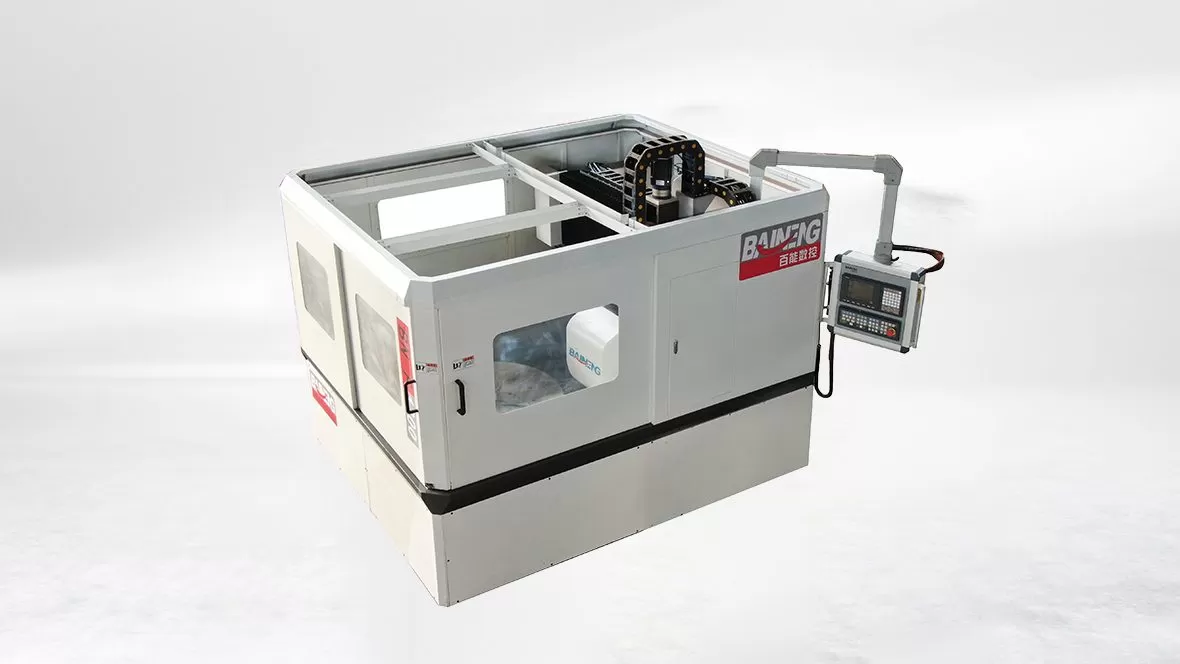
The Mechanical Architecture of an Automatic Glass Cutter
An industrial automatic glass cutter is a complex assembly of mechanical, electrical, and pneumatic systems designed to work in perfect synchronization. Unlike cutting softer materials, glass processing does not involve removing material through milling or sawing. Instead, it relies on controlled crack propagation. The cutting machine must apply a highly specific, consistent force to score the glass surface, followed by a controlled mechanical force to break the pane along the scored line.
To achieve this level of precision, the machine structure is built on several core components:
Heavy-Duty Machine Bed: A rigid, stress-relieved steel frame forms the foundation. This structure must absorb the vibrations generated during high-speed gantry movements to prevent deflection, which would otherwise distort the cutting path.
Precision Gantry and Drive System: High-performance servo motors, coupled with helical rack-and-pinion systems or linear guideways, drive the cutting bridge along the X and Y axes. This setup allows the cutting head to travel at high velocities while maintaining positioning tolerances within fractions of a millimeter.
Intelligent Cutting Head Assembly: The cutting head holds the cutting wheel (typically made of tungsten carbide or polycrystalline diamond). It features proportional pneumatic valves that dynamically adjust the downward pressure based on the thickness of the glass and the speed of travel.
Flotation and Loading Table: To handle large, heavy monolithic glass sheets without scratching them, the table surface utilizes an air-cushion system. High-pressure air blown through small holes in the tabletop creates a thin film of air, allowing operators to glide heavy sheets into position with minimal physical effort.
Directly supporting these mechanical components is the CNC controller. By translating digital CAD drawings into precise machine commands, the controller determines the exact path, pressure, and cutting speed for every individual sheet, ensuring identical results across thousands of consecutive cycles.
Resolving Key Bottlenecks in Glass Manufacturing
Industrial glass fabricators face constant pressure to improve margins while dealing with fluctuating material costs and labor shortages. Implementing automated cutting systems helps overcome several structural bottlenecks that commonly limit the profitability of manual or semi-automated factories.
Reducing Edge Micro-Cracks and Tempering Failures
When glass is scored with inconsistent manual pressure, it creates uneven micro-fractures along the cut edge. During the subsequent tempering process, where the glass is heated to high temperatures and rapidly cooled, these micro-cracks expand under thermal stress, leading to spontaneous breakage inside the furnace. An automated system maintains uniform pressure throughout the entire scoring path, even on complex curved shapes. This consistency minimizes edge defects, drastically reducing failure rates during tempering and heat-strengthening processes.
Maximizing Sheet Utilization Through Nesting Algorithms
Glass is an expensive raw material, and manual planning often results in significant scrap. Modern cutting lines overcome this by integrating optimization software directly into the workflow. Before the cutting cycle begins, the software analyzes the required part sizes and automatically nests them onto the raw monolithic sheets to achieve the highest possible yield. By reducing trim waste to single-digit percentages, manufacturers can realize substantial material savings that directly improve the bottom line.
Minimizing Material Handling and Operational Hazards
Manual handling of large-format glass sheets presents inherent safety concerns and increases the risk of accidental breakage. Integrated cutting lines often combine the automatic glass cutter with automated loading arms and tilting tables. These auxiliary systems pick up sheets directly from storage racks using vacuum suction cups and lay them gently onto the cutting bed, minimizing human intervention and creating a safer work environment.
Operational Parameters Influencing Cutting Performance
Achieving a clean break depends on several highly sensitive parameters that must be finely tuned according to the physical properties of the glass. A professional-grade system allows operators to adjust these settings with high precision.
The primary variable is the cutting wheel angle. Thin glass (such as 2mm or 3mm sheets used in picture frames or simple glazing) requires a sharper wheel angle, typically around 120° to 135°, paired with lower cutting pressure. Conversely, thick glass (such as 12mm, 15mm, or 19mm architectural panels) requires a blunter wheel angle, often between 145° and 165°, combined with significantly higher pneumatic force. If the pressure is too low, the score line will be too shallow, causing the glass to drift or break unevenly during snapping. If the pressure is too high, it will crush the glass surface, creating fine glass powder and lateral cracks that ruin the edge quality.
Lubrication is another vital factor. During the scoring process, a specialized, highly evaporative cutting oil is applied directly ahead of the cutting wheel. This oil serves two purposes: it cools the wheel and prevents the score line from "healing." Because glass has a molecular structure that attempts to fuse back together after being fractured, the cutting oil penetrates the newly formed crack, keeping it open long enough for the breaking bars to complete a clean split.
Integration of the Cutting System into the Complete Production Line
For mid-to-large-scale factories, a standalone machine is rarely the ultimate goal. True operational efficiency is achieved when the automatic glass cutter is fully integrated into a continuous, automated production line. This workflow typically consists of three synchronized stages:
The Loading Station: An automatic gantry or storage system retrieves raw sheets from material racks and positions them on the cutting table.
The Cutting and Scoring Station: The machine reads the optimized cutting layout, automatically selects the appropriate tool parameters, and scores the glass sheet.
The Breaking Station: The scored sheet is transferred to a breaking table equipped with longitudinal and transverse breaking bars. These pneumatic bars rise up from beneath the table surface to apply localized bending force, cleanly separating the scored parts.
By connecting these stations with motorized conveyor belts, a factory can maintain a continuous flow of material with minimal manual labor, transforming raw glass sheets into precisely cut parts ready for edge grinding, washing, and tempering in a matter of minutes.
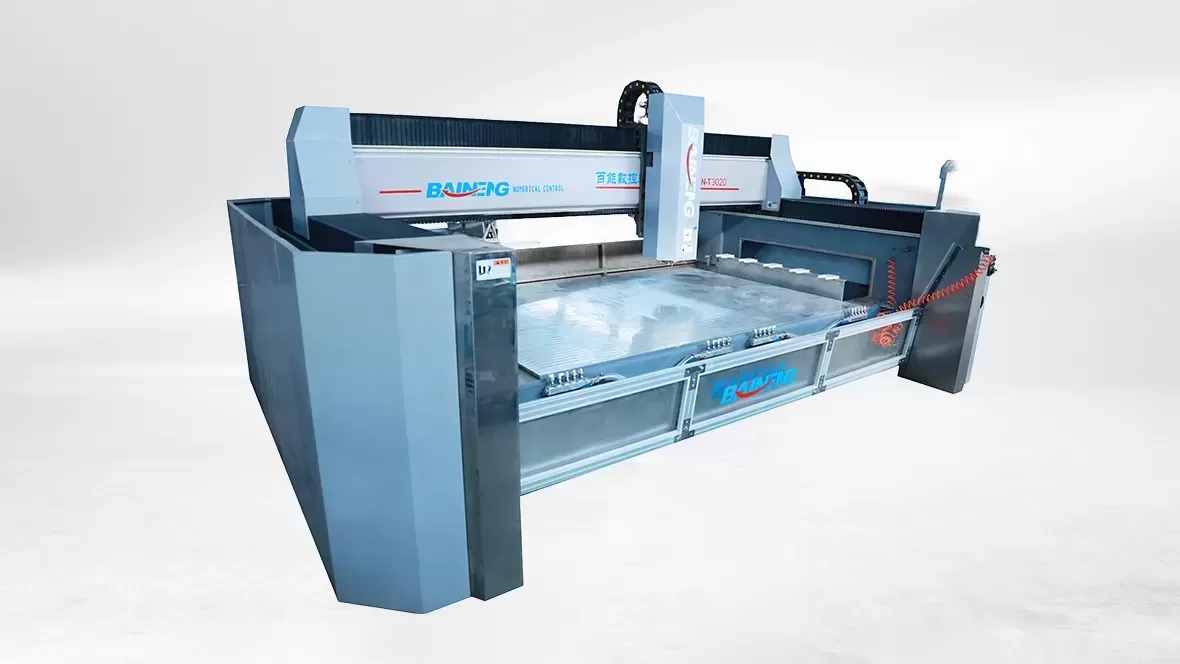
Why Choose BAINENG CNC for Your Glass Fabrication Needs
Selecting the right machinery partner is a long-term investment that shapes the capability and reliability of your production floor. BAINENG CNC manufactures high-precision CNC glass processing machinery designed to withstand the rigorous demands of multi-shift industrial environments. Our engineering focus centers on structural rigidity, intuitive software control, and reliable component selection to ensure your operations run smoothly with minimal downtime.
We work closely with global glass fabricators to configure cutting systems that match their specific space constraints, material specifications, and volume requirements. Our machines are engineered to deliver consistent edge quality and reliable long-term accuracy, helping your business lower scrap rates and increase total output.
Frequently Asked Questions
Q1: Can an automatic glass cutter handle shaped or curved cutting paths?
A1: Yes, modern systems are fully equipped to handle complex shape cutting. By utilizing CNC controllers that process standard CAD designs (such as DXF files), the cutting head can follow intricate curves, circles, and irregular geometries with the same speed and accuracy as straight cuts.
Q2: What is the maximum glass thickness that can be processed on these machines?
A2: Most industrial automated cutting tables can process monolithic glass thicknesses ranging from 2mm up to 19mm. The capability to handle thicker glass depends on selecting the correct cutting wheel angle, adjusting the pneumatic scoring pressure, and utilizing robust mechanical breaking bars.
Q3: How does the machine prevent scratching the glass during movement?
A3: The cutting bed is covered with a high-density felt surface integrated with an air-flotation system. A powerful blower pumps air through small nozzles distributed across the table, creating a low-friction air cushion. This allows heavy glass sheets to float slightly above the felt, preventing scratches during positioning.
Q4: How often do the cutting wheels need to be replaced?
A4: The lifespan of a cutting wheel depends on the material composition (tungsten carbide vs. diamond), the total linear meters cut, and the thickness of the glass processed. Generally, high-quality carbide wheels can cut tens of thousands of meters before showing signs of wear, such as decreased score quality or increased force requirements.
Q5: Can these automated tables cut laminated glass?
A5: Standard cutting tables are designed primarily for scoring monolithic glass. Laminated glass requires a specialized configuration that can score both the top and bottom glass sheets simultaneously, followed by a heating element to soften the PVB or EVA interlayer before the final separation.
Discuss Your Glass Processing Requirements with Our Engineers
Every glass fabrication facility has unique operational goals, material constraints, and output targets. To find the right automatic glass cutter configuration for your production floor, we invite you to contact the engineering team at BAINENG CNC. Submit your inquiry today with your typical glass dimensions, thicknesses, and desired daily production volume, and our specialists will provide a detailed proposal tailored to your specific manufacturing workflow.