
 FAQs
FAQs Factory Tour



Industrial glass processing requires extreme accuracy. Decorative mirrors, architectural glass facades, and specialized home appliance panels demand clean incisions and flawless surface finishes. Achieving these results relies heavily on the mechanical interaction between robust CNC machinery and the specialized glass carving tools utilized during the fabrication process. Manufacturers often face challenges regarding edge quality, processing speed, and tooling longevity. BAINENG CNC designs industrial machinery to accommodate these exacting standards, ensuring that high-speed spindles and advanced tooling work in harmony to deliver superior output.
Selecting the correct tooling parameters represents the primary step in mitigating material wastage and accelerating production throughput. This analysis examines the technical specifications of diamond tooling, operational challenges faced by glass fabricators, and methodologies for adjusting machining parameters to achieve consistent, high-yield results.
Classification and Mechanics of Glass Carving Tools
Glass is an amorphous, brittle solid characterized by high hardness and low fracture toughness. Unlike metal machining, which relies on plastic shearing to form chips, glass machining is primarily an abrasive grinding process. Consequently, glass carving tools are impregnated with industrial diamond particles that act as miniature cutting points to micro-chip the glass surface in a controlled manner.
These tools are categorized based on their manufacturing methods, bonding agents, and structural geometries. Understanding these differences allows production managers to match the tooling with the specific material properties of the glass substrate.
1. Sintered Diamond Tools (Metal-Bond)
Sintered diamond tools feature diamond abrasive grains mixed with metal powders—such as bronze, cobalt, or tungsten alloys—which are then compacted and sintered at high temperatures. This process creates a thick, multi-layered matrix of abrasive particles. As the outer layer of metal wears away during operation, fresh, sharp diamond grits are exposed. This self-sharpening mechanism makes sintered tools highly durable and suitable for high-volume, deep-grooving operations on thick architectural glass.
2. Electroplated Diamond Tools
Electroplated tools consist of a single layer of diamond particles bonded to a steel substrate using a nickel electroplating bath. This manufacturing method allows for high precision in tool geometry and exceptional initial sharpness. Because the diamond concentration on the surface is dense, these tools cut rapidly with lower spindle torque. However, once the single layer of diamond grit wears off, the tool loses its cutting capability, making it more suited for intricate, shallow engraving or low-volume custom work.
3. Resin-Bond and Polishing Wheels
Following the rough grinding stage executed by metal-bond or electroplated tools, resin-bond tools are introduced. These tools utilize a softer synthetic resin matrix to hold fine-grit diamonds or polishing agents such as cerium oxide. Their function is not material removal, but rather the elimination of sub-surface damage and micro-fractures left by the roughing tools, transitioning the glass surface from a frosted appearance to a high-gloss, transparent finish.
Common Industry Pain Points in CNC Glass Carving
High-precision glass processing shops regularly encounter technical hurdles that compromise productivity and increase operating costs. Identifying the root causes of these issues is necessary before adjusting tool selection or spindle parameters.
Micro-Chipping and Shelling: This phenomenon occurs when the tensile stresses induced by the diamond abrasive exceed the local fracture toughness of the glass. It results in jagged edges along the carved groove, which not only ruins the aesthetic quality but also weakens the structural integrity of the glass panel.
Rapid Tool Glazing and Bluntness: When the metal matrix of a sintered tool does not wear down fast enough to expose new diamond grits, the tool becomes "glazed." Instead of cutting, the worn diamonds rub against the glass, generating extreme friction and thermal stress without removing material.
Thermal Shock and Sub-surface Cracking: Glass possesses low thermal conductivity. The friction generated at the tool-workpiece interface raises temperatures rapidly. If the coolant application is inconsistent, sudden thermal fluctuations lead to micro-cracking, which can propagate throughout the panel, causing immediate failure during toughening or assembly.
Spindle Runout and Vibration Marks: Microscopic imbalances in the tool holder or spindle bearing assembly generate runout. This causes the glass carving tools to impact the glass unevenly, leading to periodic chatter marks along the carved path and accelerated wear of individual diamond grits.
Technical Parameters for Streamlining Carving Performance
Mitigating machining defects requires precise alignment of spindle speeds, feed rates, and depth of cut. The physical transition between brittle fracturing and ductile-regime grinding is narrow, requiring careful calibration.
| Tool Type / Diameter | Recommended Spindle Speed (RPM) | Feed Rate (mm/min) | Maximum Depth per Pass (mm) | Coolant Configuration |
|---|---|---|---|---|
| Metal-Bond V-Groover (Dia. 10mm) | 8,000 – 10,000 | 1,200 – 1,800 | 1.5 | Internal Water Feed + External Nozzles |
| Electroplated Detail Engraver (Dia. 3mm) | 12,000 – 15,000 | 800 – 1,200 | 0.5 | External High-Pressure Mist |
| Resin-Bond Polishing Wheel (Dia. 12mm) | 6,000 – 7,500 | 1,000 – 1,500 | 0.1 | Continuous Flooding (Water/Cerium slurry) |
Spindle rotational speed directly influences the peripheral velocity of the tool. Smaller tools require higher rotational speeds to achieve the necessary linear cutting speed (measured in meters per second) at the outer boundary of the tool. Conversely, running large-diameter tools at excessively high speeds generates heat that can degrade the bonding matrix rapidly.
The feed rate must scale with the spindle speed. If the feed rate is too low, the tool dwells in one position too long, causing localized thermal build-up and tool glazing. If the feed rate is too high, the chip load per diamond grit exceeds safe limits, leading to severe edge chipping and potential tool breakage.
The Structural Role of CNC Machinery in Tool Longevity
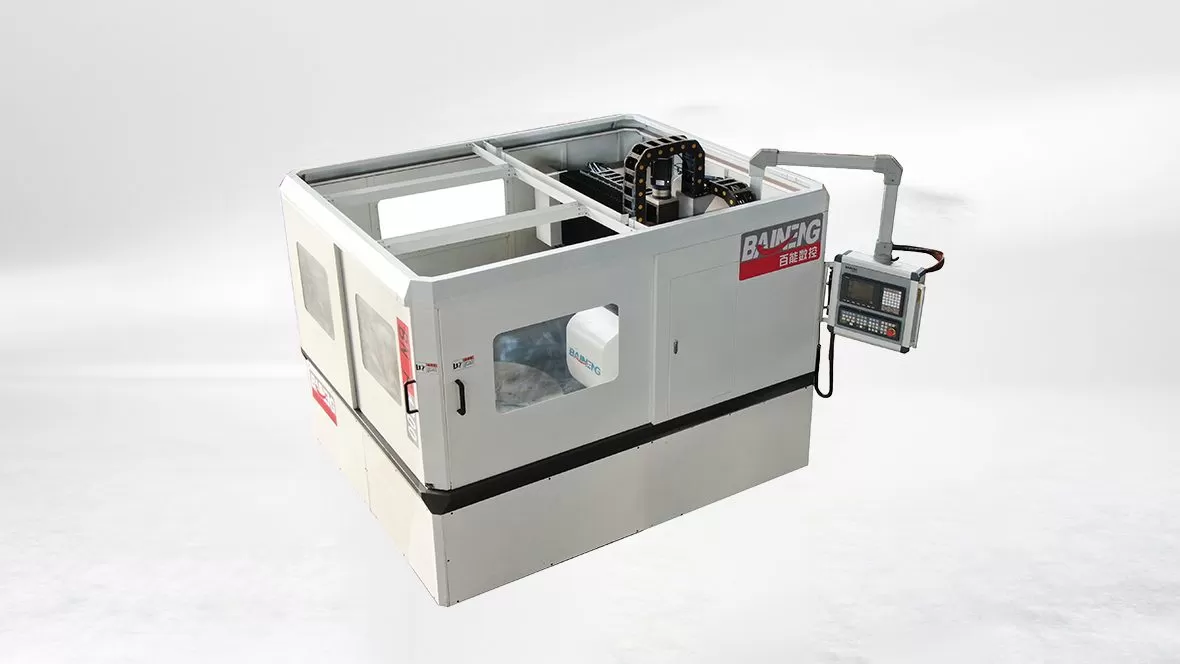
Even the highest quality glass carving tools will fail prematurely if operated on unstable machinery. Rigidity is the foundational requirement for CNC glass machining centers. When processing heavy monolithic glass panels, the machine frame must absorb low-frequency vibrations generated by high-speed grinding.
BAINENG CNC addresses this by utilizing heavy-duty cast-iron base structures and precision-ground linear guideways. This level of mechanical stability ensures that the tool path remains perfectly true, preventing erratic lateral forces on the glass carving tools. Additionally, high-precision spindle systems equipped with dynamic balancing mechanisms keep runout values below 0.003 mm. Minimizing runout ensures that each diamond particle embedded in the tool shares the mechanical load equally, preventing premature wear spots and extending overall tool life.
Coolant delivery design is another factor where machine engineering supports tooling efficiency. Standard external spray nozzles often fail to penetrate the boundary layer of air surrounding a tool rotating at 10,000 RPM. Integrating through-spindle cooling channels allows the coolant to flow directly through the core of the tool, emerging precisely at the contact point. This setup flushes away glass swarf before it can accumulate and recut, which is a major contributor to abrasive tool wear.
Post-Carving Polishing and Quality Management
Achieving a high-end, optical-grade finish within a carved groove requires a multi-stage process. Once the rough engraving tool has established the physical geometry of the channel, the surface will exhibit a translucent, frosted texture characterized by minor micro-fractures. For applications such as high-end decorative mirrors or shower screens, this groove must be polished to complete transparency.
This transition is completed by deploying specialized polishing wheels. These wheels utilize fine cerium oxide or polyurethane formulations. During this finishing pass, the spindle pressure is carefully regulated, as excessive downward force can distort the polished profile or create localized hot spots that ruin the glass clarity. Keeping surface roughness (Ra) values below 0.2 micrometers is standard for premium B2B deliveries, and achieving this consistently requires both stable machinery control and uniform tool wear characteristics.
Regular tool maintenance, including dressing the diamond surfaces with silicon carbide dressing sticks, helps restore the sharpness of metal-bond tools by removing glazed metal layers and exposing fresh diamond facets. Implementing a systematic tool wear tracking protocol within the CNC control software ensures that tools are dressed or replaced before they reach critical wear thresholds, preventing unscheduled production halts and material scrap.
Consultation and Custom Technical Solutions
Selecting appropriate tooling configurations depends on glass thickness, chemical composition (e.g., soda-lime vs. borosilicate), and desired production cycle times. Standard catalog tooling does not always satisfy the requirements of high-volume architectural or industrial glass processing lines.
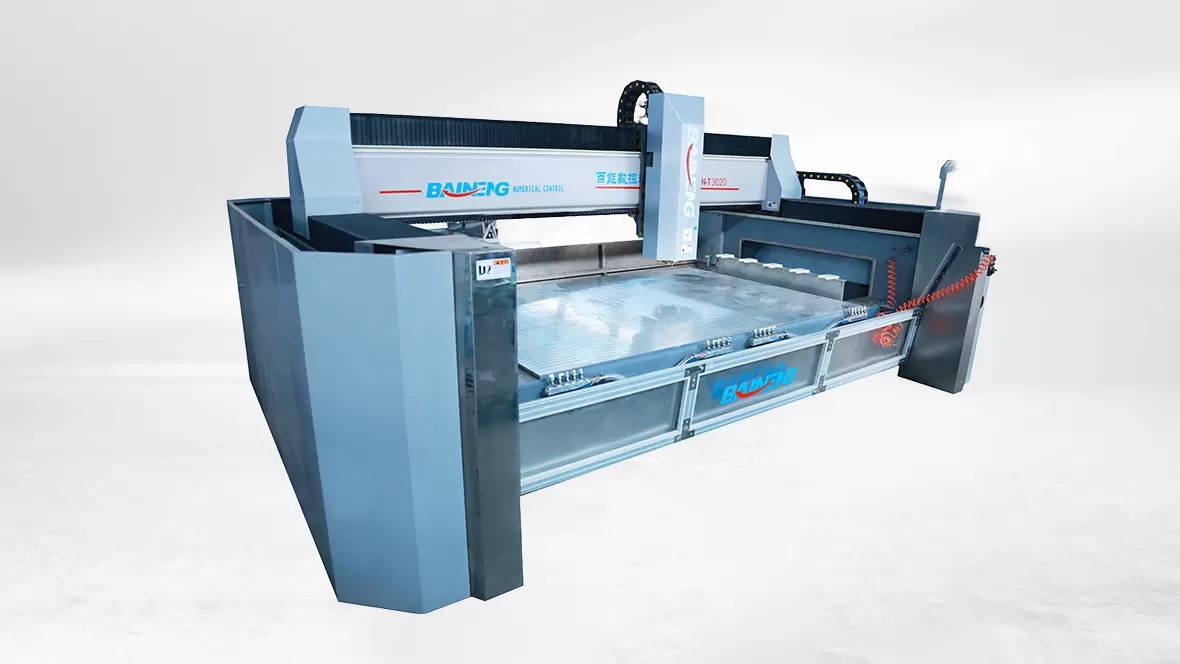
BAINENG CNC provides comprehensive technical support and customized machinery integration to help B2B clients streamline their production lines. If you are experiencing high rejection rates due to edge chipping, premature tool wear, or surface finish inconsistencies, our engineering team can analyze your specific parameters to formulate a balanced solution. Contact our sales department to submit your production specifications, material samples, and drawing files for a detailed engineering evaluation.
Frequently Asked Questions
Q1: Why are my glass carving tools wearing down much faster on some
glass types compared to others?
A1: Glass composition affects
machinability. For instance, borosilicate or chemically strengthened glass
exhibits higher hardness and thermal resistance than standard soda-lime glass.
This demands harder metal-bond diamond tools and adjusted feed rates to prevent
rapid wear. Additionally, using tools designed for soft decorative engraving on
hard, structural glass will accelerate bond degradation.
Q2: How do I eliminate the white, frosted residue left inside the
carved grooves?
A2: The frosted appearance is the natural result of
mechanical micro-fracturing from rough grinding. To achieve a crystal-clear
finish, you must perform subsequent polishing passes using resin-bond tools
followed by synthetic polishing wheels impregnated with cerium oxide. Ensure
adequate coolant flow during this phase to wash away fine glass particles.
Q3: Can I run water-soluble oil coolants with glass carving tools on
BAINENG CNC machines?
A3: Yes. Water-soluble cooling fluids are
recommended because they offer superior lubrication and heat dissipation
compared to plain water. They also help prevent rust on the machine components
and spindle assemblies. It is important to maintain the correct oil-to-water
concentration ratio as specified by the manufacturer.
Q4: What is the main cause of the tool vibrating during the middle of
an engraving cycle?
A4: Vibration, or chatter, is typically caused
by three main factors: spindle runout, incorrect tool balancing, or excessively
high feed rates. If the feed rate is too high for the spindle speed, the tool
will bounce off the glass surface rather than grind smoothly. Check the tool
holder alignment and ensure the spindle bearings are within nominal wear
tolerances.
Q5: How often should I dress a metal-bond diamond glass carving
tool?
A5: The dressing frequency depends on the diamond
concentration and the feed rate. If you observe a sudden drop in cutting speed,
increased spindle load, or minor burn marks on the glass, the tool is likely
glazed. Dressing the tool with a medium-grit aluminum oxide or silicon carbide
stick for a few seconds will strip away the worn metal layer and expose fresh
diamond grits.