
 FAQs
FAQs Factory Tour



Industrial glass fabrication requires precise surface scoring, predictable breakouts, and minimal raw material waste. Traditional manual cutting methods or legacy semi-automatic scoring tables often introduce edge micro-fissures, inconsistent score depths, and excess scrap rates. These inefficiencies directly impair downstream operations, including edge grinding, tempering, and laminating.
To overcome these processing bottlenecks, implementing automated glass cutting technology addresses both mechanical accuracy and production throughput. By pairing high-speed CNC control with dynamic pressure regulation and smart layout software, automated systems deliver repeatable, clean score lines across float, low-E, coated, and laminated glass substrates. Processing machinery developed by BAINENG CNC incorporates these advanced operational capabilities to maintain strict dimensional tolerances in demanding factory environments.
The Physics of Glass Scoring and Edge Quality
Glass does not cut in the way metals or polymers do through mechanical shearing or chip removal. Instead, glass processing relies on controlled crack propagation. A specialized cutting wheel—typically made from micro-grain tungsten carbide or polycrystalline diamond (PCD)—is driven across the glass surface under precise pneumatic or electromagnetic pressure. This action creates a controlled vertical median crack while minimizing lateral micro-cracks.
Excessive force generates severe lateral chips and micro-fractures along the score line. These defects require excessive edge grinding later and significantly increase the risk of glass breakage inside tempering ovens. Conversely, insufficient scoring pressure fails to drive the vertical crack deep enough into the glass matrix, resulting in irregular breakout edges and severe glass loss. Advanced machinery maintains real-time closed-loop pressure control, adjusting wheel force dynamically based on glass thickness, surface coating type, and bridge movement speed.
Scoring oil selection and delivery play an equally key role in this mechanical process. Evaporative or synthetic scoring oils lower surface tension, lubricate the cutting wheel axle, and prevent micro-fissures from re-closing or "healing" prior to breakout. Automated delivery systems synchronize oil flow directly with wheel movement, ensuring zero dry-scoring while preventing oil contamination on soft-coat low-E surfaces.
How Automated Glass Cutting Systems Transform Yield and Edge Quality
Moving from manual layout to full automation shifts the focus of a plant from labor reliance to system repeatability. Modern automated glass cutting machinery delivers measurable improvements across several core operating parameters:
Optimal Sheet Yield via Dynamic Nesting: Real-time linear and freeform optimization algorithms compute complex cut plans in seconds. By nesting varied customer orders onto jumbo glass sheets (such as standard 3300mm x 6000mm sizes), raw material scrap rates consistently drop below 8%.
Consistent Score Depth Across Varying Thicknesses: Automated tool heads automatically adjust tool angle, cutting speed, and downward wheel pressure based on recipe parameters stored for glass thicknesses ranging from 2mm up to 19mm.
Edge Protection for Coated Low-E Glass: Integrated mechanical or laser edge-deletion heads scrub soft metallic coatings off low-E sheets along the cut path before scoring occurs, preventing perimeter oxidation and sealant failure in double- or triple-glazed insulating glass units (IGUs).
High-Speed Axis Acceleration: Driven by rack-and-pinion or linear motor systems, cutting bridges achieve speeds exceeding 160 meters per minute with acceleration profiles that reduce point-to-point cycle times.
System Architecture and Machine Mechanical Engineering
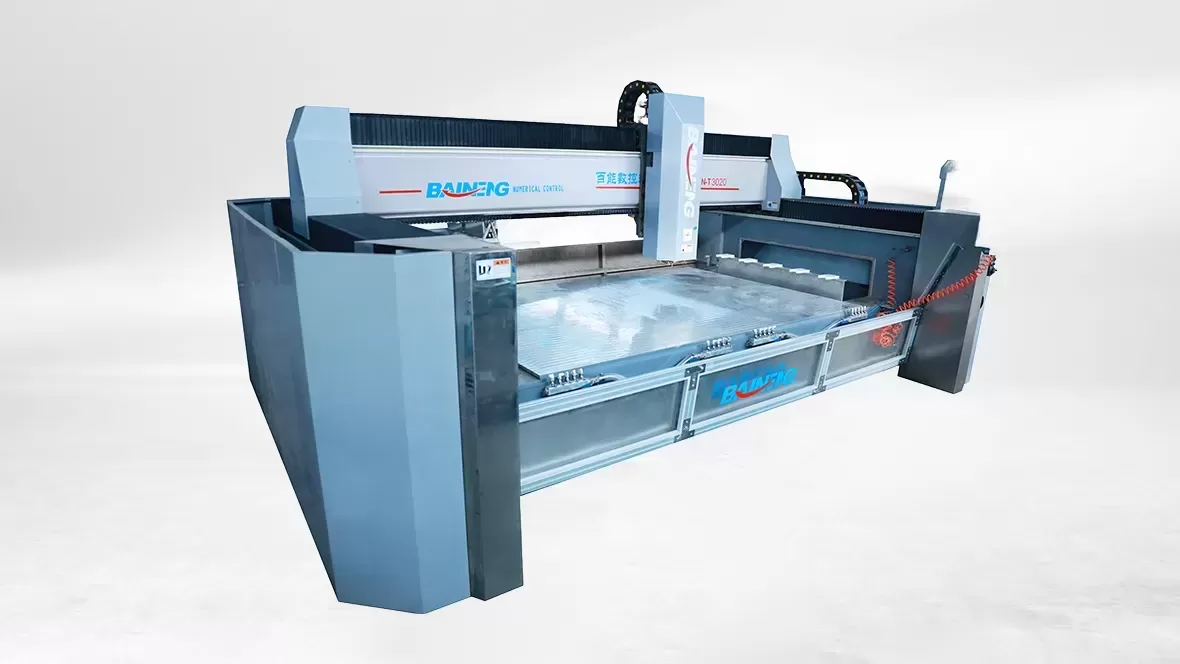
A robust cutting bridge forms the foundation of any reliable automated system. Structural stability determines whether a scoring head can hold tight tolerances over years of continuous multi-shift operations. Heavy-duty structural steel frames undergo thermal stress relief treatment to prevent thermal expansion distortion and frame warping under heavy load conditions.
The mechanical driving components utilized in equipment designed by BAINENG CNC prioritize position repeatability and smooth motion dynamics. Dual-drive gantry systems prevent bridge racking, while absolute optical encoders continuously feed position data back to the central controller. This eliminates homing sequences after power cycles and maintains scoring accuracy within +/- 0.15 mm across large-format glass surfaces.
Below the cutting bridge, the machine bed plays an equally active role in material handling. Air-flotation tables create a high-pressure air cushion beneath heavy raw sheets, allowing operators to position float glass with minimal manual effort and zero surface scratching. Integrated pneumatic breakout bars then rise vertically through the table surface to apply uniform tension beneath the scored lines, splitting giant sheets cleanly along X, Y, and Z axes.
Software Integration: From CAD Drawings to Automated Production
Mechanical precision remains ineffective without seamless digital workflows. Modern cutting equipment functions as an integrated node within the overall smart factory environment, interacting directly with enterprise resource planning (ERP) systems and glass optimization software suites.
The operational workflow follows a strict digital sequence:
Order Import: Batch orders comprising various rectangular, shaped, and drilled glass specs enter the cutting line control unit via standard DXF, XML, or native ERP formats.
Algorithm-Based Nesting: Optimization engines assess sheet inventory, glass directionality (for patterned or textured glass), edge grinding margins, and remnant sheet management to calculate optimal tool paths.
Sequence Generation: The control software automatically orders cuts to maintain structural integrity of the main sheet during movement, prioritizing transverse cuts before secondary longitudinal splits.
Remnant Sheet Tracking: Unused off-cut sections receive auto-generated barcode labels and are cataloged into automated storage racks for retrieval during future short-run orders, eliminating unnecessary material disposal.
Application Scenarios Across Glass Fabrication Sectors
Different industrial glass sectors place vastly distinct physical demands on cutting equipment. Understanding these nuances ensures machinery configuration aligns precisely with downstream output goals.
Architectural and Structural Glass Fabrication
Architectural glass processing relies heavily on automated glass cutting to handle jumbo float glass sheets destined for curtain walls, point-supported structural facades, and interior partitions. These lines must handle heavy glass thicknesses (8mm to 19mm) while performing precise edge deletion on soft-coat low-E coatings. System reliability directly influences overall plant productivity, as upstream cutting bottlenecks halt downstream edgers, washers, laminating autoclaves, and tempering furnaces.
Automotive and Specialty Vehicle Glass
Automotive applications require complex geometric profiles, tight radius turns, and rapid cycle times for windshields, sidelights, and sunroofs. Scoring heads must execute dynamic 3-axis continuous path motion without slowing down on curves. Automatic tool changers switch cutting wheels instantly based on changing glass contours, while optical cameras scan raw glass sheets to detect position variations or glass defects prior to scoring.
Appliance and Electronics Substrates
Thin glass processing (0.5mm to 3mm) for home appliances, display panels, and lighting fixtures requires ultra-fine scoring wheel profiles, low-pressure pneumatic actuators, and pristine dust-free air tables. Micro-chips along cut edges are unacceptable, as they lead to structural failure during downstream thermal processing or assembly.
Selecting machinery: Key Evaluation Metrics for Plant Managers
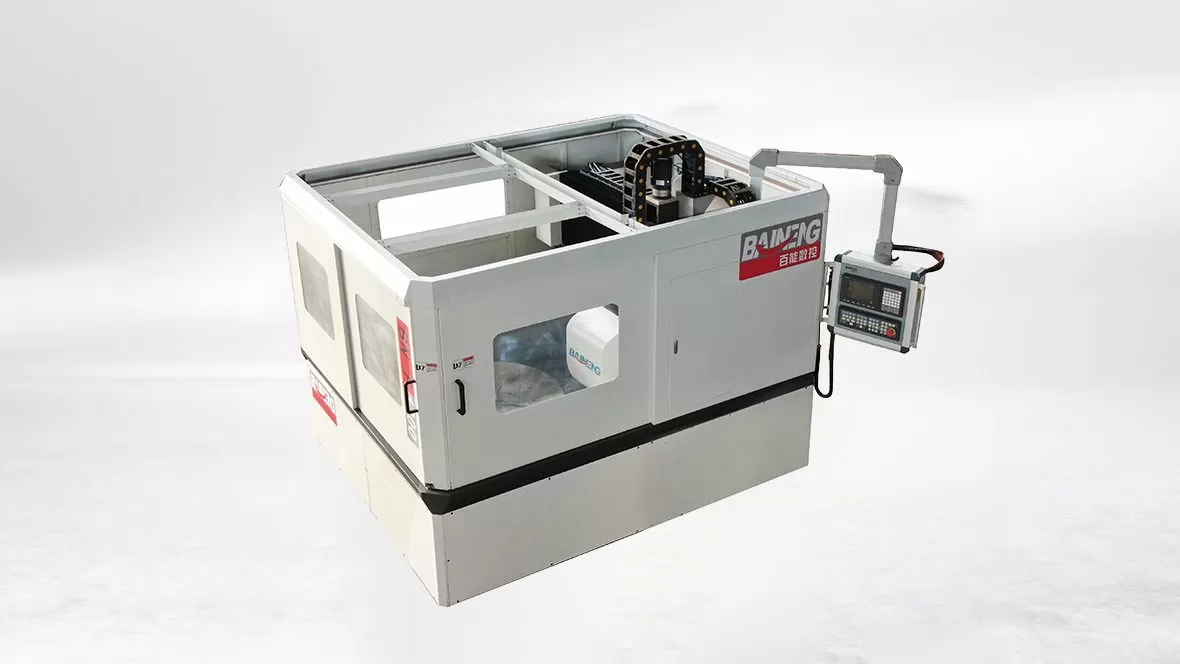
Evaluating automated glass cutting equipment requires looking beyond initial capital expenditure. Total cost of ownership, long-term serviceability, and spare parts availability dictate long-term return on investment.
When reviewing machine specifications, production leaders should focus on the following core factors:
Bridge Structure and Acceleration: Higher acceleration rates yield bigger productivity gains on complex, multi-cut nested sheets than high top speeds alone. Look for rigid bridge designs that eliminate high-frequency vibration during directional changes.
Pneumatic vs. Electromagnetic Scoring Heads: Electromagnetic voice-coil scoring heads offer faster response times and digital force feedback compared to traditional pneumatic cylinders, providing superior scoring control on textured or wavy glass surfaces.
Software Openness: Ensure machine software communicates bidirectionally via open industrial protocols (such as OPC UA) to allow direct data exchange with third-party software and automated factory machinery.
Drive Systems and Component Sourcing: Industrial-grade planetary gearboxes, hardened rack-and-pinion sets, and globally sourced electrical components simplify maintenance and minimize unexpected downtime. Solutions offered by BAINENG CNC integrate standardized industrial components to ensure reliable operation and simple maintenance across international markets.
Frequently Asked Questions
Q1: What is the main cause of poor breakout edges during glass
processing?
A1: Irregular breakout edges usually stem from incorrect
cutting wheel geometry, unbalanced scoring pressure, lack of appropriate scoring
oil, or worn cutter wheels. Excessive pressure causes lateral chipping, while
inadequate pressure prevents the vertical crack from propagating deep enough
into the glass sheet.
Q2: Can automated glass cutting machines handle soft-coat low-E glass
without damaging the surface?
A2: Yes. High-performance automated
systems feature integrated edge-deletion heads equipped with grinding wheels or
laser systems. These modules remove the low-E coating along the perimeter cut
paths before scoring, protecting the functional coating while preparing the
glass for insulated unit sealing.
Q3: How does dynamic software optimization reduce material
scrap?
A3: Nesting software evaluates entire batch order lists
simultaneously and arranges shapes on raw stock sheets to minimize unused
borders. It automatically incorporates off-cut remnant management, enabling
usable scrap portions to be returned to storage and re-cut for later orders.
Q4: What maintenance routines are required to maintain cutting
accuracy over time?
A4: Regular maintenance includes cleaning and
lubricating linear guide rails, inspecting rack-and-pinion teeth for debris,
clearing glass dust from air-flotation table nozzles, calibrating tool head
scoring pressure, and replacing worn cutting wheels according to monitored meter
counts.
Q5: What glass thickness range can an automated glass processing
table handle?
A5: Standard commercial automated tables typically
process float glass thicknesses from 2mm to 19mm. By adjusting recipe settings
inside the CNC software, the system automatically alters wheel force, wheel
angle, and bridge travel speed to suit the target material thickness.
Streamline Your Glass Fabrication Operation
Upgrading factory layout and scoring accuracy is vital for maintaining margins in modern glass fabrication. Investing in automated glass cutting equipment addresses chronic scrap losses, cuts labor costs, and supplies downstream machinery with consistent, high-quality score edges.
Engineers and technical sales representatives at BAINENG CNC assist manufacturing plants worldwide in configuring tailored cutting lines, integrated breaking tables, and specialized CNC glass processing machinery. Send an inquiry today to request customized line drawings, cycle time estimates, and system specs tailored to your current production goals.