
 FAQs
FAQs Factory Tour



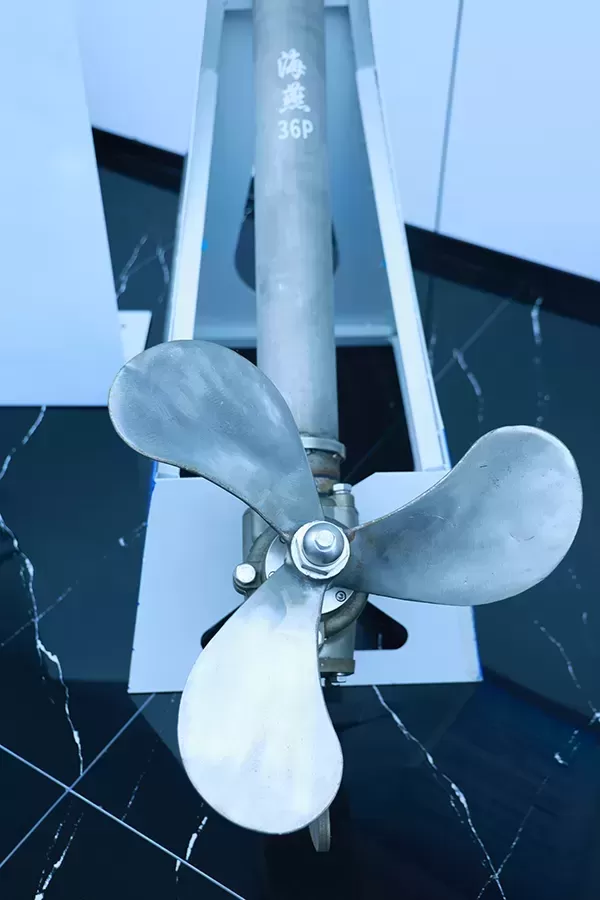
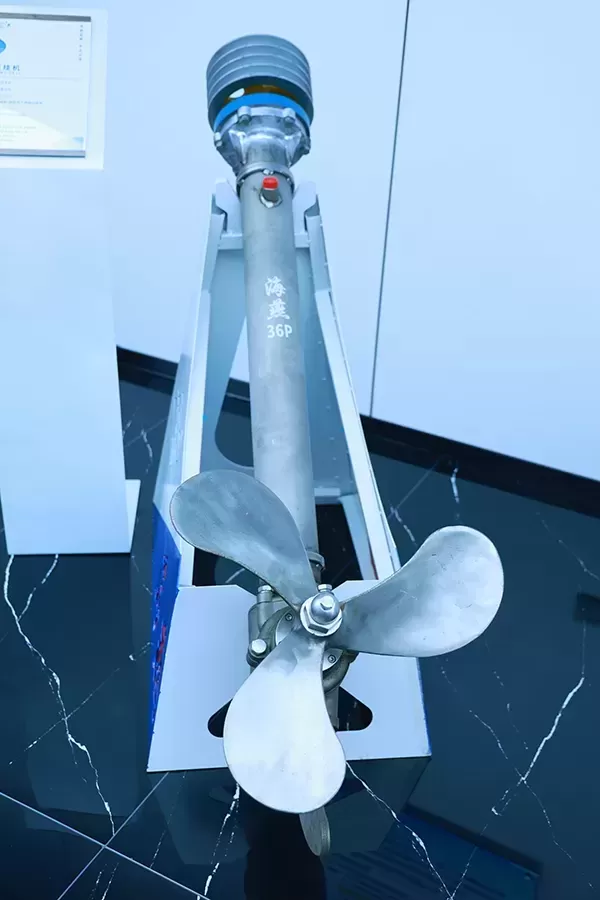
The marine transportation and offshore construction industries continuously seek improvements in vessel maneuverability and propulsion efficiency. Traditional propulsion configurations, which utilize a separate propeller and rudder, often struggle to meet the demanding operational standards of modern vessels working in confined waterways or dynamic offshore environments. A steerable propulsion system, commonly referred to as a Marine Rudder Propeller, or azimuth thruster, addresses these requirements by combining propulsion and steering into a single integrated unit. By allowing the thrust vector to rotate through a full 360-degree range, this system removes the need for conventional rudders and steering gear, providing precise directional control in any heading.
Manufacturing these complex propulsion units requires extreme mechanical precision and robust materials. Components must withstand high rotational forces, salt-water corrosion, and continuous cyclic loading over decades of service. BAINENG CNC supports global marine propulsion manufacturers by machining high-tolerance components, such as gear housings, drive shafts, and propeller hubs, ensuring long-term reliability in the most demanding marine environments.
Mechanical Architecture and Power Transmission
The drive line of a Marine Rudder Propeller relies on highly engineered gears and shafts to transmit rotational energy from the prime mover to the water. The choice of mechanical layout depends on the vessel's internal space constraints, weight distribution requirements, and power source.
Z-Drive Configuration
In a Z-drive arrangement, the power transmission path resembles the letter "Z". The horizontal output shaft of the diesel engine or electric motor connects to an upper input shaft within the thruster. A set of spiral bevel gears converts this horizontal rotation into vertical rotation down the input column. At the bottom of the steering column, inside the submerged pod, a second set of spiral bevel gears transmits the rotational force back to a horizontal propeller shaft. This design allows the prime mover to be placed horizontally inside the vessel's hull, which is highly practical for tugboats and medium-sized vessels with limited vertical machinery space.
L-Drive Configuration
An L-drive arrangement simplifies the gear train by removing the upper bevel gear set. In this setup, a vertical electric motor is mounted directly on top of the steering column, coupling directly to the vertical drive shaft. The power path travels straight down the column and undergoes a single right-angle transition at the bottom to drive the horizontal propeller shaft. This configuration reduces mechanical friction, noise, and vibration while improving overall transmission efficiency. It is frequently selected for vessels with diesel-electric power plants, such as offshore drilling platforms and advanced research vessels.
To support the rotational steering mechanism, the entire thruster column is supported by large-diameter slewing bearings. Hydraulic steering motors or electric drives rotate the lower pod assembly around its vertical axis. The alignment of these structural components is demanding, as even minor deviations under load can result in gear tooth misalignment and premature bearing wear.
Hydrodynamic Design: Blades, Hubs, and Nozzles
The external hydrodynamic components of a Marine Rudder Propeller are tailored to match the operational profile of the vessel. The design process balances the conflicting requirements of maximum thrust production, cavitation resistance, and overall structural weight.
Looking closely at the blade design, manufacturers must choose between fixed-pitch and controllable-pitch designs:
Fixed Pitch Propellers (FPP): These feature solid, single-piece castings where the blade angle is permanently set. They are highly robust, mechanically simple, and suited for vessels that operate at stable transit speeds or utilize variable-speed electric motors to regulate thrust.
Controllable Pitch Propellers (CPP): These incorporate a hollow hub housing an internal hydraulic mechanism. This mechanism adjusts the angle of the individual blades while the shaft rotates at a constant speed. This design allows for fast thrust reversals and high efficiency across a wide range of operational loads, making it ideal for salvage tugs and offshore supply vessels.
A parallel design factor is the integration of a nozzle, often referred to as a Kort nozzle, around the propeller. Shrouded propellers are highly effective for low-speed, high-thrust operations. The nozzle accelerates water flow through the propeller disc, increasing thrust by up to thirty percent at low speeds while reducing energy losses caused by blade-tip vortices. Conversely, open-wheel designs are preferred for higher-speed vessels where the drag of the nozzle would outweigh its thrust-producing benefits.
Manufacturing Challenges in Propulsion Machinery
From a manufacturing perspective, the production of Marine Rudder Propeller assemblies demands strict dimensional control and metallurgical integrity. The harsh operating environment leaves no room for manufacturing errors, as component failure at sea can lead to severe operational disruptions.
The machining of the lower gearbox housing is particularly demanding. This large, cast-steel structure must support the propeller shaft bearings and the lower bevel gear set. The bearing bores must be machined with sub-micron concentricity and parallelism. If the bores are misaligned, the bevel gears will not mesh uniformly, leading to localized stress concentrations and accelerated tooth wear. BAINENG CNC utilizes multi-axis CNC boring and milling centers to machine these massive housings, maintaining precise tolerances across multiple machining setups.
Another major challenge lies in the production of the propeller blades. Propeller geometry features complex, three-dimensional surfaces that vary in thickness, skew, and rake from the root to the tip. To prevent cavitation and dynamic unbalance, the finished blade profile must match the hydrodynamic design files with extreme accuracy. CNC multi-axis milling is used to carve the blades from cast nickel-aluminum-bronze alloys. This alloy offers excellent cavitation erosion resistance but is difficult to machine due to its high strength and tendency to work-harden. Precise tooling selection, rigid workholding, and controlled feed rates are required to prevent surface imperfections during the milling process.
Key Industry Pain Points and Engineered Solutions
Operators of vessels equipped with steerable thrusters encounter several common operational challenges. Addressing these concerns during the design and manufacturing phases is necessary to prolong equipment life and reduce dry-docking intervals.
Seawater Ingress and Lubricant Leakage
The shaft seals separating the submerged gearbox oil from the surrounding seawater operate under constant hydrostatic pressure. If seawater enters the gearbox, it degrades the lubrication properties of the oil, leading to rapid bearing failure. To mitigate this hazard, modern propulsion units utilize multi-barrier seal rings. These systems often feature a pressurized barrier fluid chamber located between the outer water seals and the inner oil seals. This arrangement ensures that any minor seal wear results in a controlled flow of biodegradable barrier fluid rather than water entering the gear chamber or oil leaking into the marine environment.
Vibration and Structural Fatigue
As propeller blades rotate past the hull or the support struts of the nozzle, they generate cyclic pressure pulses. These pulses can travel through the steering column, causing vibration throughout the vessel's hull structure. To address this issue, engineers design blades with high skew angles, which ensures that the leading edge of the blade does not pass the hull structural members all at once. Dynamic balancing of the entire rotor assembly, including the shaft and hub, is also required to eliminate rotational imbalances that could damage the internal bearings over time.
Gearbox Wear Under Shock Loads
Tugboats and ice-going vessels often subject their propulsion systems to sudden shock loads, such as when striking floating debris or ice blocks. These impacts travel back through the propeller shaft directly into the lower gear set. To prevent tooth breakage, the spiral bevel gears are manufactured from high-alloy steel forgings that undergo precision heat treatment, such as carburizing and gas nitriding. This process creates a hard, wear-resistant outer skin while maintaining a tough, ductile core capable of absorbing sudden impact energy without cracking.
Operational Applications and Vessel Integration
The operational profile of a vessel dictates how the Marine Rudder Propeller is integrated into the ship's control systems and structural design.
| Vessel Type | Typical Thruster Configuration | Primary Operational Benefit |
|---|---|---|
| Harbor and Escort Tugs | Twin Z-drive units, often shrouded with nozzles | High bollard pull and rapid 360-degree vectoring for maneuvering large ships. |
| Offshore Support Vessels (OSV) | Dual L-drive or Z-drive units integrated with Dynamic Positioning | Station-keeping accuracy near offshore platforms under wind and current forces. |
| Inland Cargo Barges | Single or dual compact Z-drives with shallow draft profiles | Maneuvering through narrow canal locks and shallow river bends without tug assistance. |
| Research Vessels | Retractable or underwater-mountable L-drive units | Low acoustic signature and minimal hull vibration during sensitive marine surveys. |
On offshore support vessels, the propulsion units are closely integrated with the ship's computerized Dynamic Positioning (DP) system. The DP system constantly calculates the environmental forces acting on the hull and automatically adjusts the angle and rotational speed of each thruster to maintain the vessel's position within a sub-meter tolerance. This application requires highly responsive steering motors and rapid variable-speed control of the propeller shafts, placing continuous demands on the internal mechanical linkages.
Engineering Standards and Quality Inspection
All propulsion machinery must comply with the stringent rules of international classification societies such as DNV, ABS, Lloyd's Register, or Bureau Veritas. These organizations establish standards for material traceability, design safety factors, and manufacturing quality control.
During the manufacturing process at BAINENG CNC, multiple inspection steps are carried out to verify compliance:
Non-Destructive Testing (NDT): Ultrasonic testing and magnetic particle inspections are performed on gear blanks, shafts, and welds to confirm the absence of internal voids, inclusions, or surface micro-cracks.
Coordinate Metrology: Large-scale Coordinate Measuring Machines (CMM) verify the geometric tolerances of the gear housing and shaft bearing journals, ensuring that the final assemblies align within specified tolerances.
Dynamic Balancing: The assembled propeller is mounted on a balancing rig to measure and correct any mass eccentricity, preventing vibrations that could cause premature seal and bearing wear.
Once the components are machined and verified, they undergo trial assemblies and pressure testing to ensure that all internal oil passages are clear and that the casing is completely oil-tight before final installation in the vessel's hull.
Frequently Asked Questions
Q1: What is the main difference between a Z-drive and an L-drive Marine Rudder Propeller?
A1: The primary difference lies in the power transmission path and gear arrangement. A Z-drive uses two sets of bevel gears to transmit power from a horizontal engine shaft, through a vertical column, to the horizontal propeller shaft. An L-drive uses a vertical motor mounted directly on top of the column, which eliminates the upper gear set, simplifying the transmission and reducing energy losses.
Q2: Why are nozzles used on some azimuth thrusters but not on others?
A2: Nozzles are utilized on low-speed, high-thrust vessels like tugs and pushboats because they accelerate water flow through the propeller, increasing thrust at low speeds. However, at higher transit speeds, the physical drag of the nozzle outweighs its thrust benefits, which is why faster vessels use open-wheel configurations.
Q3: How are the shaft seals on a steerable thruster protected from marine debris?
A3: Propeller shafts are fitted with heavy-duty rope guards and integrated net cutters. These mechanical components cut away discarded fishing lines, nets, and weeds before they can wrap around the rotating shaft and damage the delicate rubber lip seals.
Q4: What material is best suited for propeller blades in steering propulsion systems?
A4: Nickel-Aluminum-Bronze (NAB) is the standard alloy for most commercial propeller blades. It offers an excellent balance of high tensile strength, resistance to fatigue, and durability against cavitation erosion and galvanic corrosion in saltwater.
Q5: How does dynamic positioning impact the wear rate of steering gears?
A5: Dynamic positioning requires constant, small steering corrections to counter wind and wave action. This continuous rotation of the thruster column increases the wear rate on the slewing bearings and steering gears compared to vessels that run in a straight line during long ocean transits, making high-precision machining of these load-bearing components necessary.
Inquiry and Custom Manufacturing Collaboration
Sourcing reliable components for Marine Rudder Propeller assemblies requires a manufacturing partner with deep expertise in heavy-duty machining and strict quality control. BAINENG CNC provides high-precision CNC machining services tailored for demanding marine applications, including gear housings, propeller shafts, and complex structural components. If you are developing new vessel propulsion systems or need reliable replacement parts manufactured to tight tolerances, submit your engineering drawings and material requirements to our technical team to receive a detailed manufacturing assessment and quotation.