
 FAQs
FAQs Factory Tour



Flat glass manufacturing has progressed from standardized rectangular panels to highly complex geometries. Architects, automotive designers, and appliance manufacturers continuously demand custom shapes with intricate edge profiles. Producing these components with consistent quality requires specialized machinery capable of tracking complex profiles while maintaining constant pressure and feed rates. The glass shape edge grinding machine represents a primary solution to these processing challenges, transitioning fabricators away from manual inconsistencies toward automated repeatability.
For industrial glass processors, selecting the correct equipment involves understanding the mechanical, software, and dynamic forces at play during the grinding process. This article explores the operational difficulties of irregular glass shaping, the engineering structures that address these challenges, and how modern machinery helps manufacturers maintain tight tolerances across diverse glass types.
Common Bottlenecks in Irregular Glass Edge Processing
Processing non-rectangular glass presents unique mechanical challenges compared to straight-line edging. When working with curves, internal radiuses, and multi-angle corners, standard continuous-feed edging machines cannot be used. Fabricators face several distinct production hurdles when managing these complex shapes.
Variable Surface Velocity and Edge Burning
As the grinding wheel travels along a curved glass path, the contact area between the tool and the glass edge changes constantly. On tight external curves, the contact area is minimal, while on internal curves, the contact area increases significantly. This variation affects the heat generated during the process. Without precise speed compensation, areas of high friction experience thermal buildup, leading to edge burning, micro-cracks, and localized structural failure during subsequent tempering processes.
Micro-Fracturing and Mechanical Stress
Glass is a brittle material with low tensile strength. During grinding, the mechanical forces applied by the diamond wheel must be carefully balanced. If the machine dwells too long on a corner or applies excessive pressure along a sharp radius, the shock waves propagate into the glass body. This results in edge chipping or micro-fracturing. These defects are not always visible immediately but often manifest as breakage during the high-temperature tempering stage, leading to costly waste and production delays.
High Labor Dependency and Inconsistent Tolerances
Manual shape grinding relies heavily on skilled operators who guide the glass templates by hand or use semi-automatic machines. This approach introduces human error, leading to variations from batch to batch. Achieving consistent tolerances within ±0.2mm is nearly impossible over high-volume production runs using manual methods. Finding and retaining skilled operators capable of maintaining high-precision output has become a significant challenge for modern glass fabrication plants.
Structural and Mechanical Architecture of the Machine
To overcome these challenges, a high-performance glass shape edge grinding machine utilizes advanced mechanical construction and closed-loop control systems. These components work in unison to maintain a stable, precise relationship between the grinding tool and the glass edge.
Multi-Axis CNC Motion Control
Modern processing systems utilize multi-axis interpolation to coordinate the movement of the glass and the grinding head. Typically, these systems feature three to four synchronized axes:
X and Y Axes: Determine the horizontal positioning of the grinding head or the glass worktable, defining the geometric path.
Z Axis: Controls the vertical height, allowing the machine to manage tool changes, multi-layer wheels, or varying glass elevations.
C Axis (Rotational): Rotates the grinding spindle so that the face of the grinding wheel always remains perpendicular to the tangent of the glass edge curve. This constant alignment is necessary for maintaining uniform profile geometry.
Rigid Machine Base and Vibration Damping
The high-speed rotation of diamond and polishing wheels generates significant harmonic vibration. If these vibrations are allowed to transfer to the grinding interface, they cause ripples on the finished glass edge, known as chatter marks. High-quality systems, such as those manufactured by BAINENG CNC, utilize heavy, cast-iron machine beds that undergo thermal stress-relief processing. This rigid frame absorbs vibration, ensuring the spindle remains completely stable even during high-feed-rate operations.
Closed-Loop Spindle Feedback and Tool Wear Compensation
As diamond particles on the grinding wheel wear down, the physical diameter of the tool decreases. If the machine continues to follow the original CAD path, the finished glass size will gradually increase. Advanced grinding machines utilize automatic tool measurement sensors. The system periodically checks the tool profile and adjusts the CNC coordinates to compensate for wear, ensuring that the first and the thousandth glass sheet share the exact same dimensions.
Diverse Application Scenarios across Key Industries
The capability to shape and polish glass with high repeatability is utilized across multiple industrial sectors, each with its own set of standards and requirements.
Architectural and Interior Design Glass
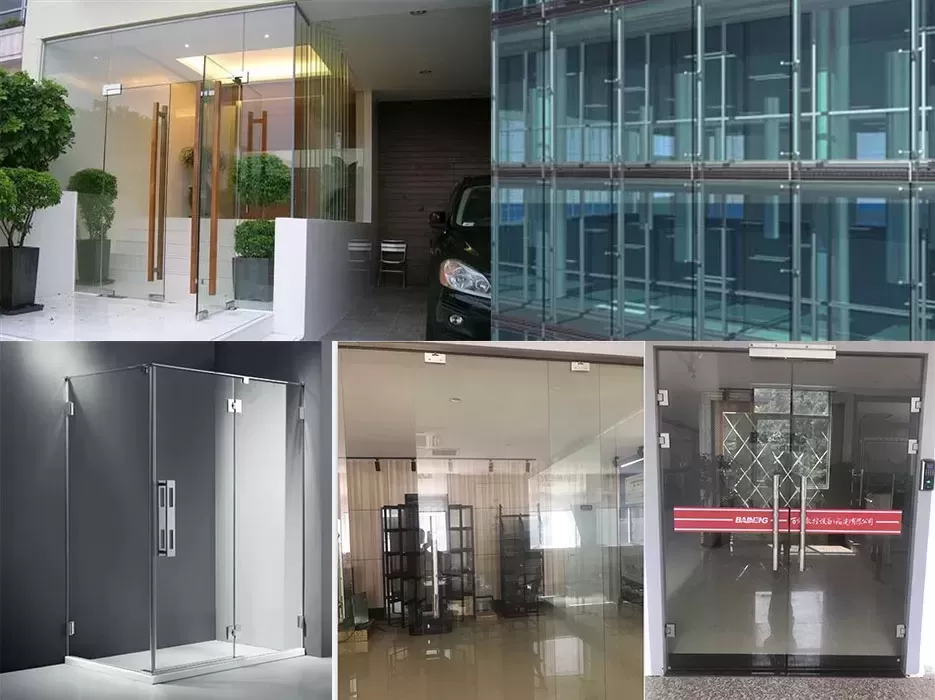
Architectural specifications frequently require shaped glass for frameless shower doors, stair balustrades, glass table tops, and decorative mirrors. These applications require high-quality polished flat edges or bevels. Because these edges remain visible after installation, cosmetic defects are unacceptable. The ability to grind and polish complex contours in a single setup reduces handling risk and ensures a clean, reflective finish.
Automotive and Marine Glazing
Automotive side windows, sunroofs, and marine windshields feature complex curved profiles with tight dimensional tolerances. These parts must fit perfectly into metal frames or polyurethane seals to prevent wind noise and water leakage. Processing these components requires highly accurate grinding to prepare the edges for the subsequent bending and tempering processes, where edge strength is vital to resist thermal shock.
Appliance and Electronics Glass
Oven door panels, microwave fronts, and touchscreen display panels require precise shape grinding, often with internal cutouts and chamfered edges. These small, highly detailed parts demand precise corner processing and smooth transitions to prevent structural failure under thermal load or daily mechanical impact.
The BAINENG CNC Engineering Methodology
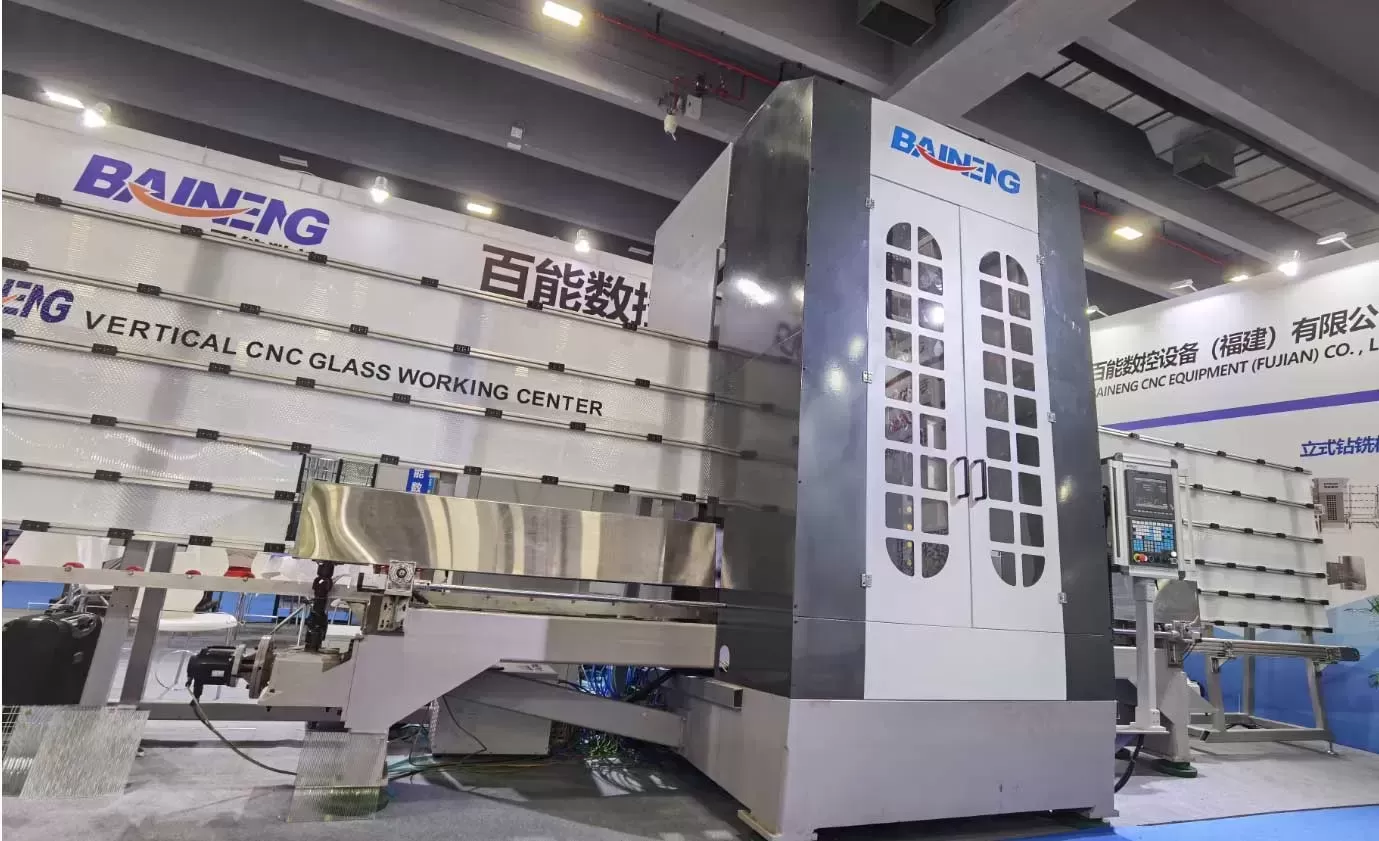
When addressing the needs of high-volume glass fabricators, BAINENG CNC focuses on structural durability and operational simplicity. The design of our glass shape edge grinding machine lines prioritizes long-term operational accuracy under continuous wet working conditions.
Our engineering approach integrates several key design choices:
Corrosion Resistance: Given the aggressive environment of glass slurry and cooling water, crucial structural elements are constructed from stainless steel or treated with anti-corrosion coatings.
Precision Linear Guides and Ball Screws: High-grade motion components are shielded with protective bellows and served by automated lubrication systems to prevent glass powder contamination.
Intuitive CAD/CAM Integration: Operators do not need to write complex G-code. The machine software imports standard DXF drawings, calculates the tool path, automatically assigns grinding speeds for corners versus straight edges, and simulates the process to avoid collisions.
This systematic design process minimizes the training time for new operators, allowing production lines to reach target output speeds quickly after installation.
Key Metrics for Sourcing Shaped Glass Grinding Equipment
B2B procurement teams must evaluate several core parameters to ensure the selected machinery fits their production requirements:
Maximum and Minimum Processing Dimensions: Ensure the machine bed can support your largest architectural panels while securely holding small appliance glass panels.
Spindle Configuration and Power: Higher spindle horsepower allows for faster stock removal on thick glass laminates, while variable speed control is necessary for transitioning between rough grinding and fine cerium oxide polishing.
Vacuum Holding System: Shaped glass is typically held in place by vacuum cups on a worktable. The system must provide sufficient suction to resist the lateral grinding forces, particularly on thick or heavily contoured glass.
Water Filtration Compatibility: Glass grinding generates fine, abrasive dust that can damage machinery and scratch glass surfaces if recirculated. The machine must integrate seamlessly with centralized or localized water filtration systems.
Evaluating these metrics ensures that the selected investment will deliver the necessary throughput, edge quality, and operational lifespan for your manufacturing facility.
Align Your Production Capabilities with Precision Technology
Selecting the right machinery is a foundational step in improving your production efficiency and expanding your product offering. To receive a detailed evaluation of how our systems can align with your specific workshop capacity and glass processing requirements, please contact BAINENG CNC. Our engineering team provides custom layout planning, detailed equipment specifications, and cycle-time analysis based on your typical glass geometries.
Frequently Asked Questions
Q1: What types of edge profiles can a glass shape edge grinding machine produce?
A1: These machines can produce a wide variety of edge profiles, including flat edges with arris, pencil edges (C-edges), bevels of varying angles, OG edges, and custom profiles. The profile is determined by the shape of the diamond wheel installed on the spindle, with the machine's multi-axis system ensuring the tool profile is consistently transferred to the glass shape.
Q2: How does the machine prevent glass slippage during heavy grinding operations?
A2: The glass is held securely on a dynamic worktable using high-pressure vacuum suction cups. These cups can be positioned manually or automatically based on the CAD drawing of the glass. For larger or heavier glass pieces, auxiliary mechanical clamps or specialized suction cup materials are used to resist the high lateral forces applied by the grinding wheel.
Q3: Can these machines process laminated glass and multi-layer structural glass?
A3: Yes, they can process laminated glass. However, this requires specific tool selection and speed adjustments. The grinding process must manage both the hard glass layers and the softer interlayer polymer (such as PVB or SentryGlas) without causing delamination or tool gumming. The variable speed spindle and precise feed rate control are necessary for this application.
Q4: How often do the grinding and polishing wheels need to be replaced?
A4: Wheel lifespan depends on several factors, including the glass thickness, the amount of material being removed, the feed speed, and the quality of the cooling water. Typically, rough diamond wheels can last for thousands of meters of edge processing, while fine polishing wheels require more frequent replacement or redressing. Modern systems track total processed linear meters to alert operators when tool inspections are required.
Q5: What are the installation and floor requirements for this class of machinery?
A5: Due to the weight of the machine and the dynamic forces during operation, a stable, reinforced concrete foundation is required to prevent settling and vibration transmission. Additionally, the installation area must be equipped with dedicated clean water supply lines, a proper drainage or water filtration system connection, and a stable three-phase power supply with voltage stabilization to protect the CNC control electronics.