
 FAQs
FAQs Factory Tour



Industrial glass fabrication requires a balance between mechanical force and brittle material characteristics. Historically, shaping, grooving, and detailing glass surfaces relied on manual labor or basic semi-automated machinery, both of which carried high rates of material breakage and dimensional variance. The introduction of the CNC glass engraving machine has altered this manufacturing sector by providing automated, multi-axis control over raw glass panels. These systems allow factories to execute detailed designs with repeatable accuracy, which is a major requirement for modern industrial supply chains.
Equipment manufactured by BAINENG CNC represents this shift toward high-rigidity, automated systems. By incorporating advanced control interfaces with robust mechanical frames, these machines isolate the glass panel from structural vibrations while delivering the torque required for diamond-tool engraving. Achieving this level of stability requires a deep integration of structural engineering, fluid dynamics, and precise motion control. Understanding these engineering elements is important for production managers who need to improve throughput while maintaining tight quality tolerances.
Structural Foundations of the CNC Glass Engraving Machine
The mechanical performance of any CNC glass engraving machine depends fundamentally on its structural base. Unlike metals or plastics, glass does not deform plastically before failure; it fractures immediately under excessive localized tensile stress. Therefore, any vibration within the machine tool, spindle, or worktable will cause micro-chipping along the cut path. To prevent this vibration, the machine bed must feature heavy, stress-relieved steel weldments or cast iron frames. These materials absorb high-frequency harmonics generated by the high-speed rotation of the spindle during heavy grinding operations.
Motion along the X, Y, and Z axes is typically driven by high-precision ball screws paired with linear guide rails. Preloaded ball screws are used to eliminate backlash, ensuring that the tool path coordinates match the design file exactly. For larger format machines, helical rack-and-pinion systems driven by AC servo motors provide the necessary torque and speed while maintaining linear positioning accuracy within micrometers. These mechanical drive systems are protected by sealed bellows to prevent abrasive glass dust from contaminating the bearing surfaces.
Spindle Mechanics and Dynamic Torque Demands
The spindle is the functional core of the engraving system. It must deliver continuous rotational force across a wide range of operational speeds, typically from 6,000 to 24,000 RPM. Because glass grinding involves constant contact with highly abrasive material, the spindle bearings must handle both radial and axial loads. Precision angular contact ceramic bearings are often utilized due to their thermal stability and low friction coefficients at elevated speeds.
Water-cooled spindle jackets are standard in these configurations to dissipate thermal energy. If heat is allowed to migrate from the spindle motor to the shaft, thermal expansion can alter the Z-axis tool position, causing variable engraving depths across a single sheet of glass. Steady spindle speed under load is maintained through closed-loop vector control drives, which adjust the electrical frequency supplied to the spindle motor to compensate for variations in material resistance during deep grooving passes.
Fluid Dynamics and Coolant Filtration Systems
Engraving glass without liquid coolant is impossible due to the rapid accumulation of heat and the generation of hazardous silica dust. The coolant serves two primary functions: reducing the temperature at the tool-workpiece interface and flushing away glass fines. The delivery system must direct pressurized coolant precisely at the cutting point, often utilizing a combination of external nozzles and through-spindle coolant passages.
Handling the waste coolant is a major operational challenge. Glass dust is highly abrasive and will damage internal pumps, valves, and linear guides if recirculated. Consequently, a multi-stage filtration system is required. This setup typically includes:
Sedimentation Tanks: Large chambers where heavy glass particles settle out of the fluid through gravity.
Centrifugal Separators: Hydrocyclones that spin the fluid to separate fine glass dust from the water.
Paper Band Filters: Automated filtration rolls that catch microscopic particulates before the water is pumped back to the spindle.
Maintaining clean coolant extends tool life and prevents the redeposition of glass particles on the polished grooves, which can cause cosmetic scratches.
Operational Parameters for CNC Glass Engraving Machine Tooling
Tool selection and feed rates must be carefully balanced to prevent edge chipping. Diamond-impregnated or electroplated tools are required to abrade the glass surface. The selection of the diamond grit size depends on whether the operation is a rough material removal pass or a final finishing cut. Coarse grit wheels remove material quickly but leave a rough surface, while fine grit wheels produce a satin finish that can then be polished with specialized resin or felt wheels.
The relationship between feed rate, spindle speed, and depth of cut is governed by the following mechanical principles:
Material Feed Speed: Too high of a feed speed increases the lateral force on the tool, causing deflection and edge breakout. Too low of a feed speed causes tool glazing, where the diamond particles rub against the glass without cutting, generating excessive heat.
Step-Down Depth: Deep grooves must be machined in multiple sequential passes rather than a single heavy cut. This approach manages the mechanical load on the spindle and allows coolant to reach the bottom of the channel.
Tool Compensation: As the diamond particles wear down, the effective diameter of the tool decreases. The CNC controller must adjust the tool path coordinates based on feedback from automatic tool presetter sensors to maintain dimensional accuracy.
Tool Path Engineering and CAM Software Integration
Translating a digital drawing into a physical groove on a glass sheet requires precise CAD/CAM translation. The software must generate smooth, continuous tool paths that avoid sudden changes in direction. Sudden deceleration or acceleration along a path can lead to dwells, where the tool remains in one position for a fraction of a second too long, causing deep micro-cracks or localized heat spots.
Advanced control software uses constant velocity control algorithms to look ahead at upcoming G-code lines. The system adjusts axis acceleration profiles dynamically, ensuring the tool maintains a constant relative speed across complex curves. Additionally, lead-in and lead-out paths must be designed to gradually engage the tool with the glass edge, rather than plunging straight down, which often causes corner blowouts.
Industrial Applications of BAINENG CNC Systems
The versatility of the BAINENG CNC engraving platform makes it useful across several high-volume manufacturing sectors. Each application requires specific adjustments in tooling, rotational speeds, and structural support setups to accommodate different glass chemistry and thicknesses.
Architectural and Structural Glass
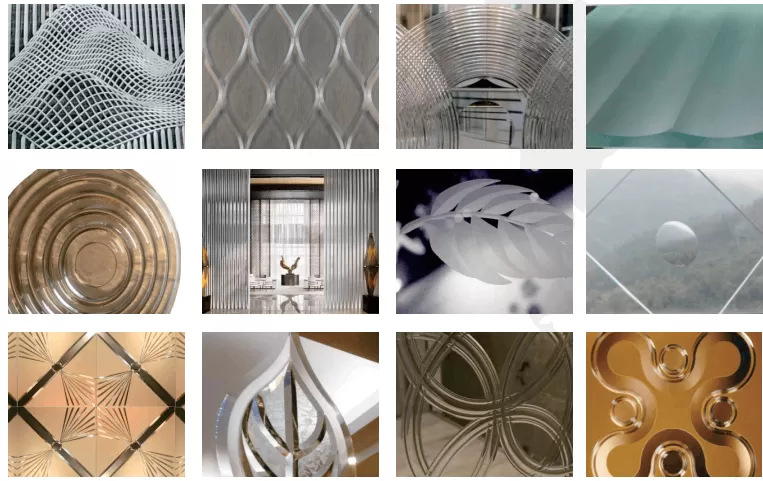
In architectural glass production, panels are thick, heavy, and require large-format processing areas. Common applications include engraving decorative patterns on office partitions, processing frameless shower doors, and cutting precise notches for mounting hardware. The machine must handle significant structural weight while maintaining high-precision alignment across spans of several meters.
Home Appliance and Electronics Integration
The manufacturing of oven doors, control panels, and induction cooktops relies on precise edge profiling and surface grooving. These components are made from borosilicate or ceramic glass, which are highly resistant to thermal changes but difficult to machine. The CNC glass engraving machine handles the precise machining of bevels, inner cutouts, and functional channels needed for touch sensors without introducing structural micro-fractures.
Furniture and Premium Decorative Mirrors
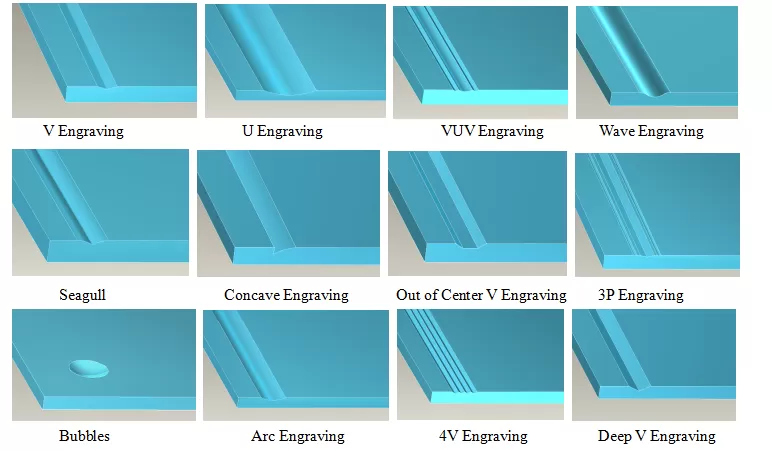
For high-end furniture, aesthetic appeal is directly tied to the polish of the engraved lines. Utilizing multi-tool sequences, the machinery grinds V-grooves, U-grooves, or custom decorative profiles, transitioning from diamond grinding to cerium oxide polishing wheels. This automated step ensures that the polished surfaces match the raw glass sheet's transparency and reflective quality.
Procuring Machinery for High-Yield Production Facilities
Industrial buyers must evaluate several factors when purchasing production machinery. The goal is to maximize throughput while minimizing downtime caused by maintenance or tooling failures. Key metrics for evaluation include duty cycle ratings, maximum load capacities, and the ease of accessing wear components for routine maintenance.
A reliable machine must integrate easily into existing factory layouts, accommodating automated loading and unloading systems if necessary. BAINENG CNC develops machinery designed for continuous operation in demanding environments, offering structural configurations that fit different factory footprints and output requirements. Discussing these specifications with factory engineers ensures that the selected machine configuration matches the intended material throughput and accuracy tolerances.
Submit an Inquiry for Custom Production Solutions
Selecting the appropriate machinery configuration requires analyzing your specific production variables, material types, and throughput targets. Our engineering team at BAINENG CNC is available to provide detailed consultations, mechanical layouts, and tooling suggestions tailored to your manufacturing facility. For more information, please submit an inquiry with your production requirements, glass dimensions, and average daily volumes, and one of our specialists will assist you with a detailed technical proposal.
Frequently Asked Questions
Q1: What types of glass can be processed on a CNC glass engraving machine?
A1: This machinery is capable of processing float glass, laminated glass, borosilicate glass, and ceramic glass. However, tempered glass cannot be engraved or machined. Any mechanical processing must be completed prior to the tempering process, as attempting to engrave tempered glass will cause the entire sheet to fracture due to stored internal stresses.
Q2: How does the system prevent glass panels from shifting during high-speed machining?
A2: The machine utilizes a high-capacity vacuum suction system integrated into the worktable. Vacuum pods can be positioned dynamically to match the dimensions of the glass sheet, providing strong holding force. This system prevents lateral movement caused by the cutting forces of the spindle without requiring mechanical clamps that could chip the glass edges.
Q3: What is the lifespan of the diamond tools used in glass engraving?
A3: Tool life depends on feed rates, spindle speed, coolant quality, and the depth of the cut. Coarser diamond wheels last longer, while fine polishing wheels wear down faster. Utilizing proper automatic tool calibration and maintaining clean, filtered coolant can extend tool life by preventing the buildup of abrasive glass residues on the tool surface.
Q4: Can a single CNC glass engraving machine perform both rough cutting and high-gloss polishing?
A4: Yes. By utilizing an automatic tool changer (ATC), the machine can hold multiple tools in its carousel. It begins with coarse diamond wheels for material removal, transitions to finer wheels for smoothing, and finishes with felt or resin wheels infused with polishing compounds to achieve a clear, high-gloss surface finish.
Q5: What are the main maintenance requirements for keeping these machines accurate?
A5: Daily maintenance involves cleaning glass dust from the guide rails and slides, checking the coolant filtration system, and verifying the level of the automatic lubrication system. Monthly checks should focus on the calibration of the Z-axis sensor, inspecting spindle bearing runout, and cleaning the vacuum pumps to ensure consistent holding force.