
 FAQs
FAQs Factory Tour



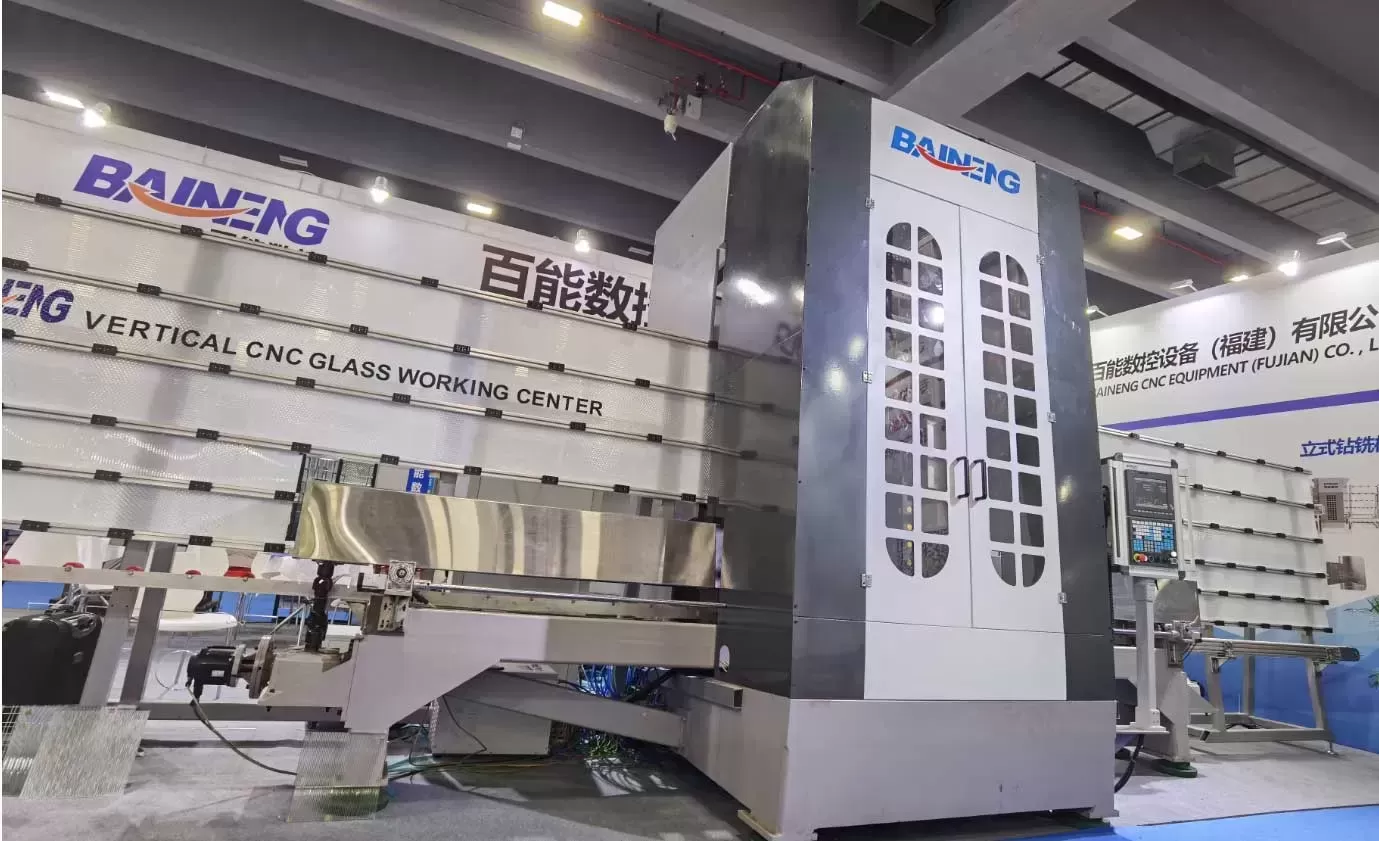
Industrial glass fabrication demands high precision, space efficiency, and reliable material handling. Traditional horizontal setups often require significant floor space and involve complex handling systems that increase the risk of glass damage. To address these limitations, many processing facilities are transitioning to a vertical glass working center. Developed to handle complex tasks such as drilling, milling, edging, and polishing in a single vertical setup, these machines alter how architectural and industrial glass is processed. BAINENG CNC designs these systems to support heavy glass sheets securely, reducing human intervention and improving overall output quality.
By shifting the processing plane from horizontal to vertical, manufacturers can address several mechanical and physical challenges inherent in glass fabrication. This structural shift alters how gravitational forces act on the workpiece, how coolant is managed, and how tools interact with the glass surface. Understanding these dynamics is key for glass processors aiming to refine their production lines and achieve consistent quality standards.
The Mechanical Advantages of Vertical Orientation
Processing glass vertically changes the physical forces exerted on the material. In horizontal systems, gravity causes large glass sheets to sag slightly in the middle, which can lead to micro-fractures during drilling or milling operations. A vertical glass working center supports the glass on a slightly tilted backrest, typically set at an angle of 6 to 8 degrees. This arrangement ensures that the weight of the sheet is distributed evenly across its lower edge and back surface, minimizing localized stress points.
Since the glass remains in an upright position, water drainage is natural and swift. Cooling water used during cutting and grinding processes flows downward immediately under gravity, carrying away glass particles. This rapid drainage prevents abrasive slurry from gathering on the surface, which minimizes the risk of scratching, particularly on delicate low-emissivity (Low-E) coatings. The dry side of the glass remains clean throughout the operation, reducing the post-processing washing requirements.
Another physical benefit is the ease of loading and unloading. Heavy glass sheets are easier to handle vertically using suction frames or overhead cranes. The risk of glass slippage or operator strain is lower when loading onto a vertical conveyor compared to lifting and positioning sheets flat onto a horizontal table. This mechanical setup supports safer working conditions and reduces material handling damage.
Multi-Functional Processing Capabilities in a Single Setup
A primary driver for adopting this technology is the integration of multiple production steps into a single workstation. Instead of moving glass sheets between separate drilling machines, milling tables, and edging lines, a vertical glass working center handles these tasks sequentially without the need to unload the material. This integration maintains the reference coordinate system, ensuring that all cuts, holes, and edge profiles are aligned.
Automatic Tool Changers: The system utilizes a rotary or linear tool magazine that houses different grinding wheels, drill bits, and polishing tools. The CNC controller manages tool swaps based on the programmed sequence, reducing idle time between different processing stages.
Dynamic Suction Cup Positioning: Vacuum suction cups along the backrest secure the glass sheet. The system can automatically adjust the position of these cups to clear paths for drilling or edge-grinding tools, preventing structural collisions and protecting the machine.
Dual-Spindle Configurations: Many configurations feature dual opposing spindles that drill from both sides of the glass simultaneously. This design prevents glass chipping when the drill bit exits the material, yielding clean holes suitable for structural installations.
By combining these steps, the overall cycle time for manufacturing products like frameless shower doors, glass balustrades, and structural facades is reduced. The elimination of intermediate transport steps minimizes the chance of edge impact, which is a common cause of breakage during manual transfers.
Solving Production Bottlenecks in Glass Factories
Glass processing operations frequently encounter bottlenecks related to labor costs, alignment errors, and material waste. When operators manually position glass sheets on multiple machines, the risk of misalignment increases. A vertical glass working center reduces these human-error factors through computerized positioning systems that reference the glass edges automatically.
Another challenge is the physical footprint of the machinery. Horizontal lines require substantial floor space, limiting the layout options inside a workshop. Vertical equipment occupies a fraction of that space, allowing manufacturers to install high-capacity processing lines in smaller facilities. This compact footprint makes it easier to design linear, efficient workflows where glass moves smoothly from cutting to tempering.
Managing scratch prevention on coated glass is a common issue. Because the vertical backrest uses non-abrasive roller bearings and air-cushion technology, the active surface of the glass rarely comes into direct contact with structural components. This protection is particularly important for high-performance architectural glass, where surface defects can lead to product rejection by quality inspectors.
Structural Components and Engineering Principles
The rigidity of the machine frame determines the precision of the finished glass. BAINENG CNC structures the main frame using heavy-duty, stabilized steel to absorb vibrations generated during high-speed milling and grinding. Vibrations can cause micro-cracks along the cut edges of the glass, which may expand during the tempering process and lead to breakage inside the oven.
The movement axes are guided by high-precision linear rails powered by brushless servo motors. These motors provide the necessary torque and positioning accuracy, often within tolerances of a fraction of a millimeter. The X-axis controls the horizontal travel of the glass carriage, while the Y and Z axes manage the vertical and depth movements of the machining spindle. This three-axis coordination allows for complex shape cutting, such as inner cutouts for door handles or hinges.
The water-cooled electro-spindle operates at variable speeds to accommodate different tool diameters and glass thicknesses. Constant internal and external water cooling prolongs tool life and maintains a clean cut. The software interface integrated into the controller translates architectural drawings directly into machining paths, supporting standard industrial formats like DXF to simplify the transition from design to production.
Diverse Industrial Applications
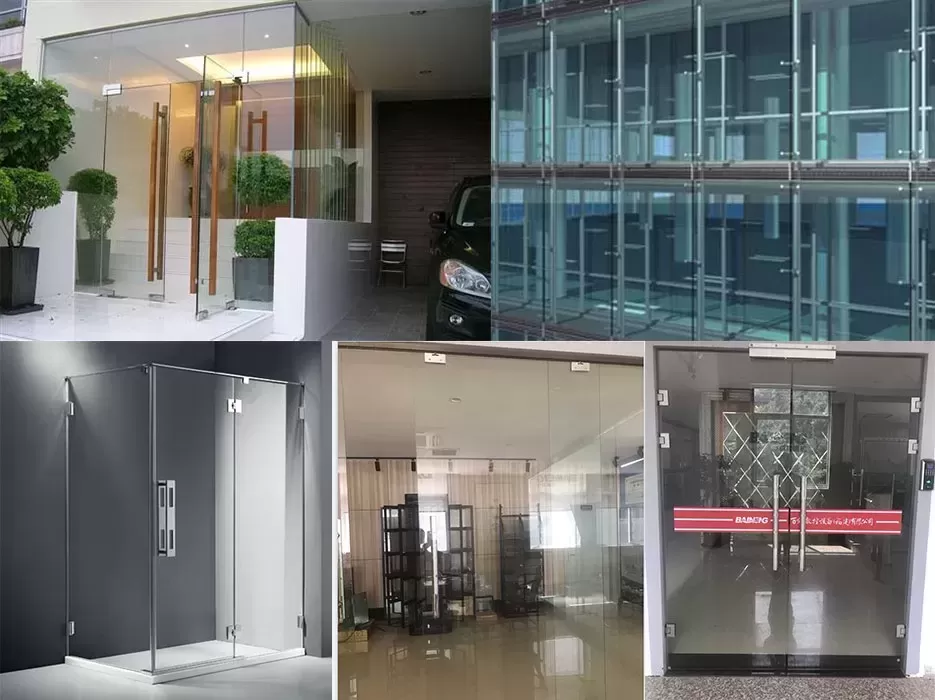
The flexibility of a vertical glass working center makes it suitable for various market sectors. In architectural glass production, it is used to prepare heavy panels for structural glazing, commercial storefronts, and curtain walls where precise cutout notches and countersunk holes are required. The vertical alignment allows for the processing of jumbo-sized sheets that would otherwise be difficult to manage on horizontal machines.
For interior design components, the machine produces frameless shower enclosures, glass doors, and partition walls. These items demand high-quality edge polishing and precise hinge cutouts, which are executed in a single cycle. The ability to handle varying glass thicknesses without extensive manual retooling makes the system practical for custom batch production.
In the industrial sector, the equipment processes glass panels for commercial refrigeration, home appliances, and display cases. These applications require high repeatability and tight tolerances to ensure proper sealing and integration with metal frames. A vertical system provides the consistent output needed to meet these strict industrial standards.
Operational Maintenance and Lifespan Extension
Maintaining a vertical glass working center involves regular monitoring of the mechanical guides and water filtration systems. Because glass dust is highly abrasive, the linear rails and ball screws must be protected by bellows and lubricated regularly. Automated lubrication systems can deliver metered amounts of grease to key wear points, reducing reliance on manual maintenance routines.
The quality of the cooling water is another factor. Suspended glass particles in the coolant can wear down the diamond tools prematurely and damage the internal seals of the spindle. Implementing a closed-loop water filtration system with centrifugal separators or flocculant dosing helps maintain clean water, protecting both the tools and the machine components. Regular calibration of the vacuum system ensures that the suction cups hold the glass securely during high-pressure grinding operations.
Comparing Vertical and Horizontal Workflows
To understand the operational impact of this equipment, it is useful to compare its workflow with traditional horizontal setups across several key metrics:
| Operational Metric | Horizontal Processing Line | Vertical Glass Working Center |
|---|---|---|
| Floor Space Requirement | High (requires large tables and transfer zones) | Low (compact vertical footprint) |
| Glass Handling Risk | Moderate to High (frequent manual lifting and flipping) | Low (glass remains upright, minimal handling) |
| Water Drainage & Cooling | Slow (water pools on flat glass surfaces) | Rapid (gravity-fed drainage prevents pooling) |
| Setup Time for Varying Sizes | Moderate (manual adjustment of supports often needed) | Low (automated vacuum positioning) |
| Low-E Coating Protection | Difficult (rollers touch the coated surface) | Easier (minimal contact with the active surface) |
This comparison shows that while horizontal machines remain useful for specific high-volume single-pass operations, the vertical layout offers distinct advantages for facilities handling diverse, high-value glass products with complex fabrication requirements.
Frequently Asked Questions
Q1: What thickness of glass can a vertical glass working center process?
A1: Typically, these machines can process glass thicknesses ranging from 3 mm to 19 mm, with some configurations accommodating sheets up to 25 mm or more, depending on the tool setup, spindle specifications, and the weight capacity of the supporting conveyor system.
Q2: How does the machine prevent scratching on Low-E coated glass?
A2: The vertical design ensures that the coated side of the glass does not rub against a flat table. Instead, the glass is supported by specialized rollers and vacuum pads on the non-coated back surface, while the vertical angle allows water and debris to drain away instantly, reducing abrasive contact.
Q3: Is programming a vertical system complex for operators?
A3: Modern systems use user-friendly CAD/CAM software that imports standard DXF files. The software automatically calculates tool paths, vacuum cup positioning, and processing speeds, allowing operators with basic CNC training to manage production after initial setup training.
Q4: How does a vertical system compare to a horizontal one in terms of water management?
A4: Vertical systems have superior water management because gravity naturally pulls coolant and glass dust downward into a collection trough. This reduces water pooling on the glass surface, keeps the workspace cleaner, and simplifies the filtration and recycling process.
Q5: Can this machine handle irregular glass shapes?
A5: Yes, the software and vacuum positioning system allow the vertical glass working center to process shaped glass, including arches, circles, and polygons, for both edge grinding and internal cutouts, provided the glass meets the minimum dimensions required for vacuum clamping.
Inquire for Custom Engineering Solutions
For glass processors looking to balance floor space, production speed, and edge quality, choosing the right machinery is a significant step. BAINENG CNC provides engineered solutions tailored to specific industrial requirements, helping factories improve their processing workflows. Contact our engineering team to discuss your production layout and receive a technical consultation for your facility.