



The Difference Between Glass Engraving and Etching Explained
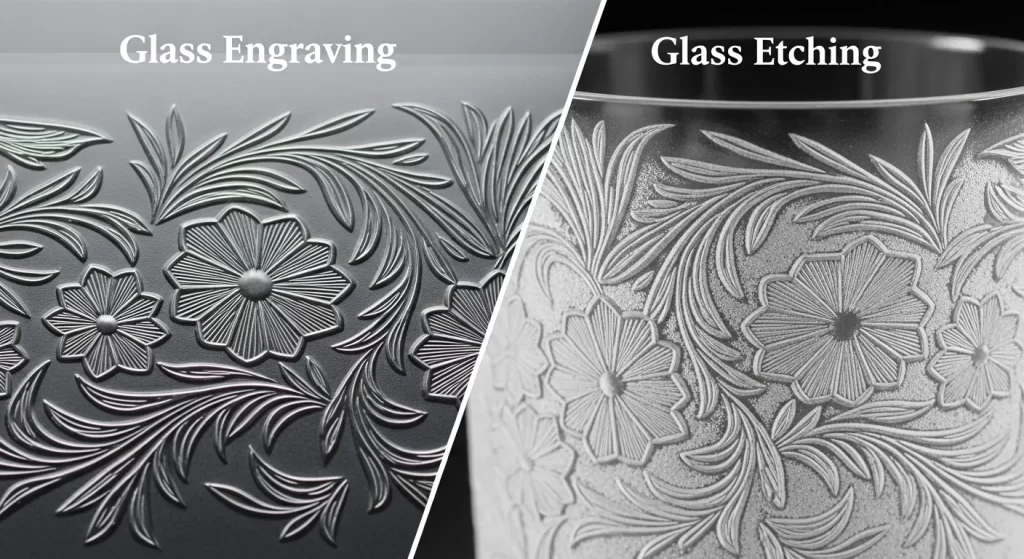
The difference between glass engraving and etching is a fundamental distinction in decorative glasswork, defined by the method used to alter the glass surface and the resulting visual effect. Engraving is a physical, subtractive process that carves or cuts a design into the glass, creating depth and clarity. Etching is an abrasive or chemical process that creates a frosted, matte finish on the surface of the glass. Understanding this core difference is essential for designers, fabricators, and consumers to accurately specify and achieve the desired artistic outcome for any glass project.
What is the Core Difference in Technique?
The core difference in technique is that engraving physically removes material to create a groove, while etching abrades the surface to create a texture. Engraving is a mechanical action, like carving wood. Etching is a surface treatment, like sandblasting a wall. This fundamental distinction in method is what leads to their vastly different appearances and applications.
How is Engraving a Subtractive Process?
Engraving is a subtractive process because it involves the physical removal of glass material. A sharp tool, such as a diamond-tipped burr or a focused laser beam, cuts directly into the glass. This action creates a distinct channel or groove with tangible depth. The result is a sharp, clear mark that interacts brilliantly with light. This process is detailed in guides on professional glass engraving tips. The physical carving is what defines engraving as a subtractive art form.
How is Etching an Abrasive Process?
Etching is primarily an abrasive process. Methods like sandblasting or using an etching cream do not cut deep into the glass. Instead, they create millions of microscopic pits and fractures on the very top layer of the surface. This roughened texture disrupts the transparency of the glass. It scatters light rather than allowing it to pass through directly. This is what creates the characteristic frosted or matte appearance. The technology behind this is explored in our article where glass laser etching technology is explained.
What is Glass Engraving in Detail?
Glass engraving is a precision art form that uses specialized tools to carve designs into a glass surface. The resulting marks are typically deep, clear, and have a V-shaped or U-shaped profile. The process is valued for its ability to create intricate details, sharp lines, and a brilliant, sparkling effect as the cut edges catch the light. It is a technique associated with high-end, custom decorative work.
What Are the Common Methods of Glass Engraving?
The common methods of glass engraving have evolved from traditional hand tools to sophisticated modern machinery.
- Rotary Tool Engraving (CNC): This method uses a high-speed rotating tool, typically a diamond-tipped burr, held in a CNC machine. The computer-controlled movement allows for incredible precision and repeatability.
- Laser Engraving: A high-powered laser beam is focused on the glass surface. The intense energy creates micro-fractures within the glass, creating the engraved mark. This method is exceptionally precise and fast. The comparison between laser engraving vs. CNC engraving for glass highlights the strengths of each technology.
- Hand Engraving: This is the traditional craft, using small, handheld rotary tools or sharp gravers. It allows for artistic freedom but is very time-consuming and requires immense skill.
What is the Appearance of an Engraved Finish?
An engraved finish is characterized by its depth, clarity, and brilliance. The carved lines are sharp and well-defined. Because the process cuts into the glass, the design has a tangible, three-dimensional quality. The sharp, angled edges of the engraved grooves catch and refract light. This creates a sparkling, jewel-like effect. This brilliant finish is a key reason why engraved glass is so highly prized for decorative applications.
How is 3D Glass Engraving Achieved?
3D glass engraving is an advanced laser technique. It focuses a powerful laser beam not on the surface, but at specific points inside a solid block of crystal or glass. The laser creates a tiny, localized fracture at each focal point. By plotting millions of these points in a 3D coordinate system, the machine can build a complex, three-dimensional image that appears to float inside the glass. The process is explained in detail in our guide on how 3D glass engraving machines work.
What is Glass Etching in Detail?
Glass etching is a process that creates a frosted, translucent, or matte finish on a glass surface. It does not create significant depth. Instead, it alters the surface texture to diffuse light. The result is a soft, elegant appearance that is often used to create privacy, add subtle branding, or produce decorative patterns over larger areas.
What Are the Common Methods of Glass Etching?
The common methods of glass etching use either an abrasive or a chemical action to roughen the surface.
- Sandblasting (Abrasive Etching): This is a very common method. A high-pressure stream of fine abrasive particles, such as aluminum oxide, is directed at the glass. A stencil or mask is used to protect the areas that are not to be etched.
- Laser Etching: A laser can also be used for etching. In this application, the laser's power and focus are adjusted to abrade the surface rather than cutting deep into it. This provides a very high level of detail.
- Acid Etching (Chemical Etching): This method uses hydrofluoric acid to corrode the surface of the glass. It produces a very fine, smooth frosted finish. Due to the hazardous nature of the acid, this is primarily an industrial process. The comparison between laser vs. chemical glass etching highlights the trade-offs in quality and safety.
What is the Appearance of an Etched Finish?
An etched finish is characterized by its soft, frosted texture. It has a matte, non-reflective quality. The appearance is typically a uniform, cloudy white or gray. Unlike engraving, it has very little depth and does not sparkle. Its beauty lies in its subtlety and its ability to create a gentle, diffused light effect. It is often described as having an elegant and understated appearance.
How Are Stencils and Masks Used in Etching?
Stencils and masks are essential for creating designs with abrasive or chemical etching. A mask, typically made of a rubbery, adhesive vinyl, is applied to the glass surface. The desired design is then cut into the mask and the unwanted areas are peeled away. This exposes the glass that is to be etched. The mask protects the rest of the glass from the abrasive or chemical. After the etching process is complete, the remaining mask is removed. This reveals the crisp, clean design.
Head-to-Head Comparison: Engraving vs. Etching
To fully clarify the difference between glass engraving and etching, a direct comparison of their key attributes is the most effective approach. This table provides a clear, at-a-glance reference that highlights their distinct characteristics.
| Feature | Glass Engraving | Glass Etching |
| Core Method | Subtractive (carving/cutting) | Abrasive or chemical (surface roughening) |
| Resulting Depth | Significant, tangible depth. | Minimal to no depth. |
| Final Finish | Clear, sharp, brilliant, sparkling. | Frosted, matte, soft, translucent. |
| Light Interaction | Refracts light like a prism. | Diffuses and scatters light. |
| Primary Tools | Diamond burrs, lasers (focused deep). | Abrasive media, lasers (focused shallow), acid. |
| Tactile Feel | Grooves can be felt. | A slightly rough or textured surface. |
| Level of Detail | Capable of extremely fine, sharp lines. | Good for bold designs; fine lines can be softer. |
| Common Use | Fine art, detailed logos, text, awards. | Privacy glass, decorative patterns, large logos. |
What Are the Key Application Differences?
The different visual and physical characteristics of engraving and etching make them suitable for very different applications. Engraving is the choice for high-detail, high-value decorative pieces. Etching is the preferred method for creating privacy and for decorating large surface areas. The choice between them is a critical design decision.
When is Engraving the Superior Choice?
Engraving is the superior choice when the goal is to create a design with fine detail, sharp text, and a brilliant, sparkling appearance. It is the ideal process for:
- High-End Awards and Trophies: The depth and sparkle of an engraved award convey a sense of quality and prestige.
- Detailed Logos and Crests: Engraving can reproduce the fine lines and sharp corners of a complex logo with perfect clarity.
- Personalized Gifts: Engraving names, dates, and messages on items like wine bottles or glassware creates a lasting, high-value memento.
- Fine Art: Artists use engraving to create incredibly detailed and expressive works on glass.The process is a cornerstone of the market for glass engraving for decor and branding.
When is Etching the Preferred Method?
Etching is the preferred method when the goal is to create a frosted finish for privacy or to apply a large, bold design. It is the standard process for:
- Shower Doors and Bathroom Windows: An etched surface provides privacy while still allowing light to pass through.
- Office Partitions and Doors: Etched logos and patterns are a common way to add branding and a sense of privacy in a corporate environment.
- Decorative Patterns on Glassware: Creating frosted bands or large, simple logos on pint glasses or wine glasses is a common application.
- Architectural Glass: Large-scale etched patterns are used on building facades and interior walls to control light and add a decorative element. Some inspiring examples are explored in glass engraving ideas for architecture.
How Do the Tools and Technologies Compare?
The tools and technologies used for engraving and etching are highly specialized. While some technologies, like lasers, can be adapted for both processes, the specific setup and parameters are very different. The choice of technology is a major factor in the final outcome and the overall efficiency of the process. The pace of engraving and etching innovations continues to advance these capabilities.
What Defines Engraving Technology?
Engraving technology is defined by its ability to create controlled, localized material removal. A CNC machine for engraving must be extremely rigid to handle the cutting forces and to prevent vibration. The software used must be able to generate precise, complex toolpaths. The top glass engraving software tools are designed for this level of detail. A laser used for engraving must have a very fine focal point and the power to penetrate the glass surface. The entire system is optimized for precision cutting.
What Defines Etching Technology?
Etching technology is defined by its ability to create a uniform surface abrasion. A sandblasting cabinet is a common piece of equipment. It includes a high-pressure nozzle, an abrasive media reservoir, and a dust collection system. A laser used for etching is programmed with different parameters. It uses a lower power density and often a raster scanning motion to create a smooth, frosted effect. For beginners, the choice of equipment is key, as highlighted in our review of the best glass etching machines for beginners.
Can a Single Machine Perform Both?
Yes, a laser machine is the most versatile technology. It can be programmed to perform both engraving and etching. By adjusting the laser's power, speed, frequency, and focus, an operator can switch between creating deep, clear engraved lines and creating a soft, shallow etched surface. This makes a laser a very powerful and flexible tool. However, a CNC rotary machine is only capable of engraving. A sandblasting cabinet is only capable of etching.
What Are the Considerations for Durability and Maintenance?
Both engraved and etched finishes are permanent and will last as long as the glass itself. However, there are some minor differences in their long-term appearance and maintenance. These considerations can be a factor in choosing the right process for a specific application.
How Does the Durability of the Finishes Compare?
Both finishes are extremely durable. An engraved mark is a physical groove carved into the glass. It cannot be worn off. An etched surface is a permanent change to the texture of the glass. It also cannot be worn off. From a structural standpoint, a very deep engraving could theoretically create a stress concentration point. However, for most decorative applications, this is not a concern. Both finishes are considered permanent alterations to the glass.
What Are the Maintenance and Cleaning Requirements?
The maintenance and cleaning requirements are slightly different.
- Engraved Glass: The grooves of an engraving can sometimes trap dust or dirt. It may require occasional cleaning with a soft brush and a standard glass cleaner to keep the lines looking crisp and clear.
- Etched Glass: An etched surface, particularly a sandblasted one, is slightly more porous than polished glass. It can show fingerprints or oils more readily. It is best cleaned with a lint-free cloth and an ammonia-free glass cleaner. Over time, the maintenance of the machinery itself is also a factor, as discussed in our guide on the maintenance of glass engraving machines.
Conclusion
The difference between glass engraving and etching is ultimately a choice between brilliance and subtlety. Engraving is the art of the brilliant, sparkling line. It is a process of depth and precision that creates a bold, eye-catching statement. Etching is the art of the subtle, frosted texture. It is a process of surface and diffusion that creates an elegant, understated effect. Neither is inherently better than the other. They are simply different artistic languages. By understanding their unique vocabularies, a designer or fabricator can choose the perfect method to express their vision in the timeless medium of glass.