
 FAQs
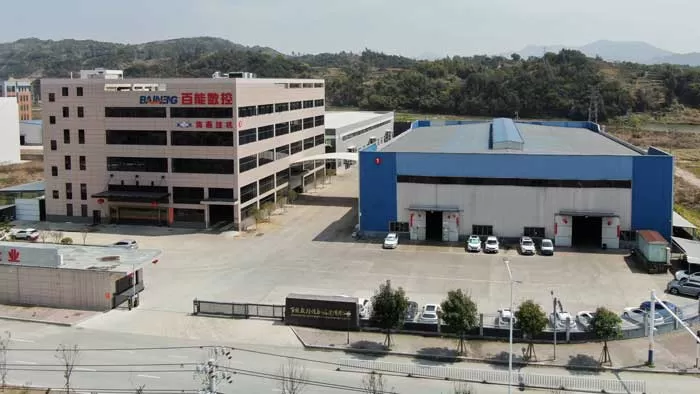
 Factory Tour



Architectural facades, custom LED mirrors, and luxury glass packaging are driving massive demand for precision surface finishing in 2026. Glass fabricators can no longer rely on slow manual sandblasting to stay competitive.
Choosing the wrong glass engraver leads to micro-cracking, shallow finishes, and costly production bottlenecks. Before investing capital, factory owners must weigh mechanical CNC milling against laser etching.
At BAINENG CNC, our engineers build industrial glass-processing machinery for global fabrication plants. This guide compares both technologies across carving depth, edge quality, sheet capacity, and real operating costs.
Evaluating new equipment for your shop floor? Send your glass drawings and panel dimensions to our team today for a free sample engraving test and factory quote.
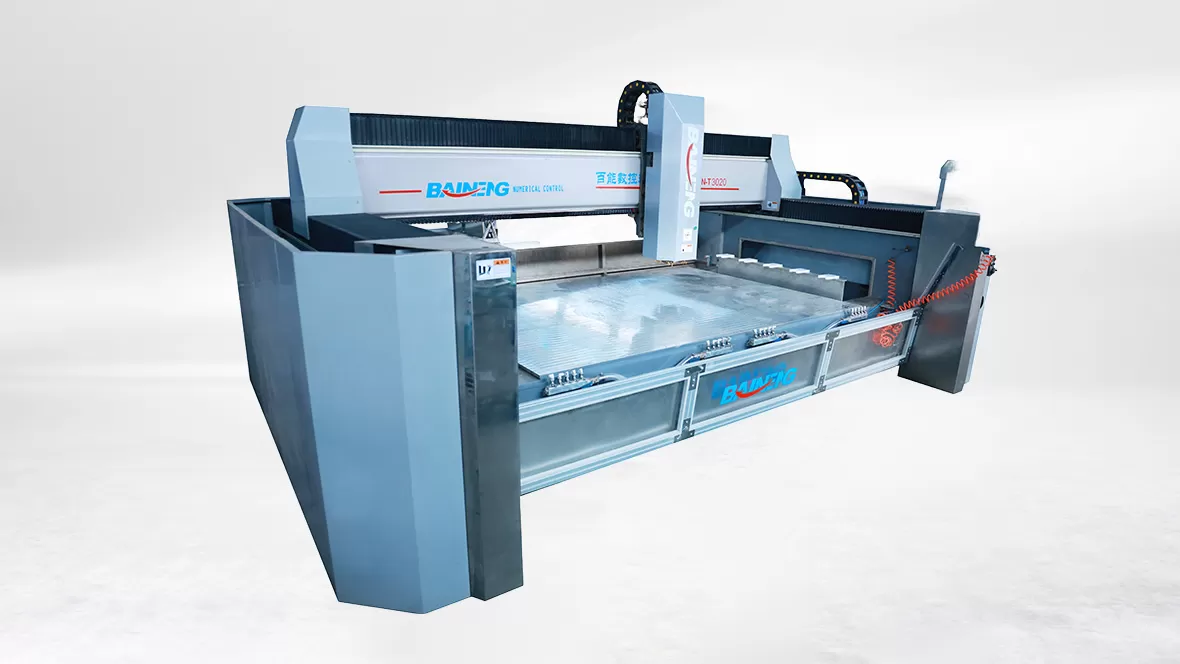
How CNC and Laser Glass Engravers Work
Although both machines decorate and mark glass, they remove material through completely different physical mechanisms. Understanding that core difference prevents expensive buying mistakes.
Modern industrial glass engraving splits into two distinct paths: subtractive diamond grinding and non-contact thermal or photochemical marking.
How a CNC Mechanical System Operates
A CNC machine uses a high-speed water-cooled spindle spinning at 12,000 to 24,000 RPM. Sintered or electroplated diamond milling tools physically grind and polish patterns straight into the glass surface.
- Closed-loop water cooling: High-pressure coolant jets flush away abrasive glass dust and keep the cutting zone cool.
- Multi-tool flexibility: Automatic tool changers (ATC) switch between V-groove cutters, flat mills, and felt polishing wheels in one continuous program.
How a Laser Engraving System Operates
A laser unit directs a focused beam of light onto or inside the glass without touching the sheet. No mechanical clamping force presses against the workpiece.
Factory laser engraving relies on two main wavelengths. CO2 lasers heat the surface rapidly to create tiny controlled micro-fractures, leaving a frosted white mark. UV lasers use shorter wavelengths for cold photochemical ablation, producing ultra-fine marks with minimal heat transfer.
6 Critical Comparison Factors for Glass Factories in 2026
Specs on a brochure rarely tell the full production story. Compare both technologies across these six shop-floor criteria before finalizing your budget.
| Comparison Metric | CNC Mechanical Engraving | CO2 / UV Laser Engraving |
|---|---|---|
| Carving Depth | Deep 3D relief, V-grooves & bevels (1–15+ mm) | Shallow surface frosting (0.05–0.3 mm) or subsurface 3D |
| Edge & Surface Finish | Frosted or mirror-polished with diamond & felt tools | Matte frosted (CO2) or ultra-crisp micro-mark (UV) |
| Max Sheet Size | Large architectural sheets (up to 2500 x 4000+ mm) | Compact to medium formats; galvo scan limits |
| Tempered Glass Compatibility | No (must engrave before tempering) | Yes (safe surface marking after tempering) |
| Primary Consumables | Diamond grinding bits, polishing wheels & coolant | Laser tube/source, focusing lenses & chiller filters |
| Typical Factory Fit | Architectural, mirror, furniture & door glass | Logos, QR codes, bottles & crystal awards |
1. Engraving Depth and 3D Relief Capability
CNC spindles win every time when customers demand tactile depth. You can carve deep V-grooves on bathroom mirrors, mill stepped pockets for hardware, and polish edges to optical clarity.
Lasers cannot mill deep architectural channels without shattering the sheet from heat buildup. They excel at shallow surface frosting, intricate 2D graphics, and subsurface 3D crystal dots.
2. Edge Quality and Thermal Micro-Cracking Risk
CO2 lasers generate a small heat-affected zone (HAZ) on soda-lime float glass. Under high magnification, the frosted mark consists of microscopic surface fractures that can feel slightly rough.
By contrast, a rigid CNC machine flooded with cooling water eliminates thermal shock entirely. With proper feed rates and sharp diamond tooling, edges come off smooth, clean, and ready for polishing.
3. Large Architectural Sheets vs. High-Speed Small Batching
Architectural and furniture fabricators handle massive jumbo sheets every day. Heavy-duty CNC gantry frames equipped with zoned vacuum suction tables hold thin 3 mm mirrors or thick 19 mm laminated panels completely flat.
Galvo-head laser systems achieve blazing marking speeds on small items. However, their active scan field is limited, requiring step-and-repeat stitching on large panels that can leave visible seam lines.
4. Glass Type Compatibility (Float, Tempered, Low-E, Quartz)
Understanding material limits saves thousands in ruined inventory. You cannot mechanically cut or deep-carve tempered glass because piercing its outer compression layer shatters the entire panel instantly.
- Pre-tempering workflow: Run float glass through a CNC machine for deep carving, beveling, and polishing, then send it to the tempering furnace.
- Post-tempering workflow: Use a UV or CO2 laser to etch serial numbers, safety logos, or Low-E coating removals directly onto finished tempered sheets.
5. Tooling, Laser Source Lifespan, and Operating Costs
CNC ownership costs center on diamond bits, polishing pads, and electricity for the spindle and vacuum pump. Diamond tools wear predictably based on linear meters carved, making per-piece costing simple.
Lasers consume almost zero mechanical parts, keeping daily labor low. However, glass-tube CO2 sources degrade every few thousand hours, and replacing a high-power UV laser module carries a steep capital cost.
Which Glass Engraver Fits Your Factory Best in 2026?
Do not buy equipment for hypothetical future jobs. Base your decision on the orders paying your factory bills right now.
When to Choose a CNC Glass Engraving Machine
Pick a CNC system if your core business involves value-added structural or decorative glass sheets. It delivers unmatched versatility across architectural partitions, LED backlit mirrors, shower doors, and custom tabletops.
If clients ask for deep carved V-lines, polished reliefs, or integrated edge profiling on sheets larger than one square meter, mechanical CNC is your only viable option.
When to Choose a Laser Glass Engraver
Choose a laser system when speed, fine graphic detail, and non-contact handling matter most. Beverage bottlers, cosmetic packaging lines, solar panel makers, and trophy shops rely on lasers for rapid batch serialization.
Lasers also win whenever you must mark already-tempered glass panels or curved glassware where a rigid diamond bit cannot maintain uniform contact.
Hybrid Production: Why Large Glass Plants Run Both
Tier-one glass processors rarely treat CNC and laser as enemies. Many plants run heavy CNC engraving centers for deep mirror carving and architectural grooves, while keeping a compact UV laser at the end of the tempering line to stamp compliance logos.
Want to verify how your own glass samples look before buying? Visit BAINENG CNC to schedule a free sample engraving test and review real machining videos with our application engineers.
4 Expensive Mistakes to Avoid When Sourcing Glass Engraving Equipment
Buying industrial glass machinery involves strict mechanical requirements. Dodge these four costly traps during vendor evaluation.
- Converting a wood or stone CNC router: Wood routers lack stainless steel bellows, sealed linear guides, and sloped water drainage pans. Abrasive glass slurry destroys unsealed ball screws within weeks.
- Skipping a zoned vacuum suction table: Thin glass sheets vibrate and crack during high-speed milling if held down poorly. Demand independent vacuum zones paired with automatic surface probing.
- Confusing CO2 and UV laser quality: Standard CO2 beams leave coarse, chalky edges on fine typography. Always test your smallest font sizes on a UV source if crisp micro-marking is required.
- Neglecting slurry filtration and chiller sizing: Dirty coolant scratches freshly carved glass and clogs spindle nozzles. Insist on multi-stage settling tanks and dedicated industrial chillers.
Frequently Asked Questions (FAQ)
Q1: Which glass engraver causes less edge chipping or cracking—CNC or laser?
A1: A rigid CNC machine using sharp diamond tooling and continuous water cooling produces cleaner, chip-free deep grooves on annealed float glass. However, for ultra-thin surface marks on tempered glass, a UV laser avoids mechanical stress and eliminates breakage risk.
Q2: Can you engrave tempered glass with a CNC or laser machine?
A2: You cannot engrave tempered glass with a CNC diamond bit because cutting into the surface tension layer causes the sheet to shatter. You must complete all CNC carving before tempering, or use a laser afterward for shallow surface marking.
Q3: What is the maximum sheet size a CNC glass engraving machine can handle?
A3: Industrial CNC glass centers come in standard working beds ranging from 1300 x 2500 mm up to jumbo architectural formats exceeding 2500 x 4000 mm, easily accommodating full-height door and facade panels.
Q4: What spindle power is recommended for industrial CNC glass carving?
A4: Most production glass factories specify a 5.5 kW to 9.0 kW water-cooled high-torque spindle. Higher torque maintains steady RPM when driving large V-groove cutters or felt polishing wheels across thick glass.
Q5: How long do diamond engraving bits and laser tubes typically last?
A5: Sintered diamond engraving bits typically last between 800 and 2,500 linear meters depending on carving depth and coolant flow. Glass CO2 laser tubes last 6,000 to 10,000 hours, while RF metal tubes and UV solid-state sources often exceed 20,000 hours.
Conclusion and Free Sample Testing
Selecting the right glass engraver comes down to one clear rule: choose CNC for deep carving, optical polishing, and large architectural sheets, and choose laser for high-speed surface marking or post-tempering logos.
Do not guess on finish quality before committing your 2026 equipment budget. Visit BAINENG CNC today to send your CAD pattern files, glass thickness, and target daily output. Our engineering team will run a free sample test and prepare a direct factory quotation within 24 hours.