
 FAQs
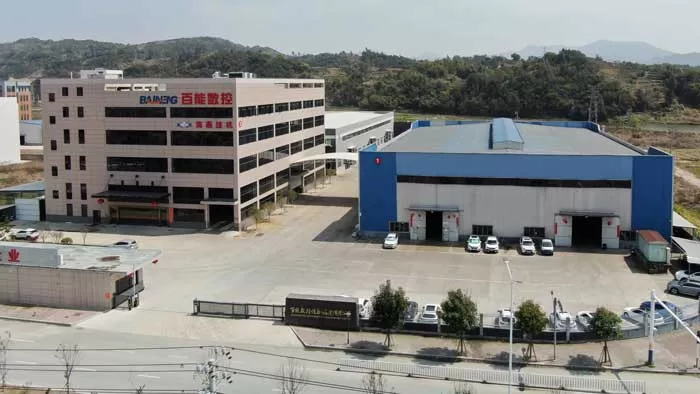
 Factory Tour



Transparent material fabrication demands unprecedented precision in 2026. Custom architectural facades, luxury retail displays, EV interior consoles, and smart home touch panels all require spotless, burr-free edges.
Selecting an acrylic glass laser cutter is no longer a simple wattage comparison. Plant managers and procurement directors must evaluate structural rigidity, multi-material compatibility, international safety compliance, and five-year return on investment (ROI).
This practical buying guide comes from the engineering team at BAINENG CNC (FUJIAN BAINENG), a specialist manufacturer with independent R&D capabilities and equipment installations across more than 50 countries. Need an urgent machine recommendation or sample cut? Contact our engineering team today to discuss your production specs.
Clarifying Core Concepts: Acrylic Glass (PMMA) vs. Real Glass Processing
Many buyers confuse synthetic "acrylic glass" with traditional silica glass during equipment sourcing. In industrial fabrication, acrylic glass refers to poly(methyl methacrylate) (PMMA), a transparent thermoplastic sheet valued for its light weight and optical clarity.
Understanding CNC vs laser cutter for acrylic and glass prevents costly material scrap and damaged optics. A CO2 laser beam vaporizes PMMA cleanly along the cut line, creating a smooth, flame-polished edge without mechanical contact stress.
Silica glass reacts completely differently under intense CO2 heat. Thermal shock causes real glass to micro-crack or shatter unpredictably during continuous cutting.
When processing true glass, factories switch to cold-ablation photonics or precision diamond tooling. Choosing between CO2 vs. UV/Picosecond laser sources—or dedicated mechanical CNC centers—depends entirely on your target substrate and edge finish.
Even within PMMA sheets, material formulation alters laser performance. When comparing Cast vs. Extruded acrylic, cast PMMA produces a crisp, frosty white engraving and crystal-clear cut edge, whereas extruded PMMA melts at slightly lower temperatures and yields cleaner bending characteristics.
| Material & Application Requirement | Optimal Processing Technology | Recommended Equipment Solution |
|---|---|---|
| Thin-to-medium PMMA sheet high-speed profiling | Thermal CO2 laser vaporization | High-power industrial acrylic laser cutting machine |
| Real glass surface or subsurface micro-marking | Cold-ablation UV or picosecond laser | BAINENG Glass Laser Etching Machine |
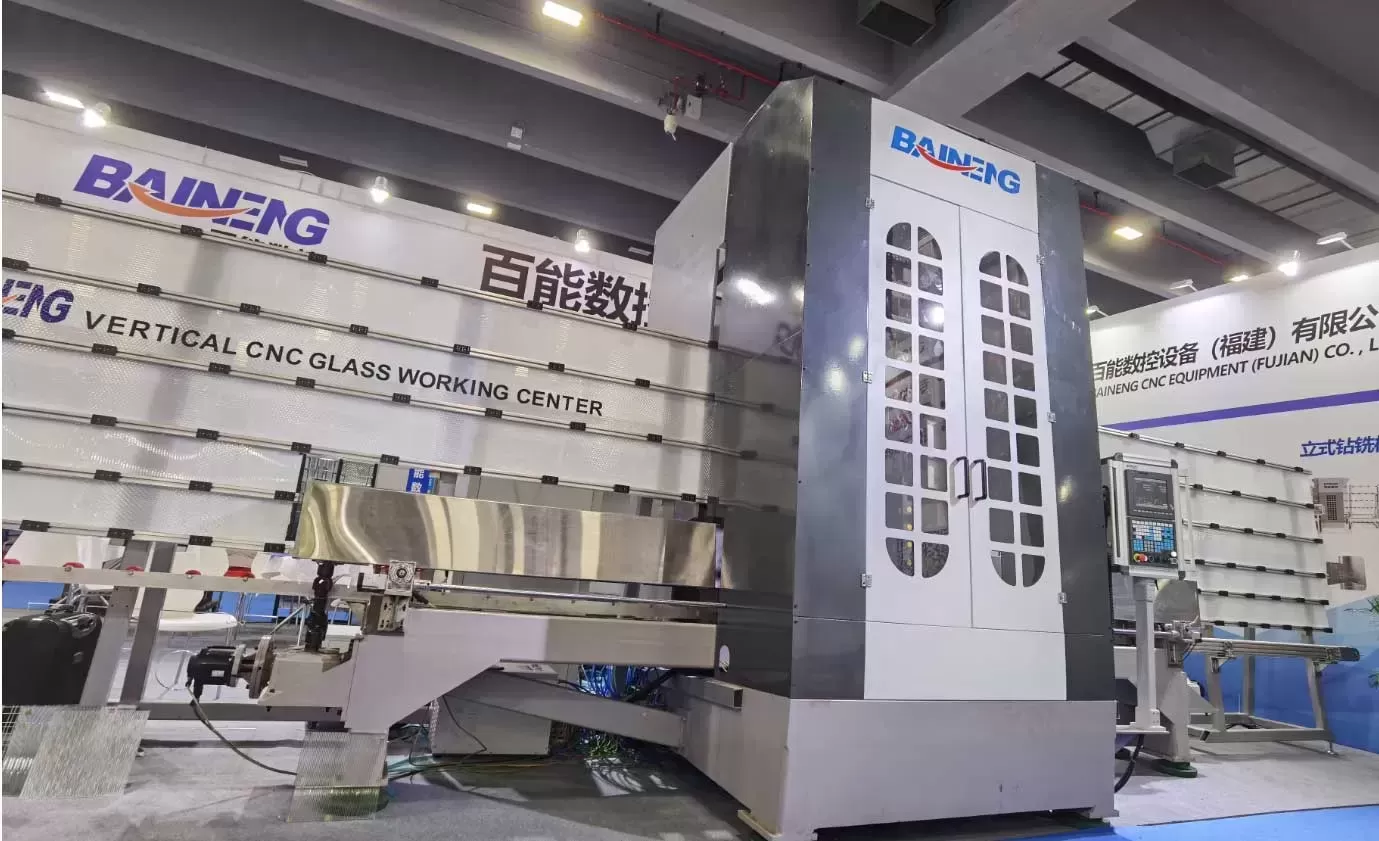
| Thick glass shaping, drilling, and edge polishing | Multi-axis diamond CNC milling | BAINENG CNC Glass Engraving Machine or CNC Glass Working Center |
| Architectural glass angled beveling and deep finishing | 5-axis synchronized CNC grinding | BAINENG 5-axis Glass Beveling Machine |
For factories handling true silica substrates rather than polymers, pairing a dedicated industrial glass laser etching machine with CNC milling centers eliminates thermal breakage. Always test your exact sheet grade before finalizing your equipment purchase order.
7 Core Technical Indicators for Choosing an Acrylic Glass Laser Cutter in 2026
Evaluating a production-grade acrylic glass laser cutter requires looking beneath the sheet metal enclosure. The seven engineering factors below separate reliable factory assets from light-duty workshop machines.
1. Laser Source Type and Power Matching
Laser wavelength and beam quality dictate kerf width and edge gloss. Standard 10.6-micron CO2 sealed or RF metal tubes dominate PMMA sheet cutting because acrylic absorbs infrared energy efficiently.
- 100W–150W CO2 tubes: Ideal for rapid signage cutting and PMMA sheets between 2mm and 12mm thick.
- 180W–300W+ high-power systems: Necessary for single-pass cutting on thick 15mm to 30mm cast acrylic blocks without edge charring.
- UV and picosecond laser sources: Essential when shifting from PMMA to real glass etching, as documented in optical fabrication research published by SPIE.
2. Mechanical Structure and Precision Tolerance
Light aluminum frames flex under high-speed acceleration, ruining corner geometry on long production runs. A heavy duty acrylic glass laser cutter relies on a stress-relieved, thick-walled welded steel bed to maintain gantry stability.
Look for precision-ground linear guideways, dual-drive servo motors, and sealed ball screws or helical racks. These components hold tight precision tolerance within ±0.05mm even during continuous 16-hour shifts.
3. Working Bed Size and Shop Floor Layout
Match the machine's working bed size directly to raw sheet inventory to avoid manual pre-trimming labor. Standard industrial beds measure 1300×2500mm, 1500×3000mm, or 2000×3000mm to accommodate full factory sheets.
If floor space is tight and your operations focus heavily on large architectural glass rather than flat PMMA cutting, consider upright processing geometry. Systems engineered for Vertical Glass Working drastically reduce factory footprint while simplifying heavy panel loading.
4. Cooling, Exhaust, and Dust Extraction Systems
Vaporizing PMMA releases volatile methyl methacrylate fumes that condense on mirrors and focal lenses. Without high-CFM downdraft exhaust and activated carbon filtration, optics degrade rapidly and operator air quality suffers.
Glass fabrication poses a different hazard: abrasive silica slurry and fine dust. Ensure your facility pairs laser cutters with closed-loop water chillers holding ±0.3°C temperature stability and dedicated filtration units suited to your specific material.
5. Software Compatibility and Intelligent Automation
Modern fabrication plants cannot waste time manually re-drawing client files. Your control system must accept standard DXF, AI, PLT, and G-code formats smoothly from major CAD/CAM platforms.
- CCD vision registration: Automatically detects printed fiducial marks on UV-printed acrylic sheets for contour cutting.
- Auto-focus and edge detection: Compensates for minor thickness variations across extruded sheets.
- Automated nesting: Reduces PMMA offcut waste by 12% to 18% on mixed-batch orders.
6. Factory Burn-In Testing and Calibration
Never accept unverified catalog specs. Reputable industrial manufacturers run full laser interferometer pitch-error compensation and 48-hour continuous load tests before crating any machine.
Request test-cut videos and inspection reports using your target thickness before authorizing final shipment.
7. Multi-Material Workflow Compatibility
Many job shops process both PMMA displays and tempered or laminated glass panels under one roof. Check whether your supplier offers compatible software ecosystems across both laser and CNC equipment lines to minimize operator retraining.
Not sure whether your project requires high-speed laser cutting, UV glass etching, or 5-axis CNC shaping? Speak with a BAINENG CNC engineer today to arrange free material sample testing and receive a tailored equipment proposal.
Safety and Compliance: Why CE and ISO Certification Matter in 2026
Buying uncertified machinery creates severe financial risk at international borders. Customs authorities across Europe, North America, and the Middle East regularly impound industrial laser and CNC equipment lacking verified safety documentation.
Beyond port clearance, commercial insurance carriers refuse workplace coverage for machines missing proper interlocking enclosures, emergency stop circuits, and radiation shielding. Full CE and ISO certification protects both your workforce and your capital investment.
- CE Certification: Verifies strict adherence to European Economic Area (EEA) directives for machine safety, electromagnetic compatibility, and environmental protection.
- ISO Quality Management: Demonstrates standardized manufacturing consistency under frameworks such as ISO 9001 quality management principles.
At FUJIAN BAINENG, quality control drives every assembly stage. Each machine undergoes rigorous inspection by accredited third-party testing agencies and holds internationally recognized CE and ISO certifications. Choose Us, Choose Trust.
Evaluating Your Supplier: R&D Patents and Global Service Reach
Low-cost trading companies frequently assemble generic parts without understanding optical path physics or structural dynamics. When an amplifier fails or a gantry loses squareness two years later, these assemblers rarely stock replacement parts or offer engineering support.
Smart B2B buyers audit a manufacturer's intellectual property, engineering headcount, and cross-border track record before signing a contract.
- National High-Tech Enterprise: BAINENG CNC operates an independent research and development department paired with a dedicated technical service team.
- 30+ Independent Patents: Continuous investment in proprietary mechanical structures, control algorithms, and optical tooling keeps our clients ahead of shifting production standards.
- Exports to 50+ Countries: BAINENG machines operate reliably across domestic plants and international markets, including the United States, Canada, France, Italy, Poland, Romania, Turkey, Russia, South Korea, India, Pakistan, Vietnam, Saudi Arabia, and Egypt.
Choosing an established OEM manufacturer guarantees standardized spare parts availability, multilingual documentation, and remote diagnostics whenever urgent production deadlines hit.
Total Cost of Ownership (TCO), ROI, and Maintenance Guide
A bargain-priced machine often becomes the most expensive asset on your shop floor within 24 months. Evaluating a heavy duty acrylic glass laser cutter through a 3-to-5-year Total Cost of Ownership (TCO) lens reveals where hidden expenses accumulate.
Low-grade cutters suffer from unstable power supplies, poor beam alignment, and weak gantry rigidity. Those flaws cause wavy edges, scorched PMMA sheets, high scrap rates, and frequent production halts.
High-reliability engineering from BAINENG CNC lowers your cost per cut part through superior uptime, longer laser source lifespan, and consistent repeatability. Follow a disciplined preventive maintenance schedule to protect that return:
- Daily: Wipe ZnSe focal lenses and molybdenum mirrors with analytical-grade alcohol; empty scrap trays to prevent fire hazards.
- Weekly: Check water chiller coolant levels and cleanliness; lubricate linear rails and ball screws; clean exhaust fan impellers.
- Monthly: Verify optical beam alignment across all four bed corners; inspect belt tension and electrical terminal tightness.
- Quarterly: Replace deionized chiller water and inspect air-assist compressor moisture traps.
2026 Frequently Asked Questions (FAQ)
Q1: Can one machine laser-cut both acrylic and real glass?
A1: No single laser wavelength cuts both materials cleanly at industrial production speeds. A CO2 acrylic glass laser cutter excels at melting and vaporizing PMMA sheets, whereas real glass cracks under CO2 heat. For true glass, factories use a specialized UV or picosecond Glass Laser Etching Machine for surface marking, or a CNC Glass Working Center for full contour cutting and edge polishing.
Q2: How thick can an industrial acrylic laser cutting machine cut in a single pass?
A2: Standard 150W industrial CO2 cutters cleanly slice up to 15mm cast acrylic in one pass. High-wattage 260W to 300W+ industrial systems cut 20mm to 30mm thick PMMA sheets with clear, polished edges when paired with long-focal-length lenses and controlled low-pressure air assist.
Q3: What certifications and export support does BAINENG CNC provide for Europe, North America, and the Middle East?
A3: Every BAINENG CNC unit undergoes accredited third-party testing and carries full CE and ISO certifications. With active exports to over 50 countries—including the USA, Canada, France, Italy, Saudi Arabia, and Turkey—our export team prepares complete commercial invoices, packing lists, certificates of origin, and compliance dossiers for smooth customs clearance.
Q4: What after-sales service and technical support does BAINENG CNC include?
A4: Our dedicated technical service team supports clients from pre-delivery layout planning through long-term production. We provide operator training manuals, live remote video diagnostics, rapid international spare parts dispatch, and on-site installation engineering when required.
Q5: How do operators prevent frosty or hazy edges when laser-cutting thick PMMA?
A5: Edge haze usually stems from excessive air-assist pressure or improper exhaust suction drawing vapor back onto cooling edges. Use a knife-blade worktable instead of a dense honeycomb grid for thick sheets, lower assist gas flow to just enough pressure to protect the lens, and maintain steady cutting speeds matched to your cast acrylic thickness.
Ready to Upgrade Your Transparent Material Production?
Investing in the right fabrication hardware safeguards product quality, lowers scrap waste, and expands your factory's contract capacity. Whether your shop requires a precision acrylic glass laser cutter, high-resolution glass laser etching, or multi-axis CNC glass shaping, BAINENG CNC delivers proven engineering built for demanding shifts.
Take the next step toward higher production efficiency: Request a Factory Quote & Download Our 2026 Industrial Equipment Specification Brochure with full CE and ISO compliance documentation today.