
 FAQs
FAQs Factory Tour



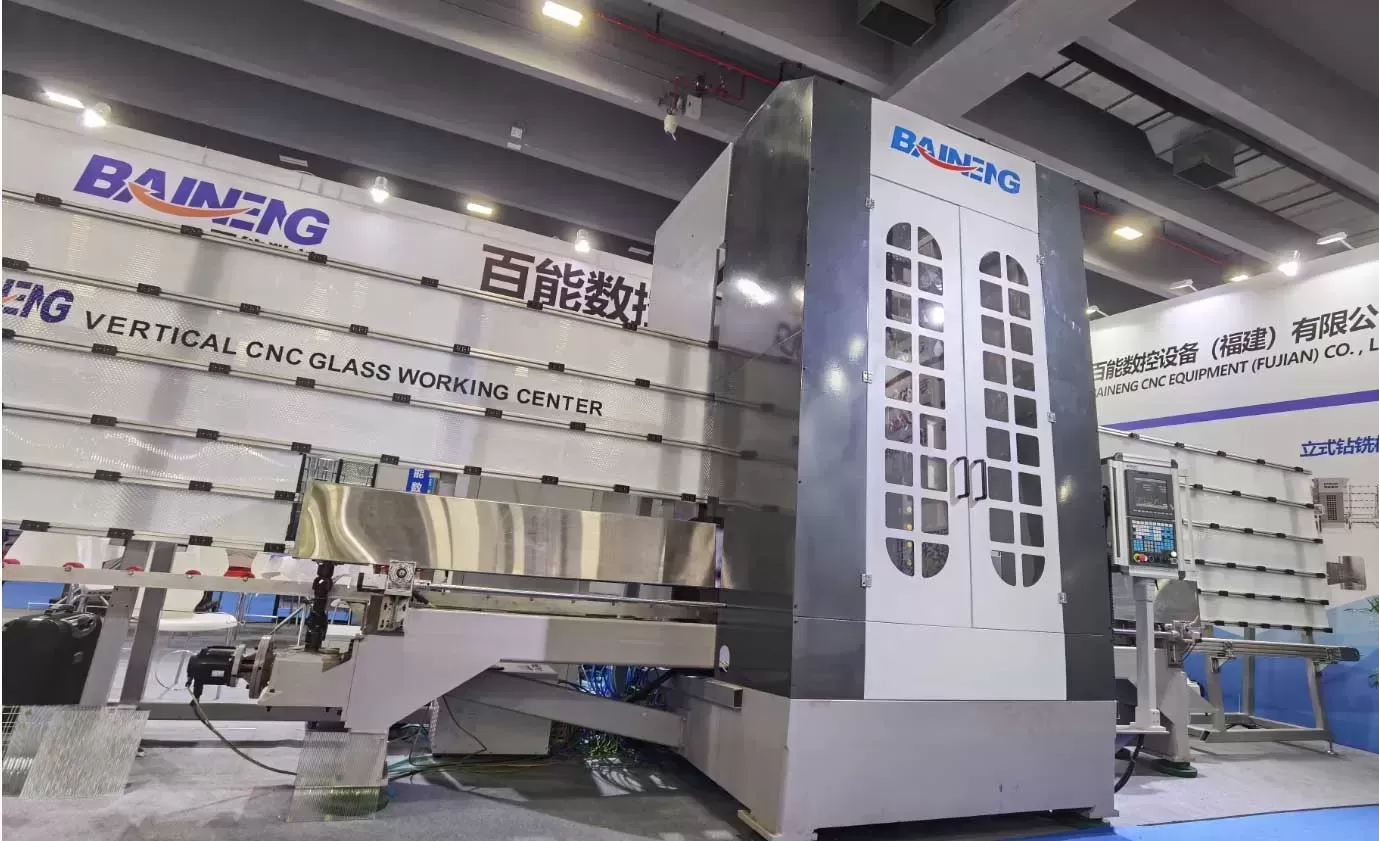
The industrial glass processing sector has undergone a significant transformation, moving away from manual grinding toward highly automated CNC solutions. Among these advancements, the vertical orientation for edge processing has emerged as a preferred configuration for architectural, furniture, and appliance glass manufacturing. The implementation of a vertical glass edging machineglass unit allows facilities to handle large-scale sheets with reduced risk of surface scratching and mechanical deflection. By positioning the glass vertically, manufacturers utilize gravity to assist in stability and water drainage, which are fundamental factors in achieving a high-quality optical finish.
When evaluating the performance of modern production lines, the integration of BAINENG CNC technology highlights the shift toward digitized control and mechanical rigidity. Unlike horizontal machines that require extensive floor space and complex roller support for large formats, the vertical layout minimizes the footprint while maximizing the support surface for thin or oversized glass. This structural choice is not merely about space; it is about the physics of glass handling. In a vertical environment, the pressure exerted by the grinding wheels is countered by a robust back-support system, ensuring that the glass remains perfectly plumb throughout the grinding, resin, and polishing stages.
.webp?t=1778836487885 "ScreenShot_2026-05-15_171524_850 (1)")
Mechanical Foundation and Frame Rigidity
The structural integrity of any vertical glass edging machineglass depends on its base frame. High-end equipment utilizes heavy-duty cast iron or reinforced welded steel that has undergone thermal stress relief. This process prevents long-term deformation, which is a common cause of geometric inaccuracies in glass edges. A vibration-dampened frame ensures that the high-speed spindles do not transmit harmonic resonance to the glass sheet, which could otherwise lead to micro-fractures or "chatter marks" on the polished surface.
Spindle Configuration and Motor Dynamics
The heart of the edging process lies in the spindle assembly. Most industrial-grade machines feature between 9 and 11 spindles, each dedicated to a specific stage of the edge profile. The sequence typically begins with coarse diamond wheels for stock removal, followed by fine diamond wheels for refining the geometry. The subsequent stages involve resin-bonded wheels and finally felt wheels impregnated with cerium oxide for a brilliant polish. Each spindle must be driven by a high-precision motor with variable frequency control, allowing the operator to adjust peripheral speeds based on the glass thickness and the specific material of the grinding wheel.
Water Management and Cooling Systems
Heat is the primary enemy of glass integrity. During the grinding process, the friction generated at the contact point can cause localized thermal expansion, leading to breakage. A sophisticated vertical glass edging machineglass incorporates a multi-point coolant delivery system. This system ensures that a constant volume of filtered water is directed exactly at the interface between the wheel and the glass edge. Furthermore, the vertical orientation facilitates natural runoff, preventing the accumulation of abrasive glass slurry on the sheet surface, which is a frequent issue in horizontal systems.
Advanced CNC Integration and Software Control
In the current industrial environment, manual adjustments are becoming obsolete. Modern systems, such as those developed by BAINENG CNC, feature PLC-based control systems that manage the entire edging cycle. Operators can input parameters such as glass thickness, removal amount, and feed speed through a touchscreen interface. The software automatically calculates the positioning of the spindles, reducing setup times when switching between different glass batches.
Automatic Tool Compensation: As grinding wheels wear down, the system detects the reduction in diameter and adjusts the spindle position to maintain constant pressure and accuracy.
Digital Thickness Adjustment: Servo motors control the movement of the front conveyor and the grinding heads, allowing for precision adjustments down to 0.1mm.
Safety Monitoring: Integrated sensors detect glass presence, preventing the spindles from engaging if the glass is misaligned or if there is a gap in the feed.
The transition to CNC control also enables better integration with ERP systems, allowing for real-time tracking of production metrics. This data-driven approach facilitates predictive maintenance, where the machine can alert the maintenance team when a specific spindle motor shows signs of electrical strain or when the coolant filtration system requires servicing.
Addressing Industry Pain Points: Quality and Throughput
One of the most persistent challenges in glass fabrication is achieving a consistent "flat edge with arris" without chipping the corners. This is particularly difficult with tempered glass precursors, where any edge defect can lead to spontaneous breakage in the tempering furnace. The vertical glass edging machineglass solves this by utilizing a synchronized timing belt conveyor system. The glass is held securely between vulcanized rubber pads, ensuring that there is zero slippage as the sheet passes over the grinding heads.
Another pain point is the processing of "soft-coat" Low-E glass. Traditional horizontal machines often scratch the sensitive metallic coating due to debris on the rollers. The vertical configuration touches only the perimeter and a small portion of the back surface, significantly reducing the risk of coating damage. This makes the vertical edging process indispensable for manufacturers of high-performance architectural glazing and energy-efficient windows.
Optimizing the Grinding and Polishing Sequence
To achieve a mirror-like finish, the mechanical synchronization of the polishing spindles is fundamental. The final stages of a vertical glass edging machineglass process often use cerium-impregnated polishing wheels. These wheels require a specific pressure and water flow rate to activate the chemical-mechanical polishing action. If the pressure is too low, the edge remains cloudy; if too high, the friction can burn the cerium, leaving unsightly marks.
High-performance machines utilize pneumatic pressure regulators on the polishing spindles to maintain a constant force. This compensates for any slight irregularities in the glass edge or minor vibrations in the conveyor. By automating this pressure control, the machine ensures that the first sheet of the day has the same optical quality as the last, regardless of operator fatigue or environmental changes.
Application Scenarios in Modern Architecture
The versatility of the vertical glass edging machineglass makes it suitable for a wide range of applications:
Structural Glazing: Producing perfectly square and polished edges for frameless glass facades and curtain walls.
Interior Partitions: High-speed processing of 10mm to 19mm glass for office dividers and acoustic barriers.
Furniture Manufacturing: Creating decorative bevels and polished edges for table tops and shelving units.
Solar Panel Substrates: Rapid edging of thin glass used in the renewable energy sector, where high throughput is mandatory.
BAINENG CNC has tailored its equipment to meet these diverse needs, providing modular spindle configurations that can be customized based on whether the primary goal is high-speed "roughing" or high-clarity decorative polishing. This modularity ensures that the equipment remains relevant as market demands shift toward different glass types and thicknesses.
Maintenance Protocols for Long-Term Precision
To maintain the accuracy of a vertical glass edging machineglass, a rigorous maintenance schedule must be observed. The environment inside a glass grinding machine is inherently corrosive due to the constant presence of water and fine glass particulates. Protecting the linear guides and ball screws is a primary concern. Most advanced machines use automatic lubrication systems that deliver a measured amount of grease to moving parts at set intervals.
Daily maintenance should include cleaning the sensors and checking the tension of the conveyor belts. Weekly tasks involve inspecting the diamond wheels for "glazing"—a condition where the metal bond becomes smooth and loses its cutting ability. Using a dressing stone to expose fresh diamond grit ensures that the spindles do not draw excessive current and that the glass remains cool during processing. Monthly audits should focus on the alignment of the support racks to ensure the glass stays perfectly vertical, preventing "tapered" edges where the top of the glass is ground differently than the bottom.
Future Trends: Robotics and Automation Integration
The next phase of evolution for the vertical glass edging machineglass involves the integration of robotic loading and unloading arms. By removing the human element from the handling process, factories can operate in a "lights-out" capacity. Robots equipped with vacuum suction cups can transfer glass from the cutting table to the edging machine and then to the washing machine without any manual intervention. This not only increases safety by reducing the handling of sharp-edged glass but also ensures a continuous flow of material, maximizing the utilization rate of the CNC equipment.
Furthermore, AI-driven vision systems are being developed to inspect the edge quality in real-time. If the system detects a decline in polish quality or a deviation in the arris width, it can automatically trigger a wheel dressing cycle or adjust the spindle pressure. This level of closed-loop control is the hallmark of the Industry 4.0 revolution in glass processing.
Selecting the Right Edging Solution
Choosing a vertical glass edging machineglass is a strategic decision that affects the entire downstream production process. A well-polished edge reduces the likelihood of breakage during tempering, improves the aesthetic value of the final product, and enhances the structural performance of the glass in architectural applications. By focusing on mechanical rigidity, precision CNC control, and efficient water management, manufacturers can ensure their facility remains competitive in a demanding market.
The technical expertise offered by BAINENG CNC provides a foundation for achieving these results. As the industry moves toward higher levels of automation and stricter quality standards, having a robust and reliable edging system becomes a fundamental requirement for any serious glass fabricator.
Frequently Asked Questions
Q1: What is the maximum glass thickness a vertical glass edging machineglass can handle?
A1: Most industrial vertical edging machines are designed to process glass thicknesses ranging from 3mm to 19mm. Some specialized heavy-duty models can accommodate up to 25mm or even 50mm glass for structural applications, though feed speeds must be reduced accordingly.
Q2: How often should the grinding wheels be replaced?
A2: Wheel life depends on the total linear meters processed and the glass thickness. Diamond wheels can typically last for thousands of meters before needing replacement, while polishing wheels wear out faster. Monitoring the spindle's electrical load is a good indicator of when a wheel is nearing the end of its functional life.
Q3: Does the vertical orientation affect the accuracy of the miter cut?
A3: On the contrary, the vertical orientation often improves miter accuracy. The glass is supported against a rigid backframe, which prevents the slight bowing that can occur in horizontal machines. This ensures a consistent angle across the entire length of the sheet.
Q4: Can this machine process laminated glass?
A4: Yes, vertical edging machines are highly effective for laminated glass. However, special attention must be paid to the coolant temperature and wheel selection to prevent the interlayer (PVB or SGP) from overheating and "smearing" across the polished edge.
Q5: What is the benefit of a multi-spindle setup?
A5: A multi-spindle setup allows the machine to complete the entire edging and polishing process in a single pass. This significantly increases throughput compared to machines that require multiple passes to achieve a finished edge.
Q6: How is the glass protected from scratches during transport within the machine?
A6: The glass is held by soft, high-grip vulcanized rubber pads on the conveyor. These pads provide enough friction to move the glass without needing high clamping pressure, which protects the surface from mechanical marking.
For industrial glass processors seeking to improve their edge quality and operational efficiency, selecting the correct equipment is the first step. Our team is ready to provide technical specifications and tailored solutions for your specific production needs.