
 FAQs
FAQs Factory Tour



Every glass fabrication shop reaches a critical crossroads. In the early days, manual cutting tables, hand-held polishers, and standalone drilling machines handle your daily throughput. They get the job done with modest upfront capital.
Business grows, client specifications get stricter, and architectural designs become more complex. Suddenly, those same manual methods turn into severe operational bottlenecks. Your margins shrink, skilled operators become impossible to find, and jobs back up across the floor.
Investing in automated machinery is not about buying new technology for the sake of it. It represents a calculated step to protect your bottom line. Manufacturers like BAINENG CNC build precision equipment specifically to help growing fabricators bridge this transition smoothly.
If you wonder whether your workshop is ready for a CNC glass router machine, examine your production floor. The following five operational signals indicate that traditional tooling is holding your business back.
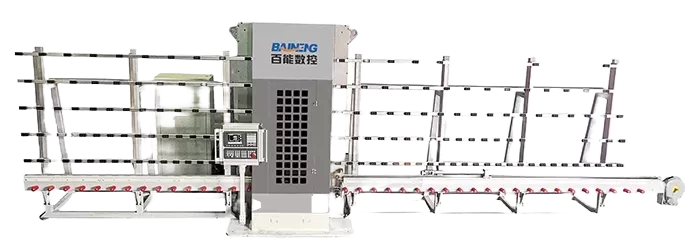
Sign 1: Complex Cutouts and Custom Shapes Cause Constant Bottlenecks
Demand for custom glass fabrication has shifted dramatically over the past decade. Standard rectangular sheets no longer drive the highest profit margins. Commercial and high-end residential clients demand frameless shower doors, structural balustrades, sink cutouts, and electrical socket openings.
Processing these parts manually involves multi-station routing. An operator cuts the opening, moves the sheet to a drilling station, and finishes the inner radii with portable grinding tools. Each manual transfer increases cycle times and the risk of operator handling errors.
Worse, manual or semi-automatic cutout work often leaves micro-fissures along internal edges. These tiny imperfections are invisible to the naked eye. When the sheet enters the tempering furnace, thermal stresses exploit these micro-cracks, causing catastrophic explosions inside the furnace.
Multi-Step Inefficiency: Handling a single glass panel across three separate stations slows your entire factory rhythm.
Internal Stress Vulnerability: Uneven manual grinding inside hinge cutouts creates localized stress points that fail during tempering.
Inconsistent Geometry: Manual radiused corners vary from piece to piece, causing fitment issues during on-site installation.
An industrial CNC glass router machine solves these problems through single-setup automation. The machine holds the glass firmly on a vacuum pod bed while executing drilling, milling, edge grinding, and fine polishing in one continuous program.
Because the cutting head uses continuous water cooling and precise spindle speeds, it eliminates edge chatter and micro-cracking. You gain consistent, defect-free internal cutouts that pass through tempering ovens without breaking.
Sign 2: High Dependency on Master Craftsmen Threatens Business Stability
Experienced glass technicians possess exceptional tactile skills. They can feel the glass vibrating, sense when a diamond wheel is glazing over, and hand-grind irregular corners by sight. These skilled workers are increasingly difficult to hire and retain.
When your production relies entirely on two or three veteran operators, your business carries immense structural risk. If a senior technician falls ill, takes leave, or retires, your ability to deliver high-precision architectural panels comes to a sudden halt.
Manual glass handling also carries persistent occupational safety risks. Lifting, repositioning, and manually routing heavy monolithic or laminated panels leads to repetitive strain injuries and lacerations. High compensation claims and downtime directly reduce operating margins.
A CNC glass working center shifts the critical skill requirement from manual dexterity to digital machine programming. CAD/CAM software controls the tool paths, feed rates, and diamond wheel RPM.
Modern equipment from builders like BAINENG CNC features intuitive user interfaces. Instead of spending years training an artisan, your workshop can train an entry-level operator to run complex jobs within a few days. The machine executes the precision movements while your staff focuses on safe loading, unloading, and quality verification.
Sign 3: Rising Scrap Rates and Rework Expenses Drain Your Net Profits
Material costs for architectural float glass, low-iron sheets, and laminated panels continue to climb. In a manual shop, a scrap rate of 8% to 12% on complex processing jobs is often accepted as the cost of doing business. That assumption destroys your profitability.
Scrap occurs at various stages during manual processing:
Dimensional Oversizing: Manual errors lead to cutouts being off-axis by 2 mm, rendering expensive bespoke panels useless.
Edge Chipping: Excessive manual feed pressure chips the delicate edges of monolithic architectural glass.
Polishing Imperfections: Inconsistent manual pressure leaves cloudiness or uneven chamfers, leading to site rejections by architects.
Every rejected panel costs you double. You lose the raw glass cost, the electrical energy spent running edge polishers, the operator's hours, and valuable furnace cycle time. If the rejected part delays an on-site installation team, you face severe contractual penalties.
An industrial glass router machine eliminates human inconsistency through rigid structural engineering. Heavy-duty gantry structures, high-precision ball screws, and closed-loop servo motors deliver positional accuracy within ±0.1 mm.
The machine applies steady, calibrated pressure on diamond tooling, virtually eliminating edge chipping. Dropping your workshop scrap rate from 10% down to under 2% delivers immediate cash savings that flow directly into net profit.
Sign 4: You Are Forced to Walk Away from High-Ticket Commercial Contracts
Tier-1 commercial contractors, high-end interior architects, and luxury storefront developers do not award contracts based solely on lowest price. They demand proof of manufacturing consistency, documented tolerances, and strict delivery timelines.
If your shop operates solely with traditional machines, procurement managers will identify you as a supply chain risk. They know manual operations struggle to produce 200 identical shower enclosures or 50 complex laminated structural glass panels on tight delivery dates.
Without CNC capabilities, workshops find themselves trapped in a race to the bottom. They compete strictly on commodity square-meter cutting and straight-line flat edging, where margins are razor thin and competition is cutthroat.
Investing in a dedicated CNC glass router machine serves as your technical qualification credential. It allows you to bid confidently on lucrative commercial projects, including:
Architectural canopies and spider-fitting curtain walls requiring precise countersunk holes.
Custom-shaped display cases and museum-grade showcase glass with mitered edges.
Appliance glass, high-spec kitchen splashbacks, and architectural mirrors with integrated cutouts.
Marine and transportation glass requiring strict, repeatable perimeter tolerances.
Moving up the value chain transforms your enterprise from a generic glass cutter into a specialized fabrication partner. You command higher pricing per square meter because few competitors can match your quality and turnaround times.
Sign 5: Your Production Floor Has Reached a Physical Footprint Ceiling
Factory real estate is expensive. When fabricators need more output, their instinctive reaction is to buy more standalone machines. They add a dedicated drill press here, a manual shape beveler there, and a separate edge-polishing table across the aisle.
This reactive purchasing creates chaotic factory logistics. A single sheet of glass travels back and forth across your shop floor on A-frames. Workers spend more time moving, loading, and staging raw material than actually processing it.
Every manual touchpoint between machines increases the probability of surface scratches, corner bumps, and accidental drops. The workshop becomes congested, aisles are blocked, and expansion seems impossible without renting an additional building.
Automated glass machining centers solve this problem by optimizing your output-to-footprint ratio. A single multi-axis glass router machine replaces multiple standalone processing stations:
It drills hinge and handle holes using automatic tool changers.
It mills large openings and internal corner cutouts.
It grinds complex shaped perimeters with coarse diamond wheels.
It polishes edges to an optical finish using cerium oxide or resin wheels.
By consolidating four operations into one rigid workstation, you clear floor space. You establish a direct, linear workflow: raw cut glass enters the CNC cell, exits fully prepped for the tempering line, and moves directly to dispatch. You multiply workshop capacity without adding a single square meter of floor space.
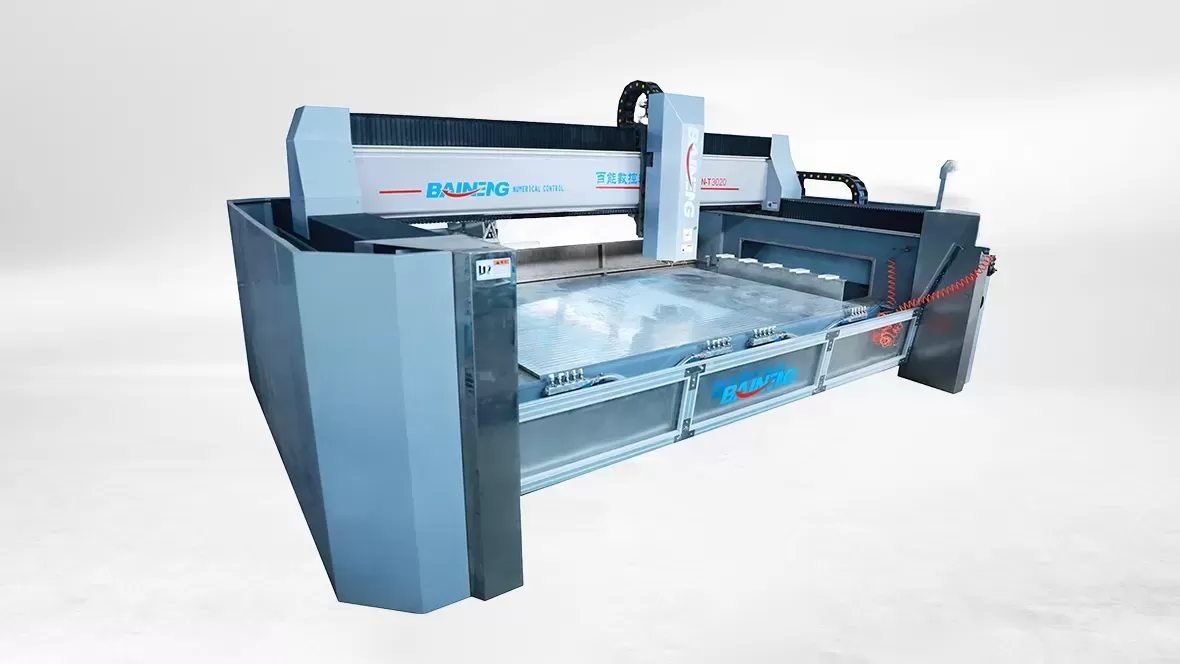
Calculating the ROI: The Math Behind the Investment
Business owners often delay automated equipment purchases due to upfront capital expenditures. A realistic financial analysis demonstrates that an industrial CNC glass router machine pays for itself far faster than most shop owners anticipate.
Consider a practical operational example:
Labor Consolidation: Replacing two manual workstations saves $70,000 to $100,000 annually in labor and associated overhead costs.
Scrap Reduction: Cutting your scrap volume by $2,500 monthly saves an additional $30,000 each year.
New High-Margin Revenue: Capturing just two additional custom commercial architectural orders per month can add $60,000 to $120,000 in gross margin annually.
Combined, these operational improvements typically yield $160,000 to $250,000 in recurring annual financial benefits. Most operations achieve full return on investment (ROI) within 10 to 18 months of commissioning.
Frequently Asked Questions
Q1: What glass thicknesses and types can a CNC glass router machine process?
A1: Industrial CNC glass machining centers can process monolithic float glass, low-iron glass, tinted glass, laminated glass panels, and patterned glass. Standard configurations handle material thicknesses ranging from 3 mm up to 25 mm. High-powered machines with robust spindle systems can process thicker laminated architectural configurations up to 40 mm or more.
Q2: How difficult is it to train operators who have no previous CNC experience?
A2: Operators do not need computer programming backgrounds to run modern equipment. Machine builders design modern glass routing machines with intuitive graphic interfaces. Operators import standard DXF CAD files, and the software automatically calculates tool paths, feed rates, and tool changes. A standard technician can learn everyday operation within three to five days of structured training.
Q3: What daily and weekly maintenance routines are required?
A3: Daily maintenance involves cleaning glass sludge from work tables, checking vacuum suction seals, verifying water coolant pressure, and inspecting tool wear. Weekly tasks include lubricating linear guide rails, checking central lubrication reservoirs, and dressing diamond grinding wheels to maintain optimal grinding efficiency and edge quality.
Q4: How does a glass router machine prevent edge chipping during processing?
A4: Chipping occurs when tooling experiences deflection or improper feed pressure. CNC routers utilize rigid structural steel beds, precision servo-driven axes, and high-frequency balanced spindles that eliminate mechanical vibration. Additionally, high-pressure internal and external water feeds cool the diamond grinding edge continuously, preventing heat buildup and edge degradation.
Q5: How does a glass router machine compare to waterjet cutting machines?
A5: Waterjet cutting handles rapid interior pierce cuts on thick glass, but it leaves a matte, non-polished edge that requires secondary grinding if exposed. A CNC glass router machine mills, grinds, chamfers, and polishes the glass edge in a single setup. For finished architectural glass products like shower doors, mirrors, and tabletops, a router provides a complete, installation-ready component.
Take the Next Step in Glass Fabrication
Recognizing the operational bottlenecks in your workshop is the first step toward building a more resilient, profitable manufacturing business. If your team is struggling with high scrap rates, labor shortages, and complex architectural shapes, manual machinery has reached its limit.
Upgrading your workshop with an industrial glass router machine protects your margins, standardizes quality, and allows you to compete for the highest-paying contracts in the commercial market.
BAINENG CNC manufactures industrial-grade CNC glass working centers designed for precision, speed, and long-term durability. Our engineering team assists fabricators worldwide in sizing machines, analyzing workshop layouts, and projecting real-world capital payback.
Are you ready to modernize your glass production? Contact our technical sales team today to request a layout consultation, discuss your custom production requirements, or schedule a live machining demonstration.