
 FAQs
FAQs Factory Tour



Glass fabrication margins are tighter than ever. Skilled hand-polishers are retiring, labor rates continue to rise, and architectural trends demand razor-thin edge tolerances. Frameless shower doors, structural balustrades, automotive windshields, and electronics display covers now require edge finishes that tolerate zero visible defects.
If you plan to expand your factory floor this year, buying an edge polisher is no longer a routine equipment swap. It is a long-term capital decision that determines your facility throughput for the next ten years. Modern machinery builders like BAINENG CNC design their systems not just to grind profiles, but to act as digital nodes in highly automated production lines.
Before issuing a purchase order or comparing equipment quotes, evaluate your purchase against the updated technological standards of 2026. Here is what production directors, plant managers, and mechanical engineers must inspect before committing capital.
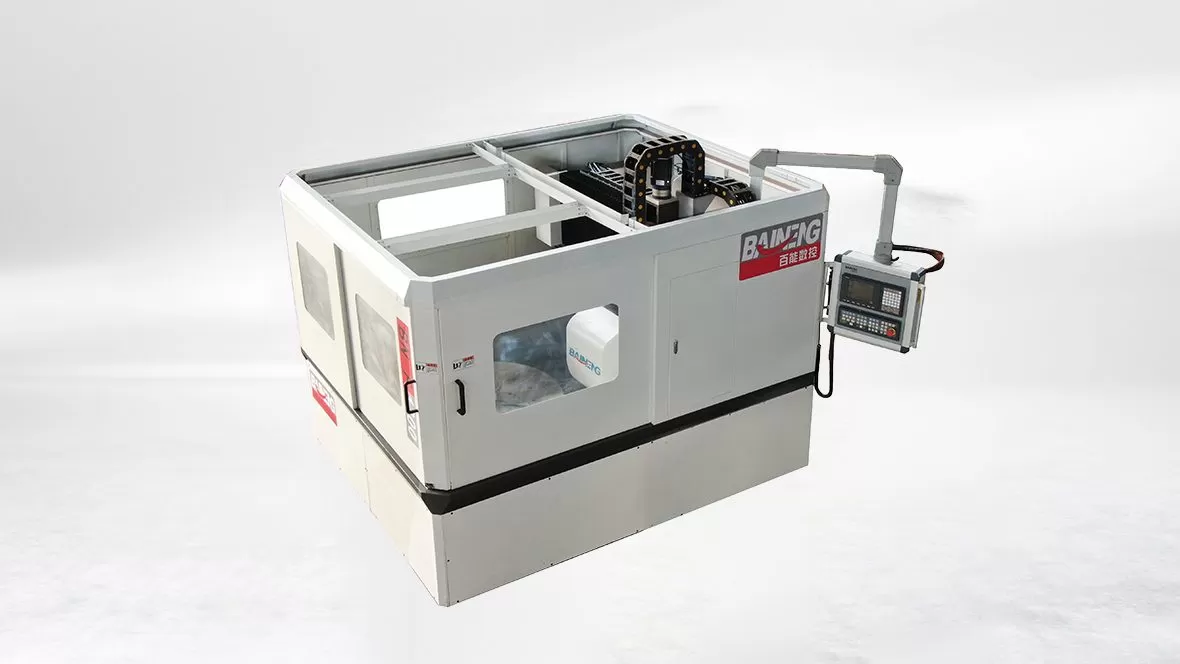
1. Spindle Engineering and Dynamic Rigidity
The spindle is the core of any CNC glass processing center. A poor spindle causes vibration, which destroys diamond tooling and leaves micro-fractures along the edge of the glass sheet. These micro-fractures lead to unexpected breakage inside the tempering furnace.
Inspect the spindle motor specifications closely. Look for synchronous high-torque electro-spindles that maintain stable torque across both low and high RPM ranges:
Spindle Runout: Insist on dynamic runout below 0.005 mm at maximum operating speeds. Any larger deviation translates directly into rippled edge profiles.
Power and Speed: A robust setup requires a spindle rated between 9 kW and 15 kW, running smoothly from 1,000 RPM up to 12,000 RPM.
Internal Cooling: The tool interface requires central high-pressure water delivery directly through the spindle shaft. External coolant nozzles shift out of place easily and starve diamond wheels of necessary lubrication.
Rigidity also depends on the machine chassis. Fabricated thin-sheet steel frames warp over time due to hydraulic stresses and thermal cycles. Prioritize structural frames constructed from stress-relieved, heavy tubular steel or cast iron bases with anti-corrosion epoxy coatings.
2. Kinematics: 3-Axis vs. 5-Axis CNC Glass Machine
Your product catalog determines the axis configuration you need. Investing in too few axes limits you to simple geometry, while unneeded complexity increases maintenance costs.
A standard 3-axis CNC glass polishing machine handles rectangular lites, simple radius corners, and perimeter profiles efficiently. However, market demand in 2026 leans toward complex geometric cuts, internal cut-outs for hardware, and variable-angle miter joints.
Consider the functional differences:
3-Axis Machines: Best for standard architectural panels, table tops, and straightforward shower doors. They offer quick setup times and lower upfront investment.
4-Axis Machines: Add an aggregate or C-axis rotation. This setup allows continuous 360-degree edge profiling without stopping the tool rotation, speeding up circular or freeform panels.
5-Axis CNC Glass Machine: Crucial for variable beveling, complex countersinking, irregular automotive glass, and compound-angle structural facades. The working head tilts to polish complex internal cut-outs that previously required manual touch-ups.
Pair your axis configuration with a high-capacity Automatic Tool Changer (ATC). Tool-to-tool switch times should register under 10 seconds. Look for tool carousels holding at least 16 to 24 tool stations, protected inside an enclosed, waterproof tool bay that keeps abrasive glass dust off the tool holders.
3. Intelligent Wear Compensation and Pressure Sensing
The difference between standard industrial glass fabrication equipment 2026 models and older generations lies in adaptive automation. Polishing wheels made of cerium, rubber, and synthetic resin wear down continuously throughout a single shift.
On legacy machinery, operators manually guess tool erosion and offset parameters in the CNC control. This manual guesswork causes two issues: under-polishing, which leaves hazy edges, or over-polishing (burn-in), which chips the glass and destroys the wheel.
Your next automatic glass edge polishing machine should feature automatic wheel wear compensation. These systems measure the physical tool diameter and height after a set number of meters processed, automatically updating CNC offsets in real-time.
Modern machines combine tool compensation with closed-loop pressure sensing. Electro-pneumatic or servo-driven pressure regulators maintain uniform contact force between the polishing wheel and the glass profile, regardless of machine movement speed or edge radius variations.
4. Industry 4.0 Compatibility and Control Usability
You cannot run a modern glass plant on isolated, disconnected machinery. Your new CNC glass processing center must communicate seamlessly with factory Enterprise Resource Planning (ERP) and Manufacturing Execution Systems (MES).
Advanced manufacturers like BAINENG CNC equip their machines with open-architecture industrial PC controls running on familiar platforms. These interfaces allow operators to load CAD drawings without manual G-code programming.
Key software features to verify include:
Parametric Macro Libraries: The software must store standard cut-outs for door hinges, patch fittings, electrical sockets, and corner radius designs. The operator selects the template, inputs dimensions, and hits run.
Direct DXF/DWG Import: The CAM module should ingest vector drawings, automatically detect tool paths, assign profile sequences, and display collisions in a 3D simulation.
Remote Diagnostics: The control system must support secure Ethernet connection protocols. If a sensor fails, factory technicians can connect remotely to diagnose hardware faults, minimizing downtime.
Barcode/QR Scanning: Operators scan a tracking label attached to the glass lite, and the machine pulls the exact cutting file and tool path instantly without human entry error.
5. Glass Sludge Handling and Closed-Loop Water Management
Coolant management affects your finished product quality, component lifespan, and utility bills. Glass particles are abrasive. When recycled water carries suspended glass sludge back into the polishing zone, it scratches the polished edges, clogs internal spindle channels, and damages linear guide blocks.
Look for machines built with integrated ecological drainage pathways:
Sloped Stainless Steel Trays: Machine beds should have steep drainage channels that prevent glass sediment from settling inside the working envelope.
Centrifugal Sludge Separators: Instead of simple settling tanks, evaluate continuous mechanical decanters or cyclone separators that drop glass fines into easily removable collection drums.
Closed-Loop Filtration: Water should run through multi-stage filtration down to 5 microns before returning to the spindle. This preserves polishing wheel life and prevents abrasive wear on your internal water rotary joints.
6. Calculating TCO, Machine Price, and True ROI
Evaluating your purchase strictly on the initial price tag is a common procurement mistake. The glass polishing machine price & ROI equation depends on scrap rate reduction, cycle times, electricity consumption, and routine service requirements.
A cheaper machine using off-brand mechanical parts costs more over three years because unexpected breakdowns halt your downstream tempering furnace and laminating line. A stopped furnace burns money every minute it sits idle.
Review the components inside the electrical cabinet. Ensure the machine uses tier-one components from global brands:
Servo Motors and Drives: Yaskawa, Siemens, or Panasonic.
Pneumatics: Festo or SMC.
Linear Guides and Ball Screws: THK, Hiwin, or Rexroth with automated central lubrication manifolds.
Electrical Switchgear: Schneider or ABB.
Global component integration means your local maintenance technician can source replacement relays, sensors, or linear runner blocks locally, avoiding weeks of downtime waiting for air freight delivery.
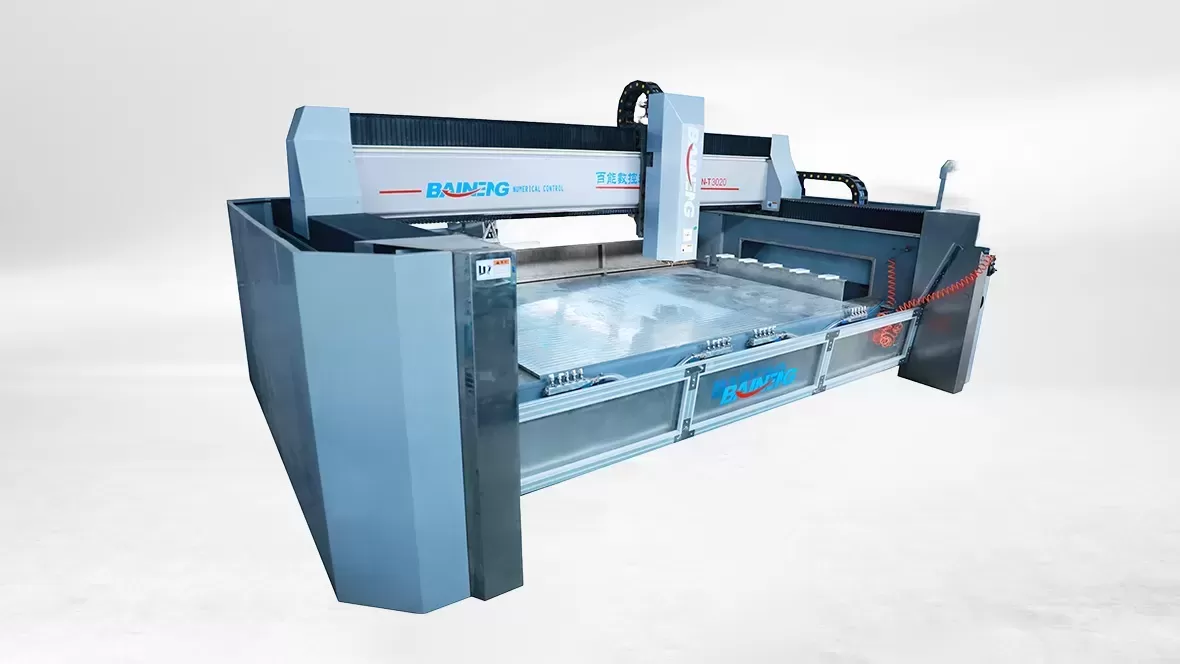
7. Factory Acceptance Testing (FAT) Checklist
Do not sign off on machinery shipment without verifying physical processing standards. Run a rigorous factory acceptance test (FAT) at the builder's production facility or via an intensive live-video run-off:
Diagonal Tolerance Test: Process a 2000 mm × 1000 mm × 12 mm panel. Measure diagonal differential across opposite corners; deviation should not exceed 0.2 mm.
Edge Finish Verification: Inspect the polished edge under a 1000-lumen inspection light. The edge must be completely free of micro-chips, haze, wheel chatter lines, or uneven bevel profiles.
Vacuum Table Suction Test: Test small component holding power. Process a narrow 150 mm × 300 mm glass shelf at high feed speeds to confirm that vacuum suction cups hold the workpiece securely without slippage.
Cycle Time Run: Time a complex shape complete with one internal hinge cutout and three holes. Compare actual machining time with the software simulation run.
Frequently Asked Questions
Q1: How does an automatic glass edge polishing machine differ from a straight-line edging machine?
A1: A straight-line edger only processes straight edges on regular, rectangular glass moving along a continuous conveyor belt. A CNC glass polishing machine fixes the glass horizontally via vacuum pods, moving the spindle on multiple axes around the perimeter. This allows the CNC to polish complex curves, internal cut-outs, irregular bevels, countersinks, and decorative shapes that straight-line machines cannot process.
Q2: What maintenance tasks are required daily on a CNC glass processing center?
A2: Daily maintenance takes roughly 15 to 20 minutes. Operators must clean the vacuum suction pads, wipe down linear guideway seals, verify auto-lubrication tank oil levels, empty the glass sludge collection bin, and clean the tool taper sockets. Operators must also run a quick calibration sweep to inspect polishing wheel profiles for uneven wear.
Q3: What determines the glass polishing machine price & ROI for mid-sized processing shops?
A3: Initial prices range from $40,000 for standard 3-axis models to upwards of $180,000 for high-speed, 5-axis systems with extensive automation. ROI calculations center on three factors: labor elimination (replacing manual polishing teams), scrap reduction before the tempering stage, and process consolidation. Most glass processors achieve complete capital payback within 12 to 18 months through higher throughput and lower reject rates.
Q4: How does spindle runout degrade the final glass edge quality?
A4: Spindle runout creates an eccentric tool rotation pattern. Instead of a smooth, uniform abrasion across the edge, the diamond or resin wheel strikes the glass with a microscopic hammering motion. This creates visible chatter marks, leaves uneven micro-scratches, chips delicate glass corners, and leads to edge failure during thermal toughening.
Q5: Can our operators program a 5-axis CNC glass machine without advanced CAD skills?
A5: Yes. Leading machine manufacturers now develop touch-based, intuitive graphic user interfaces. The system converts standard DXF drawings into machine toolpaths automatically. Operators simply select standard parametric templates from a touchscreen library, type in the desired length, width, and glass thickness, and initiate the machining cycle without writing G-code manually.
Modernize Your Fabrication Line
Choosing an industrial glass polishing system in 2026 comes down to a clear formula: Required Edge Tolerances × Part Complexity × Digital Automation Level. Purchasing a machine that lacks smart wheel compensation or industrial network interfaces risks technical obsolescence before the investment is fully amortized.
At BAINENG CNC, we engineer robust, intelligent machine centers designed to meet challenging architectural and industrial processing requirements. Our equipment combines structural rigidity with responsive controls, keeping your production line fast, accurate, and profitable.
Ready to optimize your glass processing operations? Contact our technical engineering team today. Send us your most demanding CAD processing drawings, and we will return a comprehensive cycle time analysis, tool profile strategy, and customized equipment quote for your facility.