
 FAQs
FAQs Factory Tour



Industrial glass fabrication demands high standards of precision, consistency, and material yield. Traditional cutting methodologies, relying heavily on manual measurement and hand-held cutting wheels, struggle to meet the strict tolerances required by contemporary architectural and automotive standards. The introduction of automated machinery has transformed the workshop floor, converting a highly skilled, high-risk manual craft into a predictable, highly controllable CNC process.
For modern glass processing facilities, selecting the right machinery is a significant capital decision. An automatic glass cutting machine represents the foundation of the production line, determining the speed and quality of every subsequent step, including edging, tempering, and laminating. BAINENG CNC designs these systems to address the day-to-day challenges of raw sheet management, helping manufacturers maintain tight tolerances while controlling operational overhead.
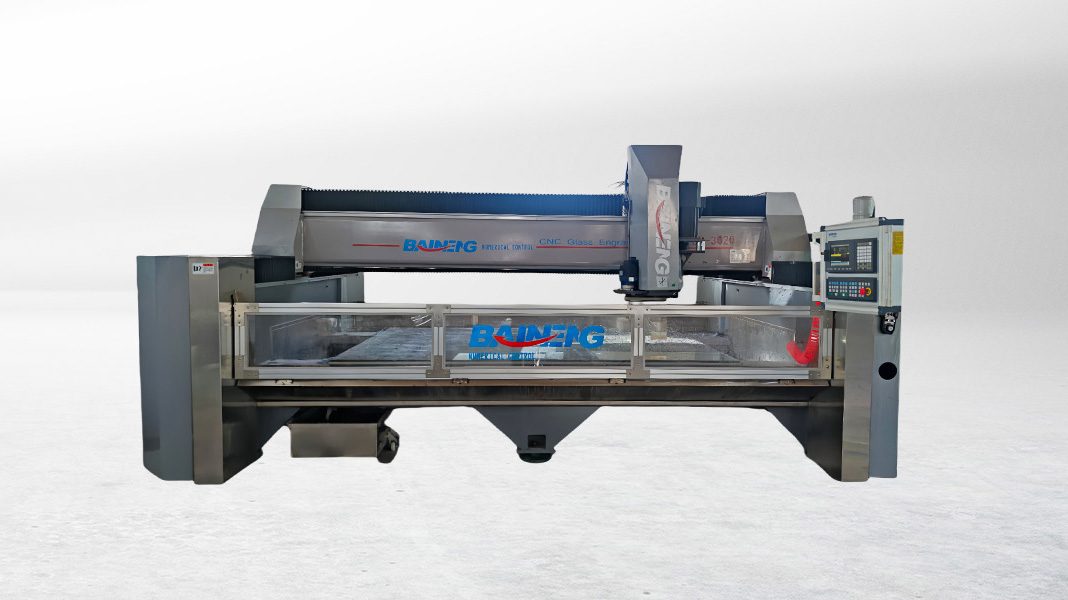
Structural Components and Engineering Principles
The operational capability of an automatic glass cutting machine depends entirely on its structural design and the quality of its mechanical components. A stable frame prevents vibrations that could otherwise lead to micro-fractures along the cut line.
The Gantry and Drive System
At the core of the cutting system is a heavy-duty steel gantry, stress-relieved through thermal treatment to prevent distortion over years of continuous operation. Linear guide rails mounted on this gantry allow the cutting bridge to travel with minimal friction. Precision-ground helical rack-and-pinion systems, driven by high-resolution AC servo motors, manage movement across the X, Y, and Z axes. This configuration allows the machine to achieve rapid acceleration while maintaining positional accuracy within fractions of a millimeter.
Cutting Head Assembly and Pressure Control
The cutting head is the primary interface between the machine and the glass sheet. It houses a tungsten carbide or diamond cutting wheel that rotates freely to follow complex paths. To ensure clean scoring without crushing the glass matrix, the machine utilizes a dynamic pressure control system. A proportional pneumatic valve regulates the downward force exerted on the cutting wheel, adjusting the pressure instantly based on the thickness of the glass and the current travel speed. This prevents excessive force on corners where the machine decelerates, reducing edge chipping.
Air Flotation and Positioning Systems
Handling large, heavy sheets of raw glass requires a system that prevents surface scratching. The cutting table features an integrated air flotation system, powered by a high-capacity blower. This blower forces air through a grid of specialized ball valves on the tabletop, creating a thin cushion of air that allows operators to slide multi-ton glass sheets with minimal effort. Once the sheet is roughly positioned, mechanical registration pins emerge from the table to align the glass accurately against the zero-point of the machine coordinates.
Overcoming Operational Challenges in Glass Processing
Glass fabricators face constant pressure to control raw material costs and minimize processing defects. Scrap material and broken sheets represent direct hits to profit margins. Modern automated machinery provides targeted solutions to these persistent industry challenges.
Reducing Material Waste through Nesting: Raw glass sheets represent a major ongoing expense. Integrated CAD/CAM software allows operators to import diverse cutting lists and automatically arrange shapes to maximize material utilization. This nesting process minimizes the size of remnant glass pieces, ensuring that very little material is discarded.
Preventing Micro-Fractures and Edge Failure: When glass is scored with inconsistent pressure, invisible micro-cracks form along the cut line. These cracks expand during the breaking process or when the glass is subjected to high heat in the tempering furnace. By maintaining a constant, computer-regulated cutting force and dispensing a controlled amount of cutting fluid (vanishing oil), the machinery ensures clean, uniform score lines that break predictably every time.
Handling Varied Glass Thicknesses: A versatile production line must handle thin 3mm glass for picture frames and thick 19mm glass for structural panels on the same shift. Manual adjustment for these transitions is time-consuming and prone to human error. Digital control systems store specific parameter profiles for different glass types, allowing operators to switch settings with a few inputs on the touchscreen interface.
Industrial Applications and Production Integration
The versatility of an automatic glass cutting machine makes it valuable across several distinct commercial sectors. Each sector demands different performance characteristics, which the machine accommodates through programmable parameters.
In the architectural sector, the focus is primarily on processing large sheets of laminated and float glass for windows, curtain walls, and structural balustrades. These applications require straight, long-distance cuts with absolute parallelism. The machinery must interface cleanly with automatic loading arms that transport jumbo glass sheets from storage racks to the cutting table, keeping the manual labor requirements to a minimum.
For furniture and interior design applications, the challenge lies in cutting complex, non-linear shapes. Table tops, shower enclosures, and mirror panels often feature intricate curves and internal cutouts. The multi-axis CNC system reads vector files directly, executing complex geometries with smooth interpolation, which greatly reduces the time required for subsequent edge grinding and polishing.
Industrial and appliance manufacturers require high throughput and tight dimensional tolerances for items like oven doors, refrigerator shelves, and control panels. In these high-volume settings, the cutting machine often operates as part of a fully automated production cell, feeding scored glass directly onto mechanical breaking tables and conveyor belts that transport the pieces to double-edging lines.
Routine Maintenance and Long-Term Reliability
Maintaining the accuracy of CNC machinery over a multi-year lifespan requires systematic maintenance. Neglecting simple wear items can lead to drift in accuracy and unplanned downtime.
Daily inspections should focus on the cutting head assembly. The cutting wheel must rotate without any lateral play in its axle, and the oil dispensing nozzle must remain free of glass dust to ensure constant lubrication along the score line. Operators should also clear the air flotation table of any small glass shards that could clog the air valves or scratch incoming sheets.
Weekly maintenance tasks include wiping down the linear guide rails and applying a thin layer of recommended lubricant. Dust and oil mixture on the rails can cause resistance, putting extra load on the servo motors and eventually affecting positioning accuracy. Operators should also verify that the pneumatic filters are clean and that the incoming air supply is dry, as moisture in the pneumatic lines can damage the proportional valves.
Monthly calibration routines are recommended to compensate for normal wear and tear. Running standard test shapes, measuring the output with high-precision calipers, and inputting calibration offsets into the PLC ensures the machine continues to operate within its original design specifications.
Strategic Sourcing with BAINENG CNC
Acquiring an automatic glass cutting machine is a partnership that extends beyond the initial machinery delivery. A reliable supplier must offer robust mechanical design alongside accessible technical support, spare parts availability, and training resources.
BAINENG CNC focuses on manufacturing heavy-duty glass processing equipment designed for long-term service. By sourcing high-grade mechanical parts and implementing strict quality control protocols during assembly, the machinery delivers reliable performance under demanding multi-shift conditions. Our engineering team assists with factory layout planning to ensure the cutting equipment integrates cleanly with your existing material handling, loading, and breaking systems, maximizing floor space utilization and labor efficiency.
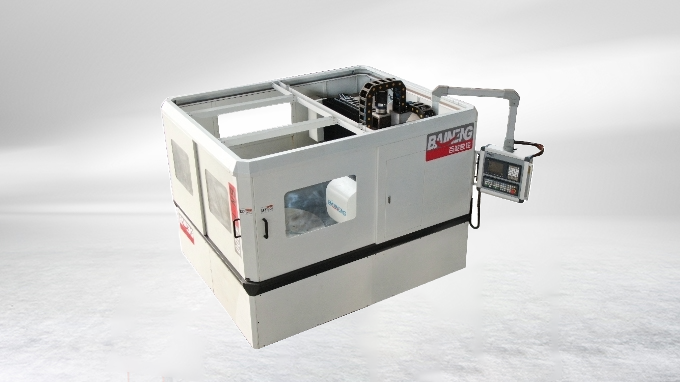
Request a Technical Consultation and Custom Quote
Selecting the optimal machine configuration requires a detailed analysis of your production volumes, average glass thicknesses, and typical shape profiles. Our technical engineers are available to review your current production requirements and recommend a system tailored to your specific operational goals. Submit an inquiry today to receive detailed technical specifications, floor plan recommendations, and a comprehensive quote for your next equipment upgrade.
Frequently Asked Questions
Q1: What is the maximum glass thickness an automatic glass cutting machine can handle?
A1: Standard systems are designed to cut glass thicknesses ranging from 3mm up to 19mm. For specialized industrial applications, machines can be configured with high-pressure cutting heads capable of scoring thinner or thicker substrates, provided the appropriate cutting wheel angle and pressure settings are applied.
Q2: Why is cutting fluid necessary during the scoring process?
A2: Cutting fluid, often a fast-evaporating light oil, serves two main purposes. It lubricates the cutting wheel axle to ensure smooth rotation and penetrates the freshly scored line to prevent the micro-fissures from "healing" or closing before the glass is moved to the breaking table. This ensures a clean, controlled break along the score line.
Q3: How does the machine handle shaped or non-linear cuts?
A3: The CNC controller uses 2D CAD files (typically in DXF format) to generate tool paths. The X and Y axes move simultaneously in an interpolated path, while the cutting head rotates to remain tangential to the cutting direction. This allow the machine to cut complex curves, circles, and irregular shapes with high precision.
Q4: Can this machine be integrated with automatic loading and breaking systems?
A4: Yes, the control software and physical height of the table are designed to interface with automatic glass loading tables at the input end and manual or pneumatic breaking tables at the output end. This integration forms a complete cutting line that reduces manual handling and protects operators from lifting hazards.
Q5: What is the typical lifespan of the cutting wheel, and when should it be replaced?
A5: The lifespan of a tungsten carbide cutting wheel depends on the linear meters cut and the thickness of the glass being processed. Generally, a cutting wheel should be replaced when visual inspections reveal wear on the cutting edge, or when the edge of the broken glass begins to show increased chipping or roughness, indicating that the score is no longer clean.