
 FAQs
FAQs Factory Tour



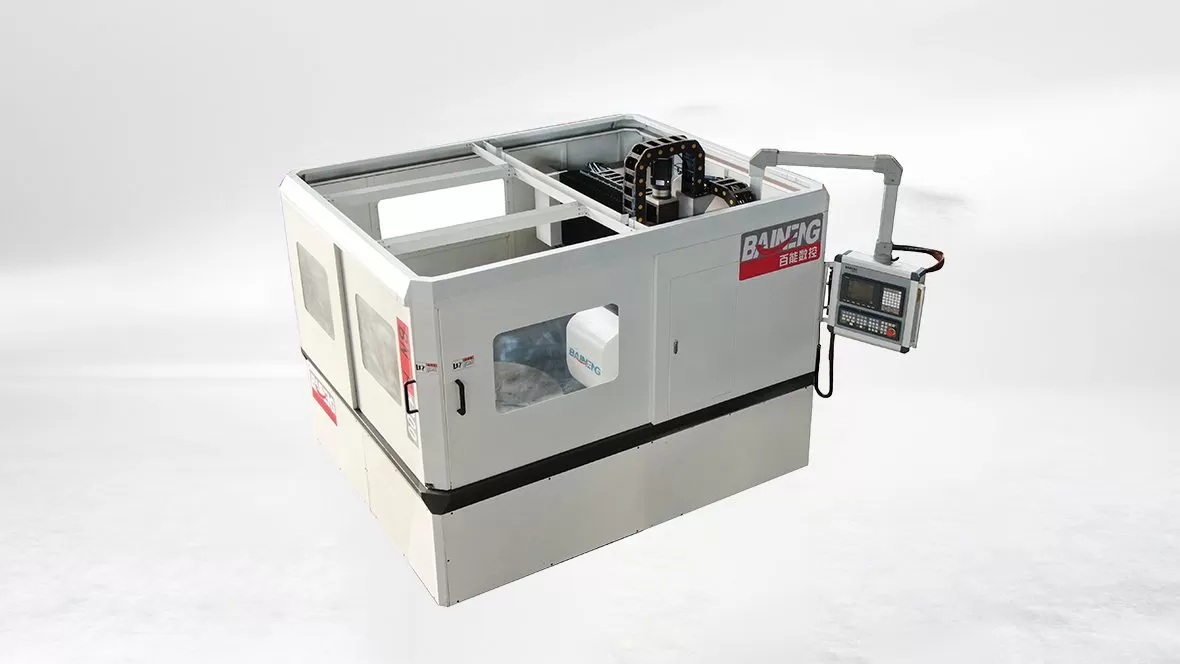
Industrial glass processing requires high repeatability, close tolerances, and smooth edge finishes. As architectural designs and industrial applications call for increasingly complex geometries, traditional processing methods involving separate cutting, edging, and drilling machines introduce operational bottlenecks. A unified cnc glass working center addresses these challenges by consolidating multiple machining stages into a single, automated setup.
Manufacturers like BAINENG CNC design these multi-functional systems to handle flat and shaped glass sheets. By performing grinding, polishing, milling, and drilling operations sequentially without removing the workpiece, these machines reduce human handling errors, prevent micro-fracturing along the edges, and significantly lower labor requirements. Implementing this technology allows fabricators to meet the strict quality standards demanded by the structural glazing, automotive, and home appliance industries.
Addressing the Structural Challenges of Glass Fabrication
Glass is a brittle material with high hardness but low tensile strength. During mechanical processing, the material does not undergo plastic deformation; instead, it fractures under stress. Standard tooling can easily cause micro-cracking, chipping, or thermal breakage if the rotational speeds, feed rates, and coolant delivery are not managed. Moving glass sheets between a dedicated bilateral edger, a separate drilling machine, and a manual polishing station increases the risk of mechanical damage.
Using a cnc glass working center mitigates these risks by stabilizing the workpiece on a heavy-duty vacuum bed. The glass remains stationary while the automated tooling head performs all required actions. This stationary approach eliminates the mechanical stresses associated with repeated loading, positioning, and unloading, protecting the structural integrity of the sheet. It also prevents errors in edge alignment, which often occur when registering a workpiece on multiple different machines.
Mechanical Architecture of a CNC Glass Working Center
The structural rigidity of the machine frame determines its ability to absorb vibration during high-speed grinding and milling. A heavy, stress-relieved steel gantry or cast-iron base forms the foundation of high-performance machinery. Vibration damping is key; even minor harmonic vibrations can transfer to the glass edge, resulting in visible chatter marks, microscopic chips, or premature tool wear.
High-Torque Spindle Systems
The spindle is the heart of the machining center. It must deliver consistent torque across a wide range of rotational speeds, typically from 0 to 12,000 RPM or higher. Liquid-cooled electro-spindles are standard in BAINENG CNC machinery because they maintain stable operating temperatures during prolonged processing cycles. These spindles feature high-precision ceramic bearings to minimize axial and radial runout, ensuring that diamond wheels and polishing tools rotate with maximum concentricity.
Multi-Axis Motion Control
Modern glass fabrication involves interpolating movements across multiple coordinates. Standard configurations include three axes (X, Y, and Z), which handle flat profiling, internal cutouts, and basic drilling. For complex beveling, variable-angle edging, and three-dimensional shapes, a four-axis or five-axis system is utilized. These advanced motion paths are driven by high-resolution AC servo motors coupled with precision-ground ball screws and linear guideways. Absolute linear encoders provide continuous feedback to the CNC controller, allowing for positioning accuracy within hundredths of a millimeter.
Clamping and Vacuum Holding Manifolds
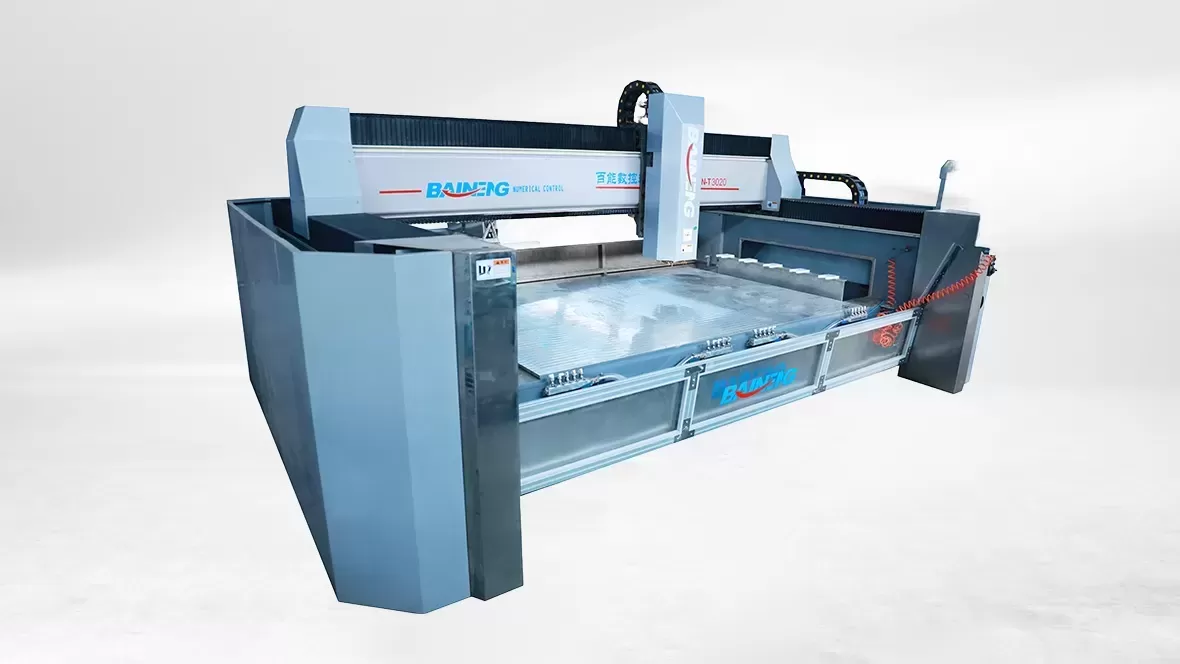
Securing a large, heavy glass plate during high-speed routing requires a reliable vacuum holding system. The worktable features adjustable vacuum pods that can be positioned dynamically based on the CAD geometry of the glass. A dual-circuit vacuum manifold allows operators to clamp the glass and position reference stops independently. High-friction rubber suction cups hold the workpiece securely, resisting the lateral forces generated by diamond grinding wheels without scratching the delicate low-E or reflective coatings on the glass surface.
Tooling Integration and Automatic Tool Changers
To process glass from a raw cut to a brilliant, polished edge without operator intervention, a cnc glass working center relies on an integrated automatic tool changer (ATC). Tool carousels are typically mounted on the gantry or alongside the work table, holding a variety of specialized tools, including:
Segmented Diamond Wheels: Used for rapid material removal during the initial rough edging stage.
Continuous Rim Diamond Wheels: Used to define the exact geometry and produce a fine, satin edge finish.
Polishing Wheels: Composed of synthetic rubber or felt impregnated with cerium oxide to achieve a high-gloss, transparent finish.
Core Drills and Countersinks: Designed with internal water channels to cool the diamond tips and flush out glass core remnants.
Finger Routers: Engineered for milling internal cutouts, sink openings, and complex radii.
The CNC software manages tool wear compensation automatically. As diamond wheels and polishing pads wear down over hundreds of cycles, the system adjusts the tool offsets to maintain consistent pressure and dimensional accuracy. Dynamic tool calibration sensors measure tool length and diameter before each run, reducing the need for manual adjustments and test cuts.
Operational Software and CAD/CAM Workflow
The translation of architectural blueprints into physical glass products relies on the integration of CAD/CAM software. The design file, usually imported as a DXF or DWG format, is processed by the CAM engine to define the toolpaths, spindle speeds, feed rates, and tool selection. The software must automatically calculate the entry and exit paths for drills to prevent exit-side spalling, which is a common issue when drilling brittle materials.
Modern control interfaces simplify the setup process through parametric programming macros. For standard tasks such as rectangular cutouts, shower door hinge notches, and circular holes, operators do not need to draft a complete CAD model. They can simply input the dimensions and coordinates directly into the machine controller. This streamlined workflow reduces idle times and makes low-volume or bespoke production runs economically viable.
Primary Applications Across Key Glass Sectors
A cnc glass working center is used across several manufacturing fields, each with its own set of quality standards and geometric demands.
Architectural and Structural Glass
In structural glazing, frameless glass doors, balustrades, and partition walls require precise fabrication. These panels often use thick tempered or laminated glass that must be processed prior to the heat treatment phase. Precise notch cuts for mounting hardware, smooth polished edges to prevent thermal stress fractures during tempering, and precise bolt hole positioning are all completed in a single setup on the machining center.
Industrial and Home Appliances
Oven door panels, refrigerator shelving, and induction cooktops require clean, rounded corners, aesthetic printing borders, and complex inner cutouts for control interfaces. The high throughput capability of automated machining centers ensures that high-volume production lines receive glass components with uniform edge profiles and defect-free surfaces.
Furniture and Interior Design
Glass table tops, mirrors, and retail display cases utilize decorative beveling, wave-form profiling, and intricate engraving. A multi-axis machining center can execute these complex profiles with high repeatability, allowing furniture designers to implement unique geometries without manual grinding or finishing work.
Preventative Maintenance and Coolant Management Systems
Operating a cnc glass working center over a long lifespan requires systematic maintenance, particularly concerning water filtration. Glass dust is highly abrasive. When suspended in the recycling water, these microscopic glass particles act like sandpaper, wearing down tool spindles, linear guideways, and diamond wheels prematurely. It can also clog the internal cooling channels of core drills, leading to localized overheating and thermal cracking of the glass.
A closed-loop water filtration system with a centrifuge or chemical flocculation unit is necessary to separate glass slurry from the coolant water. Maintaining clean water ensures that the spindle receives adequate cooling and that the diamond tooling operates at optimal temperatures. Lubrication schedules for the linear bearings, checking the vacuum pump oil levels, and calibrating the reference positioning pins are additional practices that sustain machine accuracy and minimize unexpected downtime.
Selecting the Appropriate Configuration
Choosing the correct cnc glass working center depends on several production variables. Fabricators must evaluate their average glass thickness, maximum sheet dimensions, and typical edge-finishing requirements. A single-table machine is suitable for custom architectural shops, while a double-table or conveyor-fed system is better for high-volume automated lines where loading and unloading must occur concurrently with the machining process.
Spindle power is another consideration. Thicker glass sheets require high-torque spindles to maintain reasonable feed rates during heavy grinding phases. Working with an experienced machinery provider like BAINENG CNC allows fabricators to customize the machine bed size, tool carousel capacity, and axis configurations to align with their specific operational objectives and factory layout.
Frequently Asked Questions
Q1: What thickness of glass can a cnc glass working center typically process?
A1: These machining centers are highly versatile and can process glass thicknesses ranging from thin 3mm panels used in appliances up to heavy structural glass panels of 19mm or more. The maximum thickness depends on the spindle torque and the clearance of the tooling head.
Q2: How does the machine prevent the glass from cracking when drilling holes?
A2: The machine manages this by utilizing coordinated top-and-bottom drilling tools or by using specialized diamond core drills with internal water cooling. The drilling cycle is programmed to reduce feed pressure as the drill bit nears the exit side, preventing spalling and breakout.
Q3: Is it possible to run both flat glass and shaped glass on the same system?
A3: Yes. The flexible positioning of the vacuum suction cups allows the worktable to adapt to almost any flat or curved geometry. The CAD/CAM software calculates the necessary path adjustments for curved, circular, or freeform shapes.
Q4: Why is water quality so important in the operation of a cnc glass working center?
A4: Glass grinding produces fine, abrasive particulates. If the recycled water is not filtered properly, these particulates recirculate through the high-pressure spindle and cooling channels, which accelerates tool wear, ruins spindle seals, and degrades the quality of the polished glass edge.
Q5: Can the machine handle soft-coated glass types like Low-E glass?
A5: Yes. The vacuum positioning pods only contact the underside of the glass, and special handling practices are programmed to ensure that the delicate top coating does not rub against mechanical stops or suffer damage during the automated cycle.
Discuss Your Glass Processing Requirements
Every fabrication line has unique requirements based on product dimensions, production volume, and spatial constraints. BAINENG CNC offers tailored machinery configurations designed to improve production reliability, reduce scrap rates, and maintain consistent edge quality. To find out how our CNC machinery can integrate into your existing production flow, please submit your production specifications, material types, and average daily volumes to our sales engineering team for a detailed system analysis and custom quotation.