



Vertical Drilling and Milling Machines: Your 2025 Guide to Precision Machining
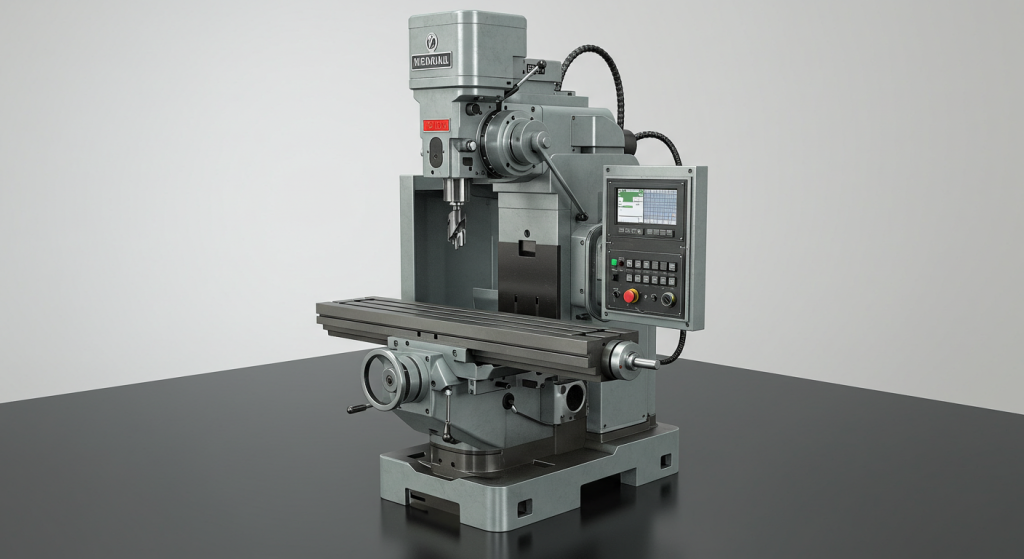
Ever marveled at a perfectly drilled metal part or a precisely milled groove and wondered how it was made? Maybe it was a custom bracket for a car or a sleek component in a gadget. Vertical drilling and milling machines are the workhorses behind those creations, blending the power to drill holes and mill surfaces with pinpoint accuracy. In 2025, these machines are more versatile than ever, catering to hobbyists tinkering in garages and professionals running high-volume shops. Whether you’re crafting prototypes or producing aerospace parts, there’s a vertical drilling and milling machine for you.
In this guide, I’ll walk you through everything you need to know about vertical drilling and milling machines. We’ll cover how they work, the different formats available, their applications, and tips to choose the right one. I’ll also compare them to horizontal milling machines to help you decide what fits your needs. By the end, you’ll be ready to drill and mill like a pro. Let’s get started!
How Do Vertical Drilling and Milling Machines Work?
A vertical drilling and milling machine is like a Swiss Army knife for machining. It combines drilling (creating cylindrical holes) and milling (cutting flat surfaces, grooves, or profiles) in one unit, with the spindle oriented vertically. The spindle holds rotating tools—like drill bits for holes or end mills for cutting—and moves up and down to engage the workpiece, which is secured on an adjustable table, as explained by KNUTH Machine Tools.
The process begins with your workpiece—metal, wood, or plastic—clamped to the table. You select the tool (e.g., a twist drill for holes or an end mill for slots), set it in the spindle, and adjust settings like speed and feed rate. The table moves along the X (left-right) and Y (front-back) axes, while the spindle or quill adjusts the Z (up-down) axis, allowing precise cuts. For example, drilling a 10mm hole in steel might take 30 seconds, while milling a 50mm slot could take 2-5 minutes, depending on the machine and material, per Summit Machine Tool.
Modern machines, especially CNC models, use software like Siemens or Fanuc to automate movements, ensuring repeatability for complex parts. Features like digital readouts (DROs), coolant systems, and power feeds enhance accuracy and ease, as noted by Elite Metal Tools. After machining, you clean off chips and coolant, leaving a polished, precise component.
Vertical Drilling and Milling vs. Horizontal Milling: What’s the Difference?
To understand vertical drilling and milling machines, let’s compare them to horizontal milling machines, a common alternative in machining. Both handle drilling and milling, but their spindle orientation and applications differ.
Vertical machines have a vertically aligned spindle, making them ideal for plunge cuts, drilling, and single-sided milling. They excel at tasks like drilling holes for bolts or milling flat surfaces, with the table moving in X and Y axes to position the workpiece, per Wikipedia. They’re versatile for smaller shops or varied tasks but less suited for heavy surface milling.
Horizontal milling machines use a horizontally mounted spindle, with cutters on an arbor, better for heavy-duty tasks like surface milling, slot cutting, or end milling. The bed moves along X and Z axes, while the cutter moves along Y, allowing deeper cuts, per Summit Machine Tool. They’re often used in large-scale manufacturing but require more space and setup time.
Here’s a comparison table to clarify:
| Feature | Vertical Drilling/Milling | Horizontal Milling |
|---|---|---|
| Spindle Orientation | Vertical | Horizontal |
| Best For | Drilling, plunge cuts, single-sided milling | Surface milling, slot cutting, heavy cuts |
| Precision | High for detailed work (0.001” accuracy) | High for large surfaces |
| Speed | Fast for small holes (30 sec/hole) | Slower for deep cuts (5-10 min/slot) |
| Materials | Metal, wood, plastic | Metal, heavy alloys |
| Cost | $1,000-$50,000 | $5,000-$100,000 |
| Best For | Small shops, varied tasks | Large-scale production |
Vertical machines are the go-to for precision drilling and versatile milling, while horizontal machines shine in heavy-duty, large-scale tasks, per KNUTH Machine Tools.
Different Formats of Vertical Drilling and Milling Machines
Vertical drilling and milling machines come in various formats, each tailored to specific needs, from hobbyist garages to industrial factories. Here’s a breakdown of the key types in 2025:
Benchtop Mill-Drills
Compact and affordable, benchtop mill-drills like the Grizzly G0704 or Warco WM14 are perfect for hobbyists or small shops. They combine drilling and milling, with tables around 9”x27” and motors up to 1 HP, costing $1,000-$3,000. They handle light metalwork or woodworking, ideal for DIY projects, per Grizzly Industrial. For example, a hobbyist might drill holes in aluminum brackets or mill slots for a custom jig.
Vertical Knee Mills
Knee mills, like the JET JTM-2 or KNUTH UFM series, are the industry standard for medium-sized shops. They feature a 9”x49” or 10”x54” table, 2-3 HP motors, and R8 or 40-taper spindles, costing $5,000-$15,000. The knee adjusts vertically for Z-axis movement, excelling at drilling and milling for automotive or mold-making, per KNUTH USA.
CNC Vertical Machining Centers (VMCs)
CNC VMCs, like the Haas VF-2 or BAINENG-inspired CNC models, automate drilling and milling with computer control. They have large beds (up to 1200x900mm), 5-20 HP spindles, and tool changers, costing $20,000-$50,000. They’re ideal for high-volume production, like aerospace parts, with 0.001” accuracy, per Waldrich-Coburg.
Turret Mills
Turret mills, like the Bridgeport Series I or Warco Major, have a fixed spindle and a quill for Z-axis cuts, with tables moving in X and Y. They cost $3,000-$10,000 and are versatile for toolrooms, handling tasks like precision drilling for circuit boards, per Warco.
Portable Mill-Drills
Portable models, like the Palmgren BF16, are lightweight (under 200 lbs) and designed for on-site work, costing $1,500-$4,000. They suit small-scale drilling/milling, like repair jobs on construction sites, per Palmgren.
A benchtop mill-drill or turret mill is a great starting point for small shops, while CNC VMCs suit industrial needs, per Elite Metal Tools.
Creative and Industrial Applications
Vertical drilling and milling machines are versatile across industries and hobbies. Here are some standout uses:
- Prototyping: Create precise metal or plastic prototypes for gadgets or tools, drilling holes and milling slots for fitment, per Summit Machine Tool.
- Automotive Parts: Drill bolt holes or mill grooves for engine brackets or custom car parts, common in repair shops.
- Aerospace Components: CNC VMCs produce high-precision parts like turbine mounts, with tight tolerances, per Waldrich-Coburg.
- Jewelry and Art: Mill intricate patterns or drill holes in metal or glass for custom jewelry or decor, adaptable from BAINENG’s glass etching precision.
- DIY Projects: Hobbyists use benchtop mill-drills to craft furniture fittings or model train parts, per Grizzly Industrial.
- Mold-Making: Mill cavities for plastic injection molds, critical for manufacturing, per KNUTH USA.
These applications show how vertical drilling and milling machines bridge creative and industrial worlds.
Benefits of Vertical Drilling and Milling Machines
Why choose a vertical drilling and milling machine? Here’s what sets them apart:
- Versatility: Combine drilling and milling, handling holes, slots, and profiles in one setup, per KNUTH Machine Tools.
- Precision: Achieve 0.001” accuracy with DROs or CNC controls, ideal for intricate parts, per Elite Metal Tools.
- Compact Design: Benchtop and turret mills fit small shops, unlike bulkier horizontal mills.
- Speed: Drill holes in seconds; mill slots in minutes, boosting productivity, per OMTech.
- Material Flexibility: Work on metal, wood, plastic, or glass with the right tools, per Grizzly Industrial.
- Cost-Effective: Benchtop models start at $1,000, offering pro features for less, per Warco.
These benefits make vertical machines a staple for varied machining needs.
Tips for Choosing and Using Vertical Drilling and Milling Machines
To pick and master your machine, try these tips:
- Match Format to Needs: Choose benchtop for hobbyists, knee mills for shops, or CNC VMCs for production, per Summit Machine Tool.
- Test Tools: Use twist drills for holes and end mills for slots, testing speeds (e.g., 500-2000 RPM for steel) on scrap, per KNUTH Machine Tools.
- Use Coolant: Apply coolant for metalwork to reduce heat and extend tool life, per Elite Metal Tools.
- Clean Workpieces: Wipe materials with alcohol to remove oils for clean cuts.
- Optimize Settings: Set low speeds for hard metals, high for soft materials, per Warco.
- Secure Workpieces: Clamp or use vises to prevent movement, per Palmgren.
Practice on scrap to dial in settings before critical projects.
Choosing the Right Vertical Drilling and Milling Machine
Here’s how to select the best machine:
- Project Scale: Benchtop mill-drills like Grizzly G0704 suit hobbyists; CNC VMCs like Haas VF-2 fit factories, per Grizzly Industrial.
- Budget: Benchtop models cost $1,000-$3,000; knee mills $5,000-$15,000; CNC VMCs $20,000-$50,000, per KNUTH USA.
- Materials: Ensure spindle power (1-20 HP) and tools match your materials (e.g., steel, aluminum), per Summit Machine Tool.
- Table Size: 9”x27” for small parts; 10”x54” for larger ones.
- Software: CNC models need Siemens or Fanuc compatibility, per Waldrich-Coburg.
- Support: Choose brands like JET, Warco, or KNUTH with strong service, per Warco.
A benchtop mill-drill is a solid starting point for small shops, while CNC VMCs are best for industrial precision.
Cost Considerations and ROI
Investing in a vertical drilling and milling machine involves upfront costs, but the return on investment (ROI) can be significant:
- Cost Range: Benchtop mill-drills start at $1,000-$3,000, knee mills at $5,000-$15,000, CNC VMCs at $20,000-$50,000, per KNUTH USA.
- Cost Factors: Spindle power, table size, CNC automation, and accessories (e.g., DRO, coolant) drive prices.
- ROI Benefits:
- High Margins: Custom parts sell for $50-$1,000, boosting revenue.
- Fast Production: Drilling holes in seconds and milling in minutes cuts labor costs.
- Versatility: One machine handles multiple tasks, reducing equipment needs.
- Used vs. New: Pre-owned machines from Bridgeport or JET can save 20-30%, though maintenance may be higher, per eBay.
Financing options from suppliers like Warco make high-end models accessible. Contact suppliers for quotes, as prices vary by region.
Maintenance and Safety Tips
Keep your machine running smoothly and stay safe with these tips:
- Lubricate Moving Parts: Oil leadscrews and ways monthly to reduce wear, per Warco.
- Clean Chips: Remove metal or plastic chips after use to prevent clogs, per Palmgren.
- Check Tools: Inspect drill bits and end mills for wear; replace dull ones, per KNUTH Machine Tools.
- Ventilate: Use dust collection for wood or coolant mist for metal to protect your lungs.
- Safety Gear: Wear safety glasses and gloves; secure loose clothing, per Focused Laser Systems.
- Avoid Overloading: Don’t exceed table load limits (e.g., 750 lbs for knee mills), per Elite Metal Tools.
Routine maintenance ensures precision and longevity.
FAQs About Vertical Drilling and Milling Machines
What materials can vertical drilling and milling machines work on?
Most handle metal, wood, plastic, and some glass with the right tools, per KNUTH Machine Tools.
How deep can they drill or mill?
Drilling up to 2” deep in steel; milling up to 0.5” per pass, depending on the tool, per Summit Machine Tool.
Do I need special software for CNC models?
Siemens, Fanuc, or Mach3 are common for CNC VMCs, per Waldrich-Coburg.
Are they safe for thin materials?
Yes, with proper clamping and low feed rates, per Warco.
How long does machining take?
Drilling a 10mm hole takes ~30 seconds; milling a 50mm slot takes 2-5 minutes, per OMTech.
Wrapping It Up
Vertical drilling and milling machines are your ticket to precision machining, from crafting custom parts to producing industrial components. With formats like benchtop mill-drills, knee mills, and CNC VMCs, there’s a machine for every shop, big or small. They offer versatility, speed, and accuracy that horizontal mills can’t always match for drilling and single-sided tasks. Start with a benchtop model like the Grizzly G0704 or explore industrial options like KNUTH’s VMCs, test settings on scrap, and keep your tools sharp. In 2025, you’re set to create parts that impress clients or fuel your DIY passion.
Ready to start machining? Check out machines from Grizzly, Warco, or KNUTH, and share your project ideas in the comments—I’d love to hear what you’re building!