



A Professional Guide to Safety Tips for Glass Cutting and Grinding
This guide to safety tips for glass cutting and grinding is the most important resource for any professional or aspiring glass fabricator. In the world of glass processing, where precision and beauty are the goals, safety is the non-negotiable foundation upon which everything is built. These processes involve razor-sharp edges, high-speed machinery, and the risk of airborne particles. A casual or untrained approach can lead to serious injury. This definitive guide provides a professional, in-depth framework for a comprehensive safety program. It covers the essential mindset, the mandatory protective equipment, and the specific protocols for a safe and productive workshop environment.
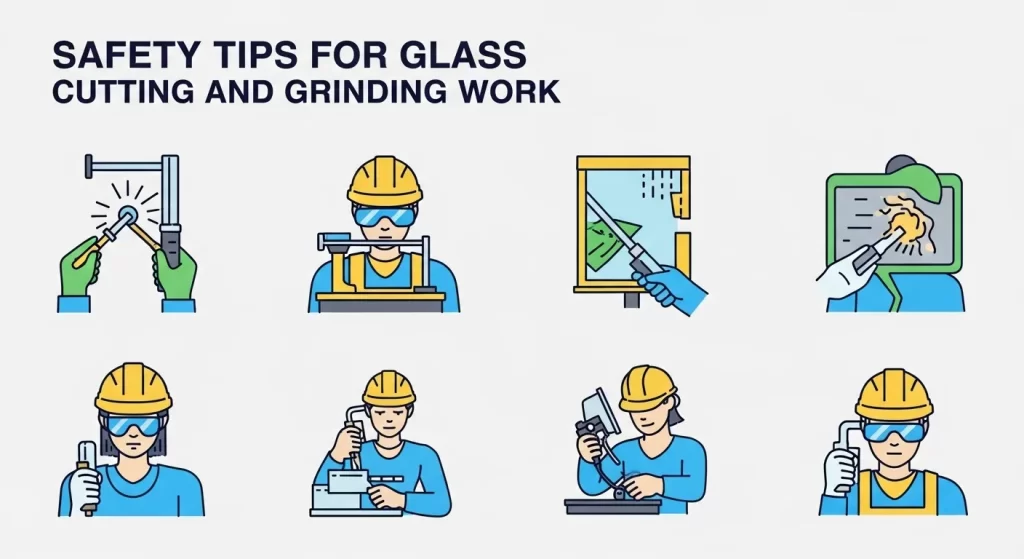
What is the Core Philosophy of Glass Workshop Safety?
The core philosophy of glass workshop safety is a proactive and unwavering commitment to risk prevention. It is the understanding that all accidents are preventable through proper training, a controlled environment, and a disciplined adherence to established procedures. This "safety-first" culture is not a set of rules to be memorized; it is a professional mindset that must be practiced every minute of every day.
How Does a "Safety-First" Mindset Prevent Accidents?
A "safety-first" mindset prevents accidents by making risk assessment an automatic and continuous process. An operator with this mindset is constantly aware of their surroundings and the potential hazards of their actions. This culture of vigilance is the most effective defense against the human error that is the root cause of most workplace incidents. It is the shared responsibility of every person in the workshop.
Why is a Clean and Organized Workspace the First Rule?
A clean and organized workspace is the first rule of safety because it eliminates a wide range of common hazards. A cluttered floor is a trip hazard. A dirty, wet floor is a slip hazard. Poorly stored materials can fall. A clean environment allows for the safe and efficient movement of people and materials. It also allows for the early identification of potential problems, such as a coolant leak from a machine. A professional workshop is always a clean workshop.
What is the Mandatory Personal Protective Equipment (PPE)?
Personal Protective Equipment (PPE) is the operator's last line of defense against injury. It is not a substitute for safe machine design or proper procedures, but it is an essential and mandatory part of the safety system. Using the correct, high-quality PPE for each task is a fundamental requirement for anyone working with glass. The cost of proper PPE is trivial compared to the cost of a serious injury.
How Do Safety Glasses and Face Shields Protect Your Eyes?
Safety glasses with integrated side shields are the absolute minimum requirement for eye protection in a glass workshop. They must be worn at all times. They protect the eyes from flying glass chips, abrasive dust, and coolant splash. For heavy grinding or cutting operations, a full-face shield worn over safety glasses provides a higher level of protection. The eyes are irreplaceable. There is no compromise on their protection. The consequences of an eye injury can be life-altering.
What Type of Gloves Are Essential for Handling Glass?
The correct type of gloves is essential for preventing severe cuts, which are the most common injury in glass fabrication.
- Cut-Resistant Gloves: When handling raw, un-edged glass, gloves made from high-performance materials like Kevlar or Dyneema are mandatory. They are rated for their level of cut resistance.
- Waterproof Gloves: During wet grinding or polishing, waterproof gloves are needed to keep the hands dry and to protect the skin from prolonged exposure to coolant. Gloves should fit snugly. A loose-fitting glove can be a snag hazard around rotating machinery.
Why is Respiratory Protection Necessary?
Respiratory protection is necessary to prevent the inhalation of harmful airborne particles. The cutting and grinding of glass, even when wet, can create a fine aerosol mist containing microscopic silica particles. Long-term inhalation of crystalline silica can lead to serious and irreversible lung diseases like silicosis. A properly fitted N95-rated dust mask or a more robust respirator should be worn, especially during dry grinding or extensive cleanup operations. The health risks of silica are well-documented and must be taken seriously.
What Are the Requirements for Protective Clothing and Footwear?
Protective clothing and footwear provide a final barrier of protection. A heavy-duty apron, preferably waterproof, can protect the body from splash and minor impacts. Long sleeves are recommended to protect the arms from cuts and abrasions. The most critical requirement is footwear. Steel-toed, slip-resistant, waterproof safety boots are the industry standard. They protect the feet from the two most common workshop hazards: falling objects (a dropped piece of glass) and slips on a wet floor.
How Do You Prepare a Safe Workspace for Cutting and Grinding?
A safe workspace is an engineered environment. It is deliberately set up to minimize risk and maximize efficiency. This preparation involves ensuring the stability of the equipment, providing adequate lighting and ventilation, and implementing proper electrical safety measures.
How to Ensure a Stable and Well-Lit Environment?
All machinery, especially a benchtop grinder, must be securely bolted to a stable, level workbench. Any vibration or movement of the machine during operation is a safety hazard and will result in poor quality work. The entire work area must be well-lit. Good lighting is essential for clearly seeing the work being performed. It allows the operator to accurately follow pattern lines and to spot any potential defects or hazards.
What Are the Electrical Safety Rules for a Wet Environment?
Water and electricity are a dangerous combination. All electrical outlets in the wet grinding and cutting areas must be protected by a Ground Fault Circuit Interrupter (GFCI). A GFCI is a fast-acting device that will cut the power in an instant if it detects a ground fault. This can be a life-saving device. All electrical cords should be in good condition, with no frayed wires. They should be routed away from areas of standing water.
Why is Good Ventilation So Important?
Good ventilation is important for maintaining good air quality in the workshop. Even with wet processes, some fine mist and dust can become airborne. A good general ventilation system, supplemented by localized fume extraction on large machines, helps to remove these contaminants from the air. This is crucial for long-term respiratory health.
What Are the Key Safety Tips for Glass Cutting?
The glass cutting process, whether manual or automated, has its own specific set of safety protocols. These are focused on the safe handling of the raw glass and the proper use of the cutting tools. This is the first and often most hazardous step in the fabrication process.
How to Handle and Prepare the Glass Sheet Safely?
Safe handling starts with a plan. Before moving a large sheet of glass, the operator should inspect the path for any obstacles. Large sheets should always be carried by two people, using suction cup lifters if necessary. The glass should be carried in a near-vertical position. Always wear cut-resistant gloves when handling raw glass. Before cutting, the glass surface should be cleaned. A clean surface allows the cutting tool to create a cleaner score.
What is the Safe Technique for Manual Scoring?
For manual scoring with a hand-held cutter, the technique is key to both safety and a good result. The operator should use a straightedge that is securely clamped to the glass. The cutter is held at a consistent angle and pulled towards the body in a single, smooth motion. Consistent pressure is applied to create an even score line. The operator should never "back up" or run the cutter over the same line twice. This will damage the cutter and create a poor-quality break.
What Are the Precautions for Breaking the Glass?
Breaking the glass along the score line requires a controlled application of force. For small pieces, this can be done by placing the score line over a raised dowel and applying even pressure to both sides. For larger pieces, running pliers are used. The operator should always break the glass away from their body. They must be prepared for the glass to separate suddenly. Safety glasses are absolutely mandatory during this step.
How Do Safety Features on CNC Cutting Tables Work?
Modern CNC cutting tables, like the best glass cutting machine CNC models, have numerous built-in safety features. These include safety light curtains or pressure mats that will stop the machine if a person enters the work area. They also have physical guards around the cutting bridge. The operator must be trained on all of these features and must never attempt to bypass them.
What Are the Key Safety Tips for Glass Grinding?
The glass grinding process introduces the hazards of high-speed rotating machinery and a wet environment. The safety protocols for this process are focused on machine setup, operator technique, and environmental control. These principles are detailed in our guide on how to use a glass edge grinder properly.
How to Set Up a Grinder for Safe Operation?
A safe setup is a methodical one. The grinder must be stable. The correct diamond grinding bit must be securely fastened to the spindle. The coolant reservoir must be full of clean water, and the delivery system (often a sponge) must be working correctly. The splash guards and face shield must be in place. The machine should be tested for a few seconds before any glass is introduced to ensure the bit is spinning true and the coolant is flowing.
What is the Safe Technique for Grinding Glass?
The safe technique for grinding glass involves a firm, two-handed grip on the workpiece. The operator should use their body to apply gentle, consistent pressure. They should never force the glass into the grinder head. The motion should be smooth and steady. The operator's hands and fingers must be kept a safe distance from the rotating grinding head at all times. They should never wear loose clothing, jewelry, or long hair that could become entangled in the machine.
How to Manage the Wet Environment Safely?
Managing the wet environment is a critical safety task. The coolant splash should be contained by the machine's guards as much as possible. Any spills on the floor should be cleaned up immediately to prevent slip hazards. The operator should wear waterproof boots with slip-resistant soles. A rubber mat on the floor in front of the machine can also provide extra traction.
What Are the Hazards of Glass Slurry?
The mixture of water and fine glass powder created during grinding is known as slurry. This slurry is highly abrasive. It can be a skin irritant. It can also make surfaces extremely slippery. The slurry must be managed correctly. On a small grinder, the reservoir should be cleaned out regularly. On a large industrial machine, the slurry is managed by a filtration system. The waste slurry must be disposed of according to local environmental regulations.
How Do You Maintain a Safe Workshop?
Maintaining a safe workshop is an ongoing process. It involves a commitment to regular equipment maintenance, good housekeeping, and continuous training. A safe workshop is a culture, not a one-time event.
What is the Role of Regular Machine Maintenance?
Regular machine maintenance is a cornerstone of safety. A well-maintained machine is a predictable and reliable machine. A program of routine checks, cleaning, and lubrication, as detailed in our guide to glass grinding machine maintenance, can prevent mechanical failures that could lead to accidents. Worn electrical cords, loose guards, or failing bearings are all hazards that can be identified and corrected through a proactive maintenance program. The impact of maintenance on safety is well-established in the manufacturing industry.
How Does Proper Scrap Glass Disposal Work?
Proper disposal of scrap glass is a critical housekeeping and safety task. Sharp off-cuts and broken pieces should never be thrown into a regular trash bin. A dedicated, puncture-proof scrap glass container should be used. This container should be clearly labeled. When it is full, it should be emptied carefully by trained personnel. Operators should never reach into a scrap bin with their bare hands.
What is the Importance of First Aid Preparedness?
Despite all precautions, accidents can happen. A well-stocked first aid kit must be easily accessible in the workshop. It should be specifically equipped to deal with cuts. This includes a variety of bandages, antiseptic wipes, and sterile gauze. All personnel in the workshop should know where the first aid kit is located. They should also be trained in basic first aid procedures for treating cuts and eye injuries. A rapid and correct response to an injury can significantly reduce its severity.
Why is Ongoing Training So Important?
Ongoing safety training is important to keep the principles fresh in everyone's mind. Regular safety meetings can be used to discuss any recent "near misses" and to reinforce best practices. New employees must receive thorough safety training before they are allowed to operate any machinery. A culture of continuous learning and open communication about safety is the hallmark of a world-class manufacturing operation.
Conclusion
These safety tips for glass cutting and grinding are not a barrier to creativity or efficiency. They are the essential foundation upon which true craftsmanship is built. A safe operator is a confident and focused operator. A safe workshop is a productive and profitable workshop. By embracing a safety-first culture, by using the correct protective equipment without fail, and by adhering to a systematic and disciplined workflow, a glass fabricator can mitigate the inherent risks of the trade. This commitment to safety is the ultimate sign of a true professional. It is the key to a long, successful, and injury-free career in the beautiful art of glass processing.