



Munich CNC Glass Engraving Machine – German Innovation
A Munich CNC glass engraving machine is the product of a world-renowned tradition of engineering excellence and technological innovation. These high-performance systems are designed for businesses that demand the highest levels of precision, reliability, and efficiency in their glass processing operations. By integrating exceptionally robust construction with state-of-the-art control systems and advanced software, they provide a powerful tool for a wide range of industries. From the demanding automotive sector to high-end architectural design, a Munich CNC glass engraving machine represents a commitment to quality. It is a strategic investment for any company looking to gain a competitive edge through superior manufacturing capabilities.
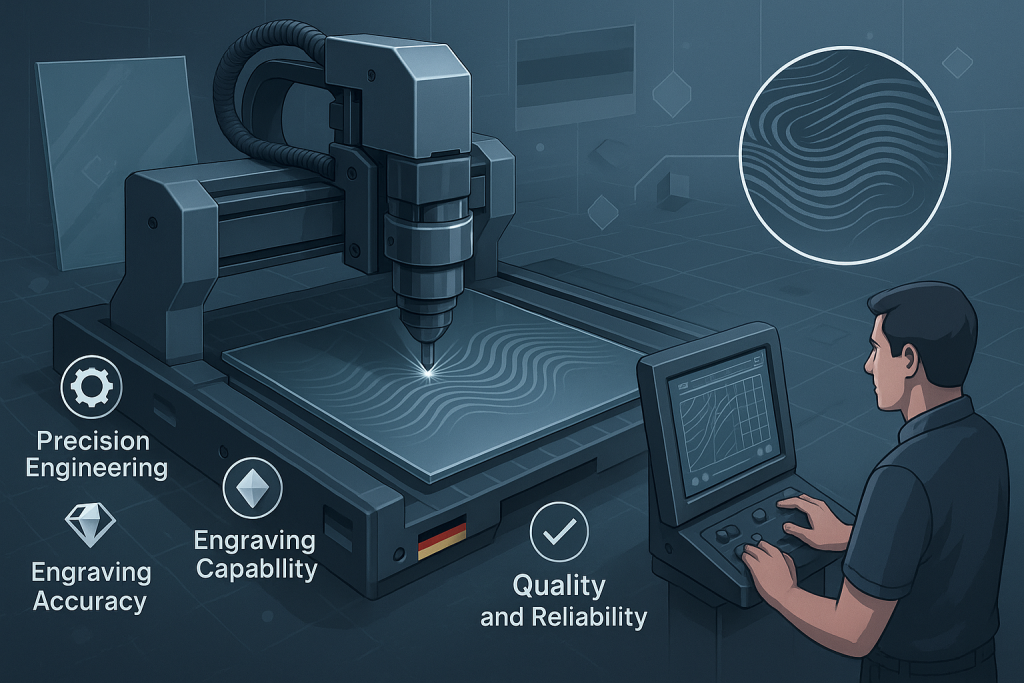
The Core Principles of Engineering in CNC Technology
The reputation for quality in this machinery is not based on a single feature, but on a holistic engineering philosophy. This approach prioritizes long-term reliability, absolute precision, and user-centric design. Every component and system is designed to work in harmony, creating a machine that is more than the sum of its parts.
A Focus on Robust and Over-Engineered Machine Frames
The foundation of any high-precision machine is its stability. These CNC machines are built on exceptionally heavy and rigid frames. These are often fabricated from thick, stress-relieved steel weldments or polymer concrete composites. This "over-engineered" approach to the machine base is a deliberate choice. The massive frame is designed to absorb and dampen any and all vibrations. This ensures that the engraving process is perfectly stable, which is essential for achieving a flawless, mirror-smooth finish on the glass.
The Pursuit of Perfection in Mechanical Components
The mechanical systems that control the machine's movement are engineered to the tightest possible tolerances.
- Drive Systems: High-performance, zero-backlash ball screws and precision-ground linear guides are used to ensure that every movement is smooth, accurate, and perfectly repeatable.
- Motors: High-resolution servo motors with advanced feedback systems provide the power and, more importantly, the precise positional control needed to execute complex designs with micron-level accuracy. This pursuit of mechanical perfection is a defining characteristic of this engineering tradition. This focus on precision is a shared value in the region's top engineering hubs, including for the Austria CNC glass engraving machine.
Integration of High-Performance Electronics
The mechanical precision of the machine is matched by the sophistication of its electronic control systems. These machines feature powerful, industrial-grade CNC controllers. These controllers can process complex programs at high speeds, enabling smooth, fluid movements without pausing or hesitation. The integration between the controller, the drives, and the motors is seamless. This ensures that the machine responds instantly and accurately to every command. This is a common trait of top-tier European machines, including the Switzerland CNC glass engraving machine.
Key Technological Innovations in Modern Machines
The field of CNC technology is one of constant innovation. A modern Munich CNC glass engraving machine will incorporate a range of advanced features designed to improve performance, increase automation, and enhance the user experience.
Advanced High-Frequency Spindle Technology
The spindle is the heart of the engraving process. These machines are equipped with advanced, liquid-cooled, high-frequency spindles. These are not just motors; they are precision-balanced instruments. They are capable of operating at very high speeds with virtually zero vibration or runout. This stability is critical for allowing the diamond tool to perform a clean, micro-grinding action on the glass. The result is a superior finish quality that is free from chipping or chatter marks.
Intelligent Coolant and Temperature Management
An intelligent coolant system is a key innovation. It does more than just spray water on the tool. It is a closed-loop system that manages the flow, filtration, and temperature of the coolant. Multi-stage filtration removes glass particles to prevent them from scratching the surface. A chiller unit maintains the coolant at a constant temperature. This thermal stability is important for maintaining dimensional accuracy during long engraving jobs.
The Role of Automation
Modern machines incorporate a high degree of automation to improve efficiency and reduce the chance of human error.
- Automatic Tool Changers: These allow the machine to automatically switch between different engraving tools for complex jobs.
- Tool Measurement Probes: Laser or touch probes can automatically measure the length of each tool with extreme precision.
- Automatic Lubrication Systems: These ensure that all the machine's moving parts are kept perfectly lubricated without operator intervention. This focus on automation is what enables "lights-out" or unattended operation on some tasks. This is a key feature across the broader Germany CNC glass engraving machine market.
Applications in High-Value Industries
The exceptional quality and reliability of a Munich CNC glass engraving machine make it the preferred choice for industries where performance is critical. These are sectors that are defined by their commitment to quality and innovation.
The Automotive Sector
The automotive industry has some of the most demanding quality standards in the world. CNC glass engraving machines are used for a variety of applications. This includes the precision marking of logos and safety information on automotive glass. They are also used to create the intricate patterns on modern headlight lenses and interior decorative glass components. The ability to produce millions of parts with perfect consistency is essential.
Architectural Glass
Architects are constantly pushing the boundaries of what is possible with glass. CNC engraving allows them to realize their creative visions. The technology is used to create large-scale, custom-engraved glass for building facades, lobbies, and interior partitions. The precision of the machine ensures that patterns can be perfectly aligned across multiple large glass panels, creating a stunning visual effect. The final product is a form of high-tech Engraved glass.
Precision Optics and Technical Glass
In the scientific and technical fields, CNC machines are used for the high-precision machining of optical components. This can include engraving fine alignment marks, creating micro-structures on the surface of lenses, or shaping technical glass for laboratory equipment. The extreme accuracy and vibration-free operation of these machines are non-negotiable for these applications. This is a common application in other major industrial cities, like those served by providers of the Berlin CNC glass engraving machine.
Sourcing a Munich CNC Glass Engraving Machine
The process of acquiring such a high-value piece of equipment requires a careful and considered approach. It is about building a long-term relationship with a technology partner who can support your business's growth.
Identifying Leading Manufacturers
The first step is to identify the leading manufacturers in the field. These are companies with a long and proven history of producing high-quality machine tools. Their brand reputation is built on decades of engineering excellence and customer satisfaction. They will have a deep specialization in the glass industry and a thorough understanding of its unique challenges.
The Importance of a Thorough Consultation
A premium supplier will not just sell you a machine from a catalog. They will engage in a deep, consultative process. Their engineers will work with you to understand your specific products, your production goals, and your facility. Based on this, they will recommend a machine and a configuration that is perfectly optimized for your needs. This collaborative approach is a hallmark of a quality supplier.
Evaluating Training and After-Sales Support
The best machine in the world is only effective if your team knows how to use it. A comprehensive training program is an essential part of the package. The supplier should also have a robust after-sales support network. This means having expert technicians available for support and a reliable supply of spare parts to minimize any potential downtime. This level of support is a key consideration when comparing suppliers, including those for the Milan CNC glass engraving machine.
Operational Excellence for Maximum Performance
To consistently achieve the highest quality results, a premium machine must be operated with a commitment to operational excellence. This includes a controlled environment, optimized programming, and a disciplined approach to maintenance.
Best Practices for Machine Setup
Every engraving job begins with a precise setup. The glass must be perfectly clean and securely held in place. The machine's work coordinate system must be accurately set. The tools must be correctly loaded and measured. A meticulous approach to this setup phase is fundamental to achieving a perfect result.
A Disciplined Approach to Preventive Maintenance
Preventive maintenance is the key to long-term reliability. A structured maintenance schedule, as recommended by the manufacturer, must be followed rigorously. This includes daily cleaning and checks, weekly lubrication, and periodic inspections of all systems. This proactive approach ensures the machine continues to operate at its peak performance and maintains its accuracy over its entire lifespan.
Conclusion
A Munich CNC glass engraving machine is a powerful symbol of technical innovation and engineering quality. It is a precision instrument designed and built to perform at the highest level for many years. For businesses in the automotive, architectural, and high-end decorative glass industries, it provides the capability to produce superior products with unmatched efficiency and reliability. An investment in this technology is an investment in a competitive advantage. It is a commitment to being a leader in the field of high-quality glass fabrication.
Frequently Asked Questions
What is the main advantage of a machine built with "German Innovation"?
It typically refers to a design and engineering philosophy that prioritizes exceptional build quality, long-term reliability, high precision, and advanced technological features. These machines are often "over-engineered" for maximum stability and a long service life.
Why is a heavy, rigid machine frame so important?
A heavy and rigid frame is crucial for damping vibrations. Glass engraving is a micro-grinding process, and any vibration can cause chipping or imperfections in the finish. A massive frame ensures the machine is perfectly stable, leading to a flawless, smooth engraving.
Are these machines only for large industrial companies?
While they are a staple in large industries like automotive, high-end versions are also used by smaller, specialized businesses. This includes architectural glass studios, art glass creators, and producers of luxury goods who require the highest level of precision and quality.
What is a high-frequency spindle?
A high-frequency spindle is a specialized motor that can rotate the engraving tool at very high speeds (often 24,000 to 60,000 RPM) with extreme stability and minimal vibration. This high speed is essential for achieving a clean, polished cut on a brittle material like glass.
Does a premium machine require more maintenance?
It does not necessarily require more maintenance, but it does require more disciplined and precise maintenance. Following the manufacturer's proactive maintenance schedule for cleaning, lubrication, and inspection is critical to keeping the machine operating at its peak precision for years.
How does the software contribute to the quality?
Advanced software allows for the creation of highly complex designs. Its CAM (Computer-Aided Manufacturing) component then generates very smooth and optimized toolpaths. This ensures the machine moves fluidly, without sharp, jerky movements, which is key to achieving a high-quality finish on the glass.