



Maintenance Tips for CNC Glass Machinery: A Pro Guide
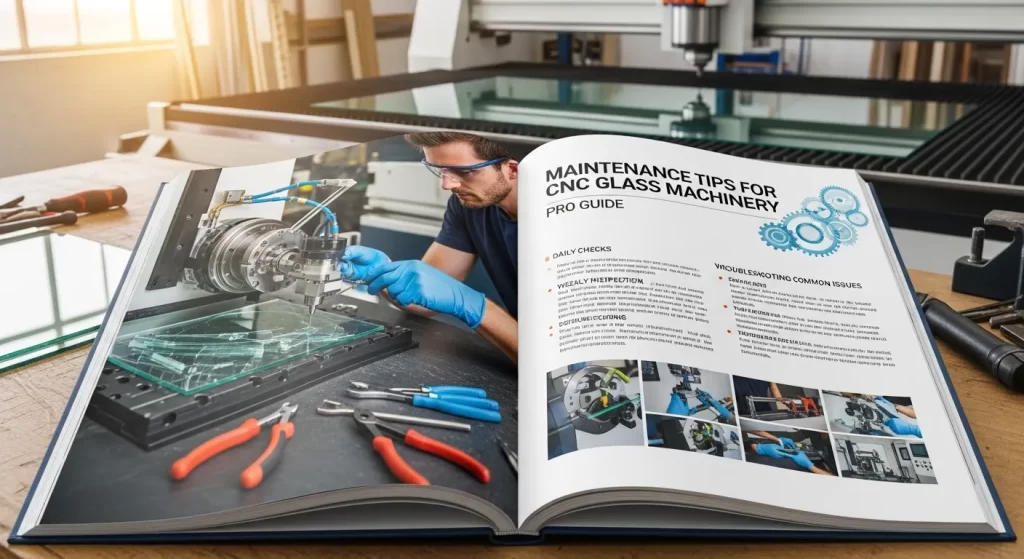
Essential maintenance tips for CNC glass machinery form the cornerstone of a successful and profitable glass fabrication operation. A proactive maintenance strategy is not a business expense; it is a critical investment in machine reliability, operational accuracy, and long-term asset protection. These complex machines, which are the heart of modern workshops, demand consistent care to perform at their peak. This guide provides a professional, in-depth framework for a comprehensive maintenance program. It covers the daily, weekly, and monthly tasks necessary to ensure your equipment remains a powerful and dependable engine for growth.
What is the Core Philosophy of CNC Glass Machinery Maintenance?
The core philosophy of CNC glass machinery maintenance is a proactive and systematic approach. This approach aims to prevent failures before they occur. It moves beyond simply fixing broken components. It focuses on preserving the machine's original state of precision and reliability. This philosophy is built on the understanding that consistent, scheduled care is far more cost-effective than dealing with unexpected downtime. It is a commitment to operational excellence that protects the entire production workflow.
How Does Proactive Maintenance Differ from Reactive Maintenance?
Proactive maintenance involves a scheduled program of inspections, cleaning, lubrication, and parts replacement to prevent future problems. Reactive maintenance is the practice of waiting for a component to fail before taking action. A proactive strategy significantly reduces unexpected downtime and catastrophic failures. A reactive approach leads to unpredictable production schedules and often results in more extensive and costly repairs. Proactive maintenance is the foundation of a modern, efficient manufacturing environment.
What is the Goal of a Maintenance Program?
The goal of a maintenance program is to achieve four key objectives. These are maximizing reliability, preserving accuracy, ensuring safety, and extending the machine's service life.
- Reliability: To ensure the machine is always available for production when needed, minimizing unscheduled downtime.
- Accuracy: To maintain the machine's ability to produce parts that meet strict dimensional tolerances.
- Safety: To keep all safety features fully functional, protecting operators from potential hazards.
- Longevity: To protect the significant capital investment by maximizing the operational lifespan of the equipment.
Who is Responsible for Maintenance?
Maintenance is a shared responsibility between machine operators and skilled technicians. Operators are the first line of defense. They are responsible for daily checks, cleaning, and monitoring the machine's condition. They are best positioned to notice subtle changes in performance. Technicians are responsible for more complex weekly, monthly, and annual tasks. These include detailed inspections, lubrication, component replacement, and system calibrations. A successful program requires a collaborative effort between these two roles.
What Are the Daily Maintenance Checks for Operators?
Daily maintenance checks are a series of quick but vital tasks performed by the operator at the start of each shift. These procedures take only a few minutes. They are the most effective way to catch small problems before they escalate. This routine ensures the machine is clean, safe, and ready for a full day of production. Consistency is the key to the effectiveness of these daily inspections.
How Should the Work Area Be Cleaned?
The work area around and on the machine must be thoroughly cleaned. This involves removing all glass dust, dried slurry, and off-cuts from the machine bed and surrounding floor. A clean work area is a safe work area. It reduces the risk of slips and falls. It also prevents abrasive glass dust from contaminating sensitive machine components like guide rails and bearings. The machine's bed, particularly the vacuum pod surfaces, must be wiped clean to ensure a secure grip on the workpiece.
What is the Procedure for Inspecting the Coolant System?
The coolant system requires a daily visual inspection. The operator should check the coolant level in the main reservoir and top it off if necessary. They must verify that the coolant concentration is within the manufacturer's recommended range. A simple check of the delivery nozzles is also important. This ensures they are not clogged and are directing a steady flow of coolant to the tool. Any leaks in the hoses or fittings should be reported immediately. This is a critical system for both quality and tool life.
How Do You Check the Pneumatic System?
The pneumatic system check involves two simple steps. First, the operator should check the main pressure gauge on the air regulator. It should read within the specified range for the machine. Second, they must drain the water separator filter. Compressed air naturally contains moisture, which condenses into water. This filter collects the water. Draining it daily prevents moisture from entering the pneumatic system. Moisture can cause corrosion and damage to sensitive valves and actuators. This simple step is vital for pneumatic system health.
What Visual Inspections Are Necessary for Tooling?
Operators should perform a quick visual inspection of the tools they will be using. They should look for any obvious signs of damage, such as chipped diamond tips on drills or burrs. They should also inspect the tool holders for any buildup of residue or signs of corrosion. This quick check can prevent the use of a damaged tool. A damaged tool could ruin an expensive piece of glass or damage the machine spindle. This is a simple but effective quality control measure.
How to Inspect Safety Features?
A daily check of key safety features is non-negotiable. The operator should test the emergency stop buttons to ensure they function correctly and halt all machine motion. They should also verify that the safety interlocks on the enclosure doors are working. The machine should not be able to start a cycle if the doors are open. These features are designed to protect the operator. Their proper function must be confirmed before any work begins. Safety checks are the most important part of the daily routine.
What Are the Weekly Maintenance Tasks?
Weekly maintenance tasks are more in-depth than the daily checks. They require the machine to be powered down. They focus on cleaning and inspecting components that are critical to the machine's motion and accuracy. These tasks help to prevent the gradual buildup of contaminants that can lead to performance degradation over time. They are a fundamental part of a proactive maintenance schedule.
How Do You Clean and Inspect Guide Rails and Ball Screws?
The linear guide rails and ball screws are the machine's pathways for motion. They must be kept impeccably clean. Once a week, they should be wiped down with a clean, lint-free cloth to remove any accumulated dust and slurry. After cleaning, a light film of the recommended lubricant should be applied. The operator should also visually inspect the rails for any signs of scoring or damage. This is a key part of the CNC automation in glass processing system. Smooth, clean motion systems are essential for accuracy.
What is Involved in Cleaning the Coolant Filtration System?
The coolant filtration system requires weekly attention to remain effective. The primary filters, which may be paper cartridges or a mesh screen, should be cleaned or replaced. The main reservoir tank should be checked for any significant buildup of settled glass slurry at the bottom. This slurry is highly abrasive. If it is allowed to recirculate, it can damage the pump and cause scratches on the finished product. A clean filtration system is essential for maintaining the quality of the CNC glass polishing techniques.
How Do You Inspect the Vacuum System?
A thorough weekly inspection of the vacuum system is important for workpiece stability. The operator should inspect all vacuum hoses for any cracks, kinks, or loose connections that could cause leaks. The rubber seals on the top of the vacuum pods should be inspected for cuts or wear. A damaged seal will not create a proper vacuum. If the machine has an oil-lubricated vacuum pump, the oil level and quality should be checked. A strong vacuum is a critical safety and quality component.
How to Verify Tool Changer Operation?
The Automatic Tool Changer (ATC) is a complex mechanical system. Its weekly check involves cleaning and functional verification. The tool gripper fingers should be wiped clean of any residue to ensure a secure grip. The tool pockets in the carousel should also be cleaned. The operator can then command a manual tool change through the controller. They should watch the entire sequence to ensure it is smooth, quiet, and free of any hesitation or jerky movements. This is a core part of any CNC glass working center setup.
What is the Process for Backing Up Machine Parameters?
Backing up the machine's digital information is a critical weekly task. This includes all machine parameters, system settings, and the tool offset library. These files are the machine's brain. A power surge or component failure could corrupt this data. Creating a weekly backup on an external device, like a USB drive, provides an essential recovery point. This simple action can save hours or even days of reprogramming in the event of a data loss.
What Are the Monthly and Quarterly Maintenance Procedures?
Monthly and quarterly procedures are more intensive. They are often performed by a trained maintenance technician rather than the operator. These tasks involve lubrication, mechanical adjustments, and deep cleaning of systems that are not easily accessible on a daily basis. They are designed to address the slow, cumulative effects of wear and tear.
How is the Lubrication System Maintained?
Most CNC machines have a centralized automatic lubrication system. This system has a reservoir that must be checked and refilled monthly. The technician should also trace the lubrication lines to each delivery point. They must ensure that oil or grease is being correctly dispensed to all the required components. Some machines may also have specific grease points, or zerks, that require manual lubrication with a grease gun. Following the manufacturer's lubrication chart is essential for machine longevity.
What is the Procedure for Inspecting Drive Belts and Couplings?
Some machines use high-torque timing belts or flexible couplings to connect the servo motors to the ball screws. These components should be inspected monthly. The technician will check the belts for proper tension. A loose belt can cause positioning errors. They will also inspect them for any signs of cracking, fraying, or missing teeth. Couplings should be checked to ensure their locking bolts are tight. These connections are critical for the machine's positioning accuracy.
How Do You Clean the CNC Controller Cabinet?
The CNC controller cabinet is the machine's electronic nerve center. It generates a significant amount of heat. It is cooled by fans and filters. Monthly, these filters should be removed and cleaned or replaced. A clogged filter will cause the cabinet to overheat. This can lead to electronic component failure, which is one of the most expensive types of repair. The inside of the cabinet should also be checked for any excessive dust buildup.
How to Perform a Basic Accuracy Check?
On a quarterly basis, a basic accuracy check should be performed. This involves programming the machine to cut a simple, known shape, like a large square, from a piece of scrap material. The technician will then use a calibrated measuring tool to check the part's dimensions. They will measure the length of the sides to check for linear accuracy. They will also measure the diagonals to check for squareness. This test provides a good baseline of the machine's geometric accuracy.
What is Involved in a Full Coolant System Flush?
A full coolant system flush is a major quarterly task. The entire coolant reservoir is drained. All the settled slurry and residue at the bottom of the tank are shoveled out and disposed of properly. The tank is then thoroughly cleaned and refilled with fresh water and the correct concentration of coolant additive. This process removes fine contaminants that the filtration system may have missed. It ensures the machine is using a clean, effective coolant. This is critical for processes like CNC drilling and milling for glass explained.
What is the Importance of Specific Component Maintenance?
Certain key components of the CNC machine require special attention. The spindle, the tooling, and the vacuum pump are all high-performance systems. Their health is directly tied to the machine's overall performance. A dedicated maintenance focus on these areas will pay significant dividends in quality and reliability.
How Do You Maximize Spindle Longevity?
Maximizing spindle longevity involves a few key practices. A proper warm-up routine should be run at the start of each day. This involves gradually increasing the spindle's RPM. This allows the bearings and grease to reach a stable operating temperature. Using the correct clamping force on the tool holder is also important. Overtightening can damage the spindle taper. Finally, operators should be trained to listen for any unusual noises or vibrations from the spindle. These can be early warning signs of bearing failure.
How to Care for Diamond Tooling?
Proper care of diamond tooling is essential for both cut quality and cost control. Tools should be stored in a way that protects their diamond tips from being chipped. After use, they should be cleaned to remove any glass residue. For some types of grinding wheels, a dressing stone can be used periodically. This process removes the glazed-over bond material and exposes fresh, sharp diamond particles. This can significantly extend the usable life of the tool.
What Maintenance is Required for the Vacuum Pump?
The maintenance required for the vacuum pump depends on its type. Oil-lubricated rotary vane pumps are common. They require regular oil changes, just like a car engine. The frequency depends on the hours of use. The oil level and quality should be checked weekly. Dry-running pumps do not use oil. However, they have internal carbon vanes that are a wear item. These need to be inspected and replaced periodically. All types of pumps have intake filters that must be kept clean to ensure good airflow.
How to Maintain the Automatic Tool Changer (ATC)?
Maintaining the ATC involves keeping it clean and ensuring proper alignment. The tool holder grippers and the spindle taper must be wiped clean daily. Any residue in these areas can affect the tool's position and balance. The tool carousel should be cleaned regularly to prevent the buildup of abrasive dust. Periodically, a technician should verify the alignment of the ATC arm to the spindle. Misalignment can cause failed tool changes or damage to the tool holders.
How Does a Maintenance Schedule Relate to Different Machine Types?
While the core principles of maintenance are universal, the specific focus can vary between different types of CNC glass machinery. A versatile working center has different maintenance priorities than a specialized vertical drilling machine. Tailoring the maintenance schedule to the specific functions of the machine is an important part of an effective program.
Are There Specific Tips for a CNC Glass Working Center?
For a CNC glass working center, the focus is on versatility. The ATC is used frequently, so its cleanliness and alignment are paramount. The coolant system must be robust enough to handle the heavy slurry from grinding and edging. It must also be clean enough to provide a good finish during polishing. Because the machine performs many tasks, from the aggressive cuts of CNC glass edging and grinding to the delicate work of a CNC router for glass engraving, tool management and calibration are especially critical.
What Maintenance is Unique to a CNC Vertical Drilling Machine?
The unique maintenance points for a CNC vertical drilling machine relate to its specific design. The vertical clamping system, including the rollers and suction cups that hold the glass upright, must be inspected regularly for wear. The synchronization of the dual drilling heads must be checked to ensure they meet perfectly in the center. The conveyor system that moves glass in and out of the machine also requires its own maintenance schedule, including belt tensioning and roller inspection.
How Does Maintenance Affect a CNC Router Used for Glass Engraving?
For a CNC router used for glass engraving, the focus is on precision and finesse. The machine's rigidity and vibration damping are critical, so regular checks for any loose components are important. The small, delicate diamond bits used for engraving are susceptible to damage, so tool care is a high priority. If a flood coolant system is used, its filtration must be excellent to prevent tiny particles from causing scratches. Because the work is often decorative, any flaw caused by a lack of maintenance is immediately visible.
How Do You Develop a Comprehensive Maintenance Program?
Developing a comprehensive maintenance program involves creating a structured, documented system. This program should be easy for everyone to follow. It turns the abstract idea of "maintenance" into a concrete set of actionable tasks. This system is the key to ensuring that no detail is overlooked and that the machine receives the consistent care it needs.
What is the Role of a Maintenance Logbook?
A maintenance logbook is the program's central record. It can be a physical book or a digital file. Every maintenance task, from a daily check to a major repair, should be recorded in this log. The entry should include the date, the task performed, the name of the person who did it, and any relevant notes. This log provides a complete service history for the machine. It is invaluable for troubleshooting problems and for planning future maintenance.
How Do You Manage a Spare Parts Inventory?
Managing a spare parts inventory is a proactive step to minimize downtime. The machine's manual will often list critical spare parts that are recommended to keep on hand. These might include common sensors, filters, belts, and fuses. Having these parts in stock means that a simple failure can be fixed in minutes rather than waiting days for a part to be shipped. This is a key part of any strategy for running an efficient operation, as discussed in our guide on how to choose a CNC glass machine for a workshop.
When Should You Schedule Professional Service?
Professional service from a certified technician should be scheduled on a regular basis, typically annually. These technicians have specialized tools and training. They can perform complex tasks like laser calibration of the machine's axes and advanced diagnostic checks. An annual professional service is like a thorough health check-up for the machine. It can identify underlying issues that are not apparent during routine inspections. This is a wise investment in long-term reliability.
How Can Operator Training Improve Machine Maintenance?
Operator training is one of the most effective tools for improving maintenance. When operators understand how the machine works, they are better able to care for it. They should be trained to recognize the early warning signs of a problem. These signs could be a new noise, a strange vibration, or a change in the finish quality. An engaged and knowledgeable operator is the best possible sensor for detecting potential issues before they become major failures.
Conclusion
A program of diligent care, guided by these maintenance tips for CNC glass machinery, is the most effective strategy for protecting your investment. This is not a passive activity but an active commitment to excellence. By establishing a routine of daily, weekly, and monthly tasks, and by fostering a culture where maintenance is a shared responsibility, a workshop can ensure its most critical asset performs at its best. This proactive approach is the key to minimizing downtime, maximizing quality, and securing a profitable and productive future in the demanding world of glass fabrication.