



An Industrial Glass Polishing Machine Guide with Pro Tips
This industrial glass polishing machine guide is a professional resource for understanding the technology that creates a flawless, brilliant finish on glass edges. These machines are the final and most critical step in the value-adding process of glass fabrication. They transform a safe but dull ground edge into an optically perfect, transparent surface. A high-quality polish is a mark of superior craftsmanship. This definitive guide provides expert insight into how these machines work, the different types available, the critical components to evaluate, and the professional techniques for achieving a perfect shine every time.
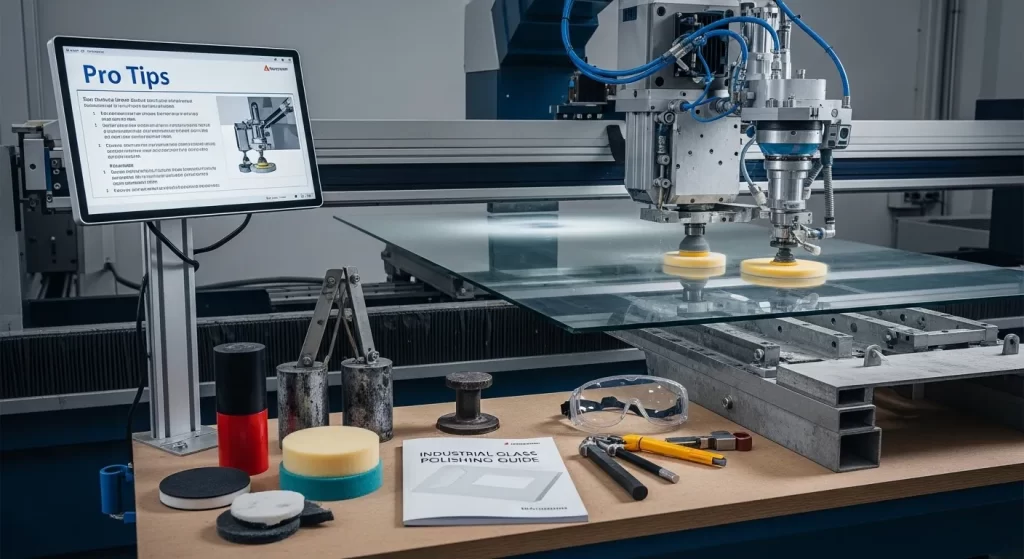
What is an Industrial Glass Polishing Machine?
An industrial glass polishing machine is a piece of automated equipment designed for the high-volume finishing of glass edges. It uses a sequential, multi-stage process of grinding, fining, and polishing to transform a raw, cut edge into a smooth, brilliant, and durable finish.1 These machines are the workhorses of any modern glass fabrication facility that produces high-quality exposed-edge glass products.
This technology is the final step in a complete fabrication workflow. It is distinct from the initial cutting process, which is detailed in our guide to the best glass cutting machine CNC models. While a basic glass edge grinder can shape an edge, an industrial polishing machine is a far more sophisticated system. It is designed to produce a perfect aesthetic finish at production speeds. It is a cornerstone of a modern glass processing machine overview.
What is the Primary Goal of Industrial Glass Polishing?
The primary goal of industrial glass polishing is to achieve a flawless, optically clear edge that is both beautiful and strong. The process is not merely cosmetic. It removes the microscopic flaws and fractures created during cutting and grinding. This significantly increases the edge's strength and resistance to chipping. Aesthetically, it restores the natural transparency of the glass. This allows light to pass through, creating a brilliant, high-end look that is essential for frameless glass products.
How Does it Differ from Simple Edge Sanding?
Industrial polishing is a world apart from simple edge sanding. The goal of a basic sanding process is simply to make the glass safe to handle by dulling its sharp corners. An industrial polishing machine performs a complete transformation. It takes a roughly shaped edge and systematically refines it through multiple stages. The end result is a perfectly smooth, transparent surface. One is a basic safety measure; the other is a high-value finishing process that is a key part of improving production with automatic glass machines.
How Does the Multi-Stage Polishing Process Work?
The industrial polishing process is a systematic journey of gradual refinement.2 It is not a single action but a carefully orchestrated sequence of operations. Each stage uses a progressively finer abrasive to remove the surface damage from the previous stage.3 This methodical approach is the only way to achieve an optically perfect, flawless finish.
What is the Initial Grinding and Shaping Stage?
The process begins with grinding.4 This is the most aggressive stage. It uses coarse, metal-bonded diamond wheels to shape the edge into the desired profile, such as a flat polish or a pencil polish. This stage removes the bulk of the material and establishes the final dimensions of the edge. However, it leaves the surface rough, opaque, and filled with deep scratches and micro-fractures.
What is the Critical Intermediate Fining Stage?
After the initial grinding, the glass moves to the critical fining, or honing, stage. This stage uses one or more resin-bonded diamond wheels. These wheels have a much finer grit than the grinding wheels. Their sole purpose is to remove the deep scratches left by the initial grinding process. The fining stage smooths the surface of the edge. It transforms it from a rough, opaque surface into a smooth, semi-transparent or "satin" finish. This step is non-negotiable for a quality polish.
How is the Final Brilliant Polish Achieved?
The final brilliant polish is achieved using a chemo-mechanical process. The glass edge is passed by one or more specialized polishing wheels, typically made of hard felt. These wheels are continuously saturated with a slurry of cerium oxide. The cerium oxide reacts chemically with the glass surface, creating a softened microscopic layer.5 The mechanical friction of the felt wheel then wipes this layer away. This action smooths the surface to an optical finish, creating the final, brilliant shine. The science behind this is a key part of professional glass finishing.
What Are the Main Types of Industrial Glass Polishing Machines?
Industrial glass polishing machines are primarily categorized into two types: straight-line polishing machines and shape (CNC) polishing machines. Each is designed for a different segment of the market. A straight-line machine is a high-speed specialist for rectangular glass. A CNC machine is a flexible generalist for custom shapes.6
What Defines a Straight-Line Polishing Machine?
A straight-line polishing machine is designed for the high-volume production of polished edges on the straight sides of rectangular glass. It operates like an assembly line. The glass is fed on a conveyor past a long series of fixed-position spindles. Each spindle holds a different grinding, fining, or polishing wheel. These machines are the industry standard for manufacturers of frameless shower doors, glass shelves, and rectangular tabletops. They are built for speed, efficiency, and reliability in a 24/7 production environment.
What Defines a Shape (CNC) Polishing Machine?
A shape, or CNC, polishing machine is designed for versatility. It can create a perfect polished edge on custom shapes, including circles, ovals, and complex free-form designs. The glass is held stationary on a table by a vacuum system. A computer-controlled tool head, which can hold a variety of wheels, then moves around the perimeter of the glass. This technology is essential for custom fabrication shops that produce a wide variety of non-rectangular products. A CNC machine can also perform drilling and milling, as detailed in our guide on the CNC drilling and milling machine for glass.
How Do the Two Main Types Compare?
The choice between a straight-line and a shape polishing machine is a strategic one based on a workshop's primary product mix.
| Feature | Straight-Line Polishing Machine | Shape (CNC) Polishing Machine |
| Best For | High-volume, rectangular products. | Low-volume, custom-shaped products. |
| Operation | Glass moves, tools are stationary. | Glass is stationary, tools move. |
| Speed | Very High | Slower, but versatile. |
| Flexibility | Low (Straight edges only). | Very High (Any shape). |
What Are the Critical Components of an Industrial Polisher?
An industrial glass polishing machine is a complex system of heavy-duty components. The quality and robustness of these components are the true indicators of a machine's performance, accuracy, and lifespan. A professional evaluation of a machine focuses on these core engineering elements.
Why is a Heavy, Rigid Frame Essential?
A heavy, rigid frame is essential to provide the stability needed for a flawless polish. The machine's multiple high-speed spindles generate significant vibrations. A massive, welded steel frame that has been properly stress-relieved absorbs these vibrations. This prevents "chatter" from being transferred to the glass edge, which would result in a poor finish. The frame is the foundation of the machine's precision.
How Does the Spindle System Determine Quality?
The spindle system is the heart of the machine. The number of spindles directly correlates to the quality of the finish and the speed of the machine. A machine with more spindles (e.g., 9 or 11) can have a more gradual and refined sequence of wheels. This results in a better polish at a faster feed rate. The spindles themselves must be high-quality, precision units. They must run true with minimal vibration. The quality of the spindle bearings is a key factor in their longevity.
What is the Role of the Conveyor or Clamping System?
The role of the conveyor or clamping system is to hold the glass securely and move it smoothly.
- On a Straight-Line Machine: A precision conveyor with non-marking pads and a synchronized top clamping track is used. Any slip or hesitation in this system will be visible in the final polish.
- On a CNC Machine: A powerful vacuum clamping system with movable pods is used. A strong, stable vacuum is critical to prevent the glass from moving during the aggressive grinding stages.8
How is the Coolant and Slurry System Managed?
An industrial machine has a sophisticated, closed-loop system for managing coolant and slurry.9 The system includes large reservoir tanks, high-volume pumps, and a multi-stage filtration system. The filtration system is critical. It removes the abrasive glass particles from the coolant and slurry. This prevents scratches and protects the pumps from damage. It also allows the expensive cerium oxide polishing compound to be recirculated, which significantly reduces operational costs. The management of this system is a key part of routine glass grinding machine maintenance.
What Are the Key Operational Parameters for a Perfect Polish?
Achieving a perfect polish requires more than just a great machine. It requires the operator to master the key operational parameters. These settings must be carefully balanced to optimize the process for both quality and speed. The ability to fine-tune these parameters is a hallmark of a skilled operator.
How Does Feed Rate Impact Quality and Throughput?
The feed rate is the speed at which the glass moves through the machine.10 It is a direct trade-off between quality and throughput. A faster feed rate increases the number of pieces that can be produced per hour. However, a rate that is too fast will not give the polishing wheels enough time to work. This will result in a hazy, unfinished look. The operator must find the optimal feed rate that achieves the desired quality standard in the shortest possible time.
What is the Importance of Spindle Speed and Wheel Pressure?
Spindle speed and wheel pressure must be optimized for each station. Grinding wheels typically run at a different speed and require higher pressure than polishing wheels. The polishing wheels require a lighter, more delicate touch. Modern machines have pneumatic or electronic pressure controls. This allows the operator to set the pressure for each wheel individually. Using the correct pressure ensures a good finish. It also extends the life of the expensive diamond and polishing wheels. This is a key part of how to extend the life of glass grinding tools.
How to Choose and Maintain the Right Wheels?
Choosing the right sequence of wheels is critical. The progression from coarse grinding to fine polishing must be gradual. The wheels must be of high quality from a reputable supplier. Maintenance is equally important. Diamond grinding wheels must be "dressed" regularly.11 This process removes the glazed-over surface and exposes fresh diamond particles. Polishing wheels must be kept clean and replaced when they become worn or overly compressed.12
How Does an Industrial Polisher Fit into a Production Workflow?
An industrial polishing machine is a key station in a larger production workflow. Its position and integration within the factory are critical for overall efficiency. It is the final step that determines the quality of many of the workshop's most valuable products. A holistic view of the entire production line is essential for maximizing its effectiveness.
This machine is a key part of achieving overall drilling, cutting, and grinding efficiency. After a piece is cut on a CNC table, it may go to a CNC drilling and milling machine for glass or a vertical glass drilling machine for holes and cutouts. The polishing machine is the final step before the glass is tempered or packaged. A smooth, logical flow of material between these stations is the hallmark of a well-planned workshop.
What Are the Critical Safety Considerations?
Operating a large, powerful industrial machine requires a strict adherence to safety protocols.13 These machines involve high-speed rotating components, heavy glass, and a wet environment. A comprehensive safety program is a non-negotiable part of any professional operation.14
The machine must have all of its safety guards in place. The work area must be kept clean and free of slip hazards. The operator must wear the correct Personal Protective Equipment (PPE). This includes safety glasses, waterproof gloves, and slip-resistant safety boots. All emergency stop buttons and safety interlocks must be tested regularly. A complete overview of best practices is available in our guide on safety tips for glass cutting and grinding.
Conclusion
This industrial glass polishing machine reveals the sophisticated technology behind a seemingly simple goal: a perfect, shiny edge. These machines are far more than just "polishers." They are complex, integrated systems that execute a precise, multi-stage manufacturing process.15 From the robust, vibration-damping frame to the finely controlled sequence of diamond and polishing wheels, every component is engineered for quality and performance. For any glass fabrication business, an industrial polishing machine is a strategic investment.16 It is the tool that provides the final, brilliant signature of quality on its most valuable products.