
 Manuel de la machine de perçage et fraisage vertical pour verre
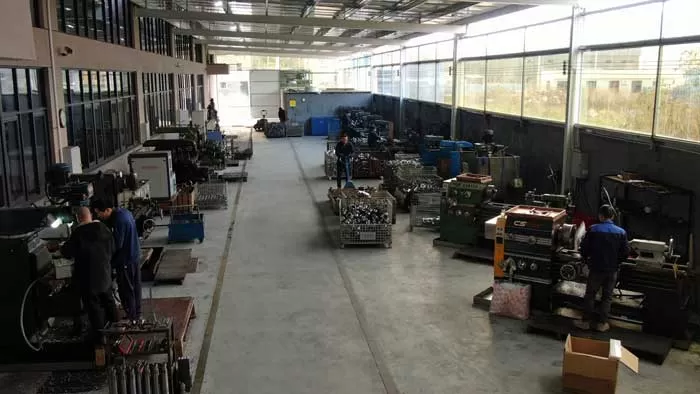
 Atelier Baineng 5



Glass fabrication shops face unprecedented operational pressures. Skilled manual polishers are difficult to hire and retain. Demand for custom, complex architectural lites continues to rise, while commercial project timelines shrink. Hand-routing sink cut-outs or manually drilling hinge cut-outs introduces costly breakages and inconsistent edge finishes.
A Verre CNC processing center is an automated, computer-controlled workstation designed to perform multiple fabrication steps—including cutting, edging, polishing, drilling, countersinking, and milling—on a single machine setup. By combining these individual processes into one automated cycle, these machines eliminate redundant material handling and deliver exceptional structural accuracy.
Whether you run an established plant or plan your next equipment expansion, choosing the right machinery shapes your profit margins for years. Manufacturers like BAINENG CNC engineer high-precision processing equipment to solve these operational bottlenecks. If you want to cut production scrap and double your throughput this quarter, contact our technical team today for a tailored machinery assessment.
How Does a CNC Glass Processing Center Work?
Traditional flat glass processing requires moving a heavy lite across multiple standalone stations: a cutting table, a straight-line edger, a standalone drill press, and a manual workstation for cut-outs. Every transfer exposes the raw glass to edge chipping, surface scratching, and operator injury.
A modern computerized machining station replaces this fragmented process through three integrated systems:
CAD/CAM Software Integration
The workflow starts on a computer screen rather than the shop floor. Operators import native architectural drawings—typically standard DXF or DWG files—directly into the machine's proprietary CAM software. The program analyzes the geometry, applies tooling offsets, defines tool entry points, and generates optimized G-code.
Modern software suites automatically calculate grinding speeds and wheel wear compensation. Fabricators do not need to write raw numerical code manually; they simply select glass thickness, edge profiles, and processing priority.
Multi-Axis Kinematics (3-Axis vs. 5-Axis)
Once the glass is positioned on suction pods, the machine's spindle moves along multiple axes:
- 3-Axis Machines: The spindle moves along the X (length), Y (width), and Z (vertical depth) axes. This setup handles flat edge polishing, standard drilling, and interior cut-outs for rectangular or irregular flat lites.
- 4-Axis Machines: Adds rotational capability (C-axis) to the spindle head, allowing specialized tooling to turn corners cleanly during complex routing routines.
- 5-Axis Machines: Introduces an articulating B-axis (tilting head). This enables complex miter cuts, angled countersinking, and three-dimensional edge beveling required in modern architectural facades. Organizations like the National Glass Association (NGA) regularly document how tight architectural tolerances drive the adoption of multi-axis automation.
Automatic Tool Changers (ATC) and Closed-Loop Cooling
Industrial glass machining generates intense frictional heat. Spindles run at speeds ranging from 6,000 to 12,000 RPM, requiring continuous internal and external water cooling delivered directly through the tool center. This pressurized flow prevents diamond tools from glazing over and eliminates thermal shock that causes glass breakage.
When switching from a rough diamond wheel to a fine resin-polishing wheel, the automatic tool changer (ATC) swaps tool holders in seconds. Rotary tool carousels hold anywhere from 10 to 30 tool stations, letting the system complete roughing, fine grinding, polishing, and drilling without operator intervention.
Key Capabilities & Operations of CNC Glass Machines
Investing in automated CNC machinery shifts a fabrication shop from commodity cutting to high-value, bespoke processing. Here is what these machines perform in a single production run:
High-Precision Edging and Polishing
A CNC workstation processes any contour with uniform finish quality. From flat edges with arris to pencil edges (C-edges), bullnose profiles, and multi-angle bevels, the machine maintains constant surface pressure against the glass perimeter. Diamond metal-bond wheels remove bulk stock, followed by resin-bond wheels and cerium-impregnated polishing wheels that produce an optical-grade shine.
Verre CNC Drilling and Countersinking
Manual glass drilling often leaves micro-fissures around hole edges, creating weak points that shatter during the tempering furnace cycle. CNC glass drills use opposing dual-spindle setups or precision-peck drilling routines that enter the glass smoothly. The system drills structural holes for spider fittings, patches, and handles, then immediately countersinks both sides for flush mounting hardware.
Internal Cut-Outs and Milling
Producing cut-outs for electrical sockets, shower hinges, mail slots, and architectural hardware is labor-intensive on manual machinery. Using specialized finger bits and router cutters, the CNC mill plunges through the glass plate and tracks the programmed interior profile with sub-millimeter precision. Radiused inner corners are milled to exact engineering standards to distribute structural stress properly.
Beveling, V-Grooving, and Decorative Surface Work
Beyond functional joinery, computerized glass centers handle decorative applications. By utilizing specialized profiling wheels, operators carve decorative V-grooves, custom artistic fluting, and edge bevels directly into mirror glass, furniture tops, and interior partitions.
Horizontal vs. Vertical Verre CNC Processing Centers
Glass machinery generally falls into two physical configurations: horizontal flat-bed machines and vertical upright processing lines. Each has distinct mechanical and operational tradeoffs.
| Feature | Horizontal CNC Processing Center | Vertical CNC Processing Center |
|---|---|---|
| Floor Space Required | Large footprint; requires open perimeter clearance. | Compact; leans back at roughly 6 to 8 degrees. |
| Workpiece Holding | Vacuum suction pods manually or auto-positioned on a flat bed. | Vertical support rollers, clamps, and backplane vacuum. |
| Glass Thickness Range | Exceptional; handles thin glass up to bullet-resistant laminates. | Typically optimized for 3mm to 19mm architectural glass. |
| Scrape & Scratch Risk | Moderate; fine cullet can settle on suction pods. | Minimal; gravity pulls cooling water and cullet down and away. |
| Best Applied For | Heavy furniture glass, complex shapes, beveling, thick laminates. | Shower doors, standard window panes, doors, railing lites. |
Horizontal machines provide unmatched accessibility when fabricating deeply contoured or extra-thick lites. However, vertical machines process high-volume, regular shapes like frameless shower doors with faster loading cycles and minimal handling risk.
Why Modern Fabricators Invest in CNC Glass Technology: The Business Case
Machinery upgrades must show a clear financial return. When evaluating capital investments, factory owners balance raw machine cost against long-term operational savings.
Equipment builders like BAINENG CNC design processing centers specifically to streamline these workshop metrics. Fabricators who transition from manual processing to computerized production realize concrete business advantages:
- Reduced Cycle Times: A job that takes 45 minutes across three manual stations—moving, cutting, drilling, and deburring—takes under 12 minutes on an automated CNC bed. One-touch setup eliminates intermediate material staging.
- Mitigation of Labor Scarcity: Finding experienced hand polishers is an ongoing challenge across the glass industry. An automated center allows one moderately trained operator to oversee the output previously produced by three skilled craftsmen.
- Strict Tolerance Adherence: Architectural glass specifications require minimal edge clearance. Manual grinding often drifts past standard tolerances, leading to project site rejections. CNC machines maintain repeatable tolerances within ±0.15 mm, complying with rigorous safety glazing criteria outlined by ASTM International standards.
- Zero-Defect Tempering Prep: Uneven manual cut-outs and microscopic fractures along drilled holes cause panels to explode inside tempering furnaces. Cleanly milled CNC profiles distribute mechanical stress evenly, drastically lowering furnace cull rates.
Typical Industrial Applications
Versatility allows fabricators to service multiple market sectors using a single processing center:
Architectural and Structural Glazing
Modern facades demand structural integrity. CNC processing centers prepare heavy monolithic and laminated panels for curtain walls, point-supported canopies, commercial entrances, and glass balustrades. Holes for countersunk spider fittings must align down to the fraction of a millimeter to distribute dynamic wind loads safely.
Interior Partitions and Frameless Shower Doors
The frameless shower market thrives on custom dimensions. Out-of-square walls require out-of-square glass cuts, hinge cut-outs, and mitered edges to prevent water leaks. CNC centers handle these custom shapes without slow manual measuring and template making.
Furniture, Retail Display, and Mirrors
From polished oval dining tables to high-end retail display showcases, aesthetics matter. CNC machines process complex external radii, polish inside cut-outs on retail display fixtures, and mill smooth cable grommets into modern glass office furniture.
Appliance and Transportation Glass
Oven doors, commercial refrigerator viewing panels, train windscreens, and marine glazing demand tight tolerances and polished finishes. According to reports in Glass Magazine, automated CNC edging continues to displace standalone equipment in tier-one appliance component manufacturing due to strict safety and fit standards.
Buyer’s Checklist: How to Choose the Right Machine
Before issuing a purchase order for a new glass processing line, evaluate these operational specifications:
- Bed Size and Effective Working Stroke: Match the machine's maximum processing axis to your largest standard stock sheet (jumbo size vs. standard split sizes). Don't ignore the minimum processing size; processing small shelf glass or patch plates requires tight vacuum pod configurations.
- Electro-Spindle Horsepower: Heavy milling and fast edge grinding through 19mm glass demand steady torque. Look for spindles rated at 9 kW to 15 kW with ceramic bearings and direct-chilled water loops to prevent thermal drift.
- Vacuum Clamping Rigidity: Evaluate the suction holding system. Look for dual-circuit vacuum systems equipped with quick-locking pod bases. If the glass shifts a fraction of a millimeter during heavy routing passes, diamond bits will snap and the panel is scrapped.
- CAM Software Usability: Ensure the operating software handles direct DXF imports without requiring cumbersome multi-step conversions. Parametric macro libraries for standard shower hinges and lock cut-outs save hours of programming every week.
- Local Service and Component Sourcing: Downtime destroys manufacturing margins. Ensure the machine uses standard industrial components (such as Yaskawa or Siemens servo motors, THK linear rails, and Schneider electronics) that can be sourced quickly.
Frequently Asked Questions
Q1: What is the main difference between a CNC glass processing center
and a straight-line edging machine?
A1: A straight-line edger only
processes straight, uniform edges on rectangular glass as it travels across
conveyor tracks. It cannot drill holes, route internal cut-outs, or shape curved
profiles. A CNC glass processing center handles both straight and irregular
shapes, while also drilling, countersinking, milling, and polishing all interior
and exterior edges in a single loading cycle.
Q2: Does an operator need advanced programming skills to run this
equipment?
A2: No. Modern machines feature intuitive graphical user
interfaces with integrated CAD/CAM software. Operators import standard DXF files
or select pre-programmed parametric shapes (such as shower doors or table tops)
from a built-in macro library. Running the machine requires basic computer
literacy and standard glass handling skills, not manual G-code drafting.
Q3: What is the typical payback period (ROI) on a glass CNC
processing machine?
A3: For most mid-sized commercial fabricators
running a single shift, the payback period falls between 12 and 24 months.
Savings come from cutting manual labor hours, reducing furnace breakages caused
by poor edge prep, eliminating outsourced fabrication costs, and securing
high-margin custom architectural orders.
Q4: How do I maximize diamond tooling life during heavy milling
routines?
A4: Tool longevity depends primarily on internal coolant
delivery and proper feed rate settings. Ensure internal spindle water pressure
is maintained according to manufacturer specifications (typically 3 to 5 bar).
Use automatic wheel dressing routines to keep diamond grits exposed, and match
spindle RPM carefully to glass thickness to prevent tool overheating.
Q5: How does the machine prevent small glass panels from shifting
during routing?
A5: CNC processing centers utilize localized vacuum
pods that direct high-suction holding force directly beneath the machining path.
For narrow or small workpieces, mechanical stop pins and specialized modular
vacuum gaskets focus suction pressure onto a compact surface area, keeping the
workpiece firmly anchored against lateral cutting forces.
Modernize Your Plant with Proven Engineering
Relying on manual glass processing methods caps your plant's daily capacity and leaves your business exposed to rising labor rates. Integrating a rugged, high-precision machining system positions your factory to accept demanding projects while keeping production costs predictable.
BAINENG CNC engineers high-performance CNC glass processing machinery built for 24/7 industrial production. Our machines feature rigid structural frames, high-torque industrial spindles, and intuitive controls designed to keep your line running profitably.
Ready to reduce scrap and scale your processing capacity? Contact our engineering specialists today to request technical specifications, receive a custom investment payback analysis, or schedule a virtual live demonstration tailored to your workshop layout.