



Uncovering the Main CNC Vertical Drilling Machine Advantages
The primary CNC vertical drilling machine advantages are its exceptional space efficiency, high production speed, and superior hole quality. This specialized equipment is engineered for a specific task. It excels at high-volume drilling for the modern glass fabrication industry. Unlike versatile horizontal machines, the vertical drilling machine is a specialist. Its design offers a unique set of benefits. These benefits directly address the core challenges of speed, precision, and workflow integration in demanding production environments. This guide uncovers these key advantages in detail.
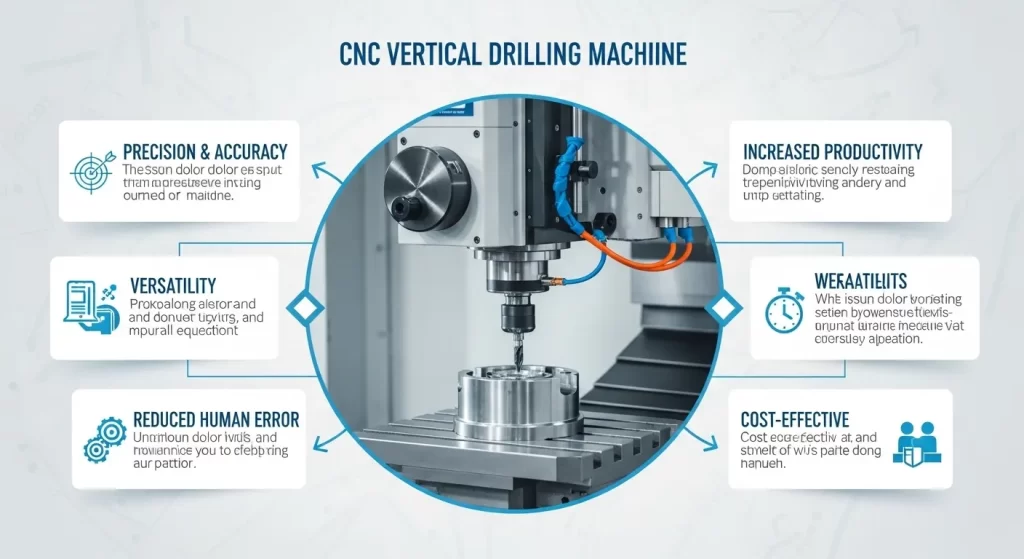
What is a CNC Vertical Drilling Machine?
A CNC vertical drilling machine is a piece of automated equipment that holds a glass sheet in an upright, vertical position to drill holes. The machine uses computer-controlled diamond-tipped drill bits. It is specifically optimized for creating numerous, precise holes quickly and efficiently. Many models feature two opposing drill heads. These heads work on both sides of the glass simultaneously. This design is a key differentiator from traditional horizontal CNC machines.
How Does the Vertical Orientation Work?
The vertical orientation changes how the glass is handled and processed. The glass sheet is loaded onto the machine's infeed conveyor.1 It is then clamped securely along its bottom edge and held upright by rollers or suction cups. The drilling heads, mounted on a movable gantry, then travel to the programmed coordinates to perform the drilling operation. This vertical setup is fundamental to the machine's design. It influences everything from its footprint to its integration capabilities. The core mechanics still follow the principles of Computer Numerical Control (CNC). The controller executes a digital program to ensure perfect accuracy.2
What is the Dual-Head Drilling Concept?
The dual-head or counter-drilling concept is a signature feature of many vertical machines. This system employs two independent drilling spindles. They are positioned directly opposite each other on either side of the glass. When a hole is programmed, both drills advance simultaneously. One drills from the front and the other from the back. They meet precisely in the center of the glass thickness. This synchronized action is a major factor behind the machine's speed and quality. This process is a specialized application within the broader scope of how CNC glass machines work.
What Are the Primary CNC Vertical Drilling Machine Advantages?
The primary advantages are a significantly smaller factory footprint, faster cycle times due to dual-head operation, superior hole quality with minimal chipping, and seamless integration into automated production lines. These benefits make the vertical drilling machine an indispensable tool for high-volume glass fabricators. Each advantage addresses a critical need in modern manufacturing. The combination of these benefits provides a strong competitive edge.
How Does a Vertical Design Improve Space Efficiency?
The vertical design improves space efficiency by drastically reducing the machine's footprint.3 Holding the glass upright means the machine's depth is minimal compared to a horizontal machine that must support the entire surface area of the glass flat. This compact design is a major benefit for workshops where floor space is a premium. It allows for more efficient plant layouts. It can free up valuable space for other processes or material storage. A vertical driller can occupy up to 60% less floor space than a horizontal machine with the same glass size capacity. This efficiency is a critical consideration when planning a workshop.
How Do Dual Drilling Heads Increase Production Speed?
Dual drilling heads increase production speed by performing the work of two machines at once. The counter-drilling technique, where both heads drill simultaneously, effectively cuts the time required to create a single hole in half. This massive increase in throughput is the machine's most compelling productivity advantage. For a product like a shower door, which may require eight or more holes, this time saving is multiplied across every piece. This speed allows workshops to meet tight deadlines. It also increases overall capacity without adding more machines or labor.4 This advantage is a key topic within the broader discussion of CNC drilling and milling for glass explained.
What is the Impact on Hole Quality and Chipping?
The impact on hole quality is dramatic, particularly in the reduction of exit chipping. The dual-head counter-drilling technique provides physical support to the glass on the exit side of the hole. As one drill bit is about to break through, the opposing drill bit is already there. This prevents the glass from flexing and chipping away. This "breakout" is a common defect in single-sided drilling. Eliminating it results in a perfectly clean, high-quality hole on both sides. This improves the aesthetic appeal and the structural integrity of the final product. It also significantly reduces the number of rejected parts. Some fabricators report a decrease in drilling-related defects of over 80% after adopting this technology.
How Does Vertical Orientation Streamline Material Handling?
The vertical orientation streamlines material handling by allowing for easy integration with in-line conveyor systems. Glass naturally moves through a factory on vertical racks or A-frames. A vertical drilling machine can be placed directly in a production line. Glass can move from a washing machine, through the driller, and onto a tempering furnace with minimal manual intervention. This contrasts sharply with horizontal machines. These require lifting equipment or robotic arms to lift glass off a rack and place it flat on the machine bed. This seamless flow is a cornerstone of the modern automation in the glass processing industry. It reduces handling time, labor costs, and the risk of breakage.
How Does a Vertical Machine Compare to a Horizontal CNC Working Center?
A vertical drilling machine is a high-speed specialist.5 It is optimized for one task. A horizontal CNC working center is a versatile generalist. It can perform many tasks like milling, edging, and polishing in addition to drilling.6 The choice between them depends entirely on a workshop's production needs and product mix. One is built for speed and volume in a specific task. The other is built for flexibility across many tasks.
What Are the Trade-offs in a Head-to-Head Comparison?
The trade-offs between the two machine types are clear. A workshop must evaluate which set of features aligns with its business model. The decision on how to choose a CNC glass machine for a workshop requires a careful analysis of these differences.
| Feature | CNC Vertical Drilling Machine | Horizontal CNC Working Center |
| Primary Function | High-speed drilling | Multi-process fabrication |
| Drilling Speed | Very High | Moderate |
| Versatility | Low (Drilling only) | Very High (Drill, mill, edge, etc.) |
| Factory Footprint | Small | Large |
| Line Integration | Excellent | Moderate |
| Setup Time | Very Low | Moderate |
| Cost | Generally lower | Generally higher |
When is a Vertical Drilling Machine the Right Choice?
A vertical drilling machine is the right choice for businesses that have a high volume of work that primarily involves drilling.7 Companies specializing in frameless shower doors, glass railings, or standardized architectural panels will see the greatest return on investment. If the majority of your machine time is spent drilling holes, this specialized equipment will offer unmatched productivity. Its speed and efficiency in this specific task are its defining strengths. The ROI for specialized machinery in high-volume settings is well-documented.
When is a Horizontal Working Center a Better Investment?
A horizontal working center is a better investment for custom fabrication shops with a diverse product mix. If your daily work involves creating custom tabletops with polished edges one hour, and then milling intricate cutouts the next, you need the flexibility of a working center. These machines can be configured for a wide array of processes.8 These include CNC glass polishing techniques and even decorative work like engraving. This versatility is essential for businesses that do not have the high volume of a single type of work to justify a specialized machine.
What Are the Key Applications for This Technology?
The key applications for CNC vertical drilling machines are found in industries that require the high-volume production of standardized flat glass panels with multiple holes. The technology is a perfect fit for manufacturing products where speed, precision, and repeatability of hole patterns are critical. Its impact is most significant in the construction and interior design sectors.
Why Is It Ideal for Frameless Shower Doors?
This technology is ideal for frameless shower doors because these products are defined by their hardware, which requires numerous, precisely placed holes. A typical shower door needs holes for hinges, a handle, and a towel bar. A full enclosure requires even more. A vertical drilling machine can process these standardized panels at a very high rate. It ensures that every hole is perfectly placed for hardware alignment. The high-quality, chip-free finish is also crucial for the aesthetic and safety requirements of a bathroom environment.
How Does It Benefit the Production of Glass Railings and Balustrades?
It benefits the production of glass railings by enabling the rapid, accurate drilling of mounting holes. Glass balustrade systems often consist of many similar panels. Each panel requires a series of holes along its edges for mounting to posts or standoffs. A vertical drilling machine can quickly process these panels. It ensures the hole patterns are identical across the entire project. This consistency is essential for a smooth and secure installation. The market for safety glass in construction continues to grow.
What is Its Role in Architectural Facades and Curtain Walls?
The machine's role in architectural facades is to produce the vast number of panels needed for modern glass buildings. Point-supported glass systems, or "spider" systems, use metal fittings that bolt through the glass panels.9 This requires four or more holes in each corner of hundreds or thousands of identical panels. A vertical drilling machine integrated into an automated line is the only way to produce this volume of work efficiently. It meets the tight deadlines and stringent quality standards of large-scale construction projects.
What Considerations Are Important Before Investing?
Before investing in a CNC vertical drilling machine, a business must carefully consider its production volume, technical requirements, and integration strategy. This is a significant capital investment. It requires a thorough analysis to ensure it aligns with the company's long-term goals. A hasty decision can lead to an underutilized asset. A well-researched one can be a powerful engine for growth.
How Do You Justify the Investment Based on Production Volume?
You justify the investment by conducting a break-even analysis. You must have a consistent, high volume of drilling work to keep the machine utilized. Calculate your current cost per hole using manual or less efficient methods. Then, project the cost per hole using the vertical driller, factoring in its speed and lower labor requirements. The point at which the savings offset the machine's cost is your break-even point. If your production volume far exceeds this point, the investment is sound. Industry consultants often recommend specialized automation when a single task accounts for over 60% of machine time.
What Technical Specifications Should Be a Priority?
The technical specifications that should be a priority include the glass size and thickness capacity, the number and type of drilling heads, and the quality of the control system.
- Glass Capacity: Ensure the machine can handle the largest and thickest glass you work with.
- Drilling Heads: Evaluate the number of tools the machine can hold. More tools mean more flexibility for different hole sizes without a manual changeover.
- Control System: The CNC controller and software should be user-friendly and reliable. It should also be compatible with your existing CAD/CAM software to ensure a smooth workflow. The quality of the control system is a key part of CNC automation in glass processing.
How Important is Integration and After-Sales Support?
Integration and after-sales support are critically important. The machine must be able to communicate with other equipment in your production line. This requires careful planning and collaboration with the machine supplier. Furthermore, the supplier's commitment to after-sales support is a crucial factor. You need access to readily available spare parts, qualified technicians, and responsive customer service. A machine is only profitable when it is running. A strong support network is essential for minimizing downtime. This is a key part of any strategy for maintenance tips for CNC glass machinery. The total cost of ownership, including service and support, should be considered.
Conclusion
The main CNC vertical drilling machine advantages of space efficiency, speed, quality, and integration provide a powerful competitive edge for the right business. This machine is not a generalist. It is a highly specialized tool designed to solve a specific problem: how to drill a large volume of high-quality holes in glass as quickly and efficiently as possible. For companies focused on products like shower doors, railings, and architectural panels, this specialist's edge is the key to unlocking new levels of productivity and profitability. Embracing this targeted automation is a strategic move towards a leaner, faster, and more competitive future in the glass processing industry.