



A Guide to CNC Glass Working Center Setup Made Easy
A proper CNC glass working center setup is the essential first step toward achieving precision, efficiency, and profitability. This complex machinery is the heart of a modern fabrication workshop. Its capabilities are only fully realized through a methodical and precise installation process. This setup goes beyond simply placing the machine on the floor. It involves careful site preparation, meticulous mechanical alignment, and detailed software configuration. This guide provides a clear, step-by-step process for a successful setup. It ensures the machine performs optimally from the very first day of operation.
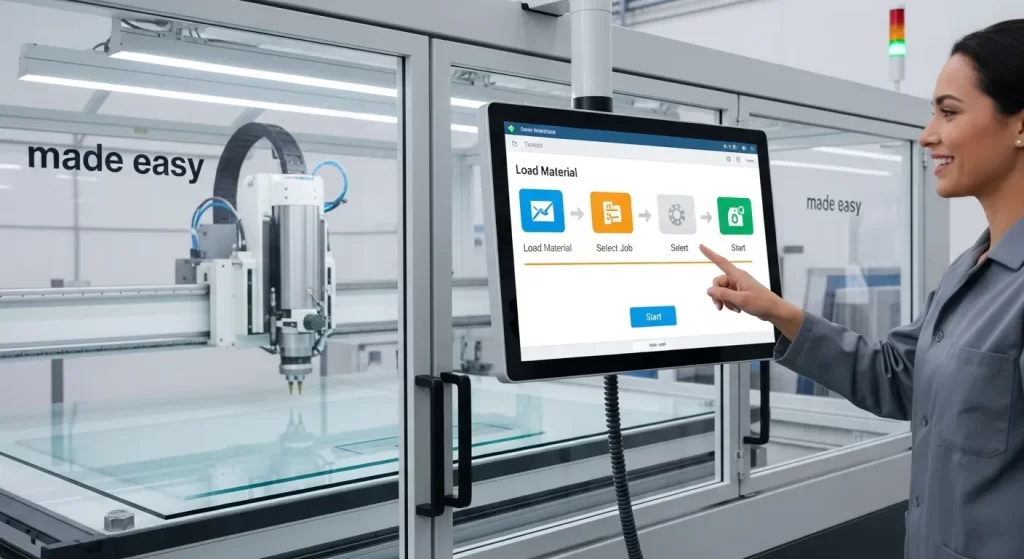
What is the Goal of a Proper CNC Glass Working Center Setup?
The goal of a proper CNC glass working center setup is to ensure the machine operates with maximum precision, safety, and efficiency. It involves a systematic process from site preparation to final calibration. This procedure lays the foundation for consistent, high-quality production. A correct setup minimizes mechanical wear. It also guarantees that the finished product perfectly matches the digital design. It is the most critical factor in maximizing the return on a significant capital investment.
How Does Setup Impact Machine Longevity?
The initial setup directly impacts the long-term health and longevity of the machine. A machine that is perfectly level and aligned experiences less stress on its mechanical components. This includes guide rails, ball screws, and bearings. This reduces premature wear and tear. It also lowers the frequency of costly repairs. A solid foundation that absorbs vibration also protects sensitive electronic components. A proper setup is the first and most important step in a proactive maintenance strategy.
Why is Accuracy Dependant on a Good Setup?
The accuracy of the finished product is entirely dependent on the quality of the setup. The machine's controller assumes that its mechanical structure is perfectly level, square, and aligned. If the foundation is uneven or the axes are not perpendicular, the machine has no way of knowing. It will execute the program's commands faithfully. However, the resulting cuts will be inaccurate. This is a core principle explained in our guide on how CNC glass machines work. A precise setup is the physical guarantee that the machine's movements in the real world match the instructions from the digital world.
What Are the Pre-Installation Site Requirements?
Before the machine arrives, the workshop must be thoroughly prepared. The pre-installation phase is critical. It ensures that the site can support the machine's operational and environmental needs. This involves preparing a solid foundation, providing adequate utilities, and planning the workshop layout. Overlooking these steps can lead to significant delays and complications during the actual installation.
How Do You Prepare the Foundation?
A solid, level concrete foundation is necessary to support the machine's immense weight and absorb operational vibrations. An inadequate foundation will lead to persistent accuracy issues and premature mechanical wear. The manufacturer's specifications will detail the required concrete thickness, which is often substantial. The concrete must be fully cured before the machine is installed. This can take several weeks. Precision leveling plates are often embedded in the foundation. These provide a stable base for the machine's leveling feet. A properly engineered foundation is a non-negotiable requirement for precision manufacturing.
What Are the Electrical and Pneumatic Needs?
The machine requires a dedicated, stable power supply and a clean, dry compressed air source. Electrical fluctuations can damage sensitive CNC controllers and servo motors. A dedicated circuit with the correct voltage, phase, and amperage is required. Pneumatic systems power components like the tool changer and vacuum pods. The compressed air must be free of moisture and oil. These contaminants can damage pneumatic valves and cylinders. This requires an air compressor with a high-quality air dryer and filtration system. The reliability of these utilities is essential for uninterrupted operation.
Why is Workshop Layout and Space Crucial?
A well-planned workshop layout is crucial for both efficiency and safety. The machine needs ample clearance on all sides. This space allows for the safe loading and unloading of large glass sheets. It also provides maintenance personnel with unrestricted access to all components. A cramped installation is a safety hazard. It also makes routine service difficult. The layout should consider the entire workflow. This includes the movement of raw materials, the machine's position, and the path for finished products. This planning ensures a smooth and logical production flow.
What is Involved in the Mechanical Installation Process?
The mechanical installation is a precision-focused phase. It is typically performed by factory-certified technicians. This stage involves the physical assembly, leveling, and alignment of the machine's core components. These steps create the stable and accurate mechanical framework upon which all the machine's operations will depend. Every adjustment is made using highly sensitive measuring instruments.
How is the Machine Assembled and Leveled?
Technicians begin by assembling the main components of the machine on the prepared foundation. This includes the base, the gantry, and the working head. Once assembled, they begin the meticulous process of leveling the machine bed. Using precision machinist's levels or laser trackers, they adjust each of the machine's leveling feet. They make micro-adjustments until the entire work surface is perfectly flat. A level bed is essential. It ensures the Z-axis maintains a consistent height relative to the workpiece across the entire table.
What is the Process of Aligning the Axes?
Aligning the axes ensures that they are perfectly perpendicular to each other. Technicians use precision tools like granite squares and dial test indicators. They check that the Y-axis travel is exactly 90 degrees to the X-axis travel. They also verify that the Z-axis is perfectly perpendicular to the XY plane. Any deviation from squareness, known as racking, will result in skewed cuts and inaccurate parts. This precise alignment is fundamental to the machine's ability to produce dimensionally correct products. It is a cornerstone of modern automation in the glass processing industry.
How Do You Set Up the Core Operating Systems?
With the mechanical structure in place, the focus shifts to the core operating systems. This involves preparing the systems that deliver coolant, change tools, and hold the workpiece. These systems are the lifeblood of the machine's daily operations. Their proper setup is essential for both the quality of the finished product and the efficiency of the production process.
What is the Setup for the Coolant and Slurry System?
The coolant system setup involves filling the main reservoir with water and the appropriate coolant additive. The filtration system must be checked, and the pumps must be primed. All delivery lines are inspected to ensure they are free of blockages. For processes like polishing, a separate slurry tank for cerium oxide is prepared. A properly functioning coolant system is vital. It prevents thermal shock during aggressive operations. It is also a key component for achieving a brilliant shine with CNC glass polishing techniques. The health of this system directly impacts tool life and finish quality.
How Do You Configure the Automatic Tool Changer (ATC)?
Configuring the ATC is the heart of setting up the machine's automation. This process involves several steps.
- Loading Tools: Each tool is placed into a specific tool holder. The holders are then loaded into the ATC's carousel or magazine.
- Assigning Pockets: In the machine's control software, each physical pocket in the carousel is assigned the corresponding tool number.
- Calibrating the Changer: Technicians run a calibration routine. This ensures the ATC arm can grip the tool holder, move it to the spindle, and return it to the carousel smoothly and accurately. A correctly configured ATC is the foundation of efficient, multi-process jobs. This is a key aspect of CNC automation in glass processing.
How is the Vacuum Clamping System Prepared?
Preparing the vacuum system involves connecting the vacuum pump to the machine bed's plumbing. All connections are checked for leaks to ensure maximum suction power. The operator is then trained on the proper placement of the vacuum pods on the machine bed. The pods must be positioned to provide even support to the glass sheet. This prevents it from flexing or vibrating during machining. A strong and stable vacuum is a critical safety and quality requirement. It is the primary method of holding the workpiece securely in place.
What is the Initial Software Configuration and Calibration?
The initial software configuration bridges the gap between the physical machine and the digital design. This stage involves installing the necessary software, building a digital library of the physical tools, and establishing the machine's coordinate systems. This digital setup is just as important as the mechanical alignment. It ensures that the machine's brain has an accurate model of its physical self.
How Do You Install and Configure the CAM Software?
The CAM (Computer-Aided Manufacturing) software is installed on a separate programming computer. The most critical part of this configuration is loading the correct post-processor for the specific machine model. The post-processor is a small file. It acts as a translator. It converts the generic instructions from the CAM software into the specific G-code dialect that the machine's controller understands. An incorrect post-processor will generate code that the machine cannot read or that may cause it to behave unexpectedly. The software's tool library is then populated with all the tools loaded in the ATC.
What is the Process of Calibrating Tool Lengths and Offsets?
Calibrating tool lengths is a precision measurement process. Each tool, when mounted in its holder, will have a unique length. The machine must know this exact length. This information is used to control the Z-axis depth accurately. This calibration is done using an electronic tool presetter or an on-machine touch probe. The device measures the length of each tool. This data is then entered into the machine's tool offset table in the controller. Accurate tool offsets are vital for every process, especially for precise CNC drilling and milling for glass explained. Industry standards demand high precision in this area.
How Do You Set and Verify Machine Home and Work Coordinates?
Setting coordinates involves establishing reference points for all machine movements. First, the machine is "homed." This process sends each axis to a fixed switch at the end of its travel. This establishes the machine's permanent reference point, known as machine zero. For each new job, the operator then sets a "work coordinate system" (WCS), or a temporary zero point. This is typically a corner or the center of the glass sheet. All the G-code program's movements will then be relative to this work zero. This system allows for easy and repeatable setups.
What Are the Final Steps Before Full Production?
Before the machine is put into full production, a series of final checks and training sessions are conducted. This commissioning phase ensures that all systems are functioning correctly together. It also ensures that the operators are fully equipped with the knowledge to run the machine safely and effectively. This final stage transitions the project from an installation to an operational asset.
How Do You Run the First Test Cuts?
The first test cuts are always run on a sacrificial piece of scrap material, never on valuable glass. The technician will run a series of simple test programs. A program to cut a large square is used to verify the machine's dimensional accuracy and squareness. A program with multiple tool changes is used to confirm the ATC is functioning correctly. A drilling program is run to check tool offsets and hole quality. These tests are a final, real-world verification of the entire setup. They confirm that all mechanical and digital systems are working in harmony.
What is Included in Operator Training?
A proper setup always concludes with comprehensive operator training from the manufacturer's technicians. This is a critical knowledge transfer step. The training should cover:
- Machine Operation: The function of every button and switch on the control panel.
- Software Use: How to load programs, set work offsets, and manage the tool library.
- Routine Maintenance: Daily, weekly, and monthly checks that the operators are responsible for.
- Safety Procedures: Emergency stop procedures and all built-in safety features. A well-trained operator is the most important factor in the machine's long-term success. The return on investment for training is exceptionally high.
How Do You Establish a Maintenance Schedule?
The final step of the setup is to establish a clear, documented maintenance schedule. This schedule is based on the manufacturer's recommendations. It should be easily accessible to the operators and maintenance staff. The schedule will detail all routine tasks. These include lubricating moving parts, cleaning filters, and inspecting for wear. This proactive approach is the key to ensuring the machine's reliability and performance for years to come. A complete list of best practices can be found in our guide on maintenance tips for CNC glass machinery.
Conclusion
A successful CNC glass working center setup is a comprehensive and meticulous process. It is the true foundation upon which all future production rests. From the solidity of the concrete floor to the precision of the final digital calibration, each step is a critical link in a chain that leads to quality, efficiency, and safety. By approaching the setup with a systematic plan and a focus on detail, a workshop can ensure that its investment is maximized. This unlocks the full potential of this powerful technology. The setup is not the end of the journey. It is the beginning of a new era of capability and growth.