
 FAQs
FAQs Factory Tour



For manufacturing engineers and procurement specialists in the architectural, automotive, and decorative glass sectors, selecting the correct subtractive processing method is critical. While both CNC glass engraving and CNC glass etching are employed for surface modifications, their underlying physical principles, achievable geometries, and mechanical impact on the substrate differ substantially. Making an uninformed choice leads to increased rejection rates, compromised glass strength, and inefficient production workflows. This analysis provides a component-level comparison of these two technologies, integrating industry-specific terminology and practical solutions for high-mix, low-volume production environments.
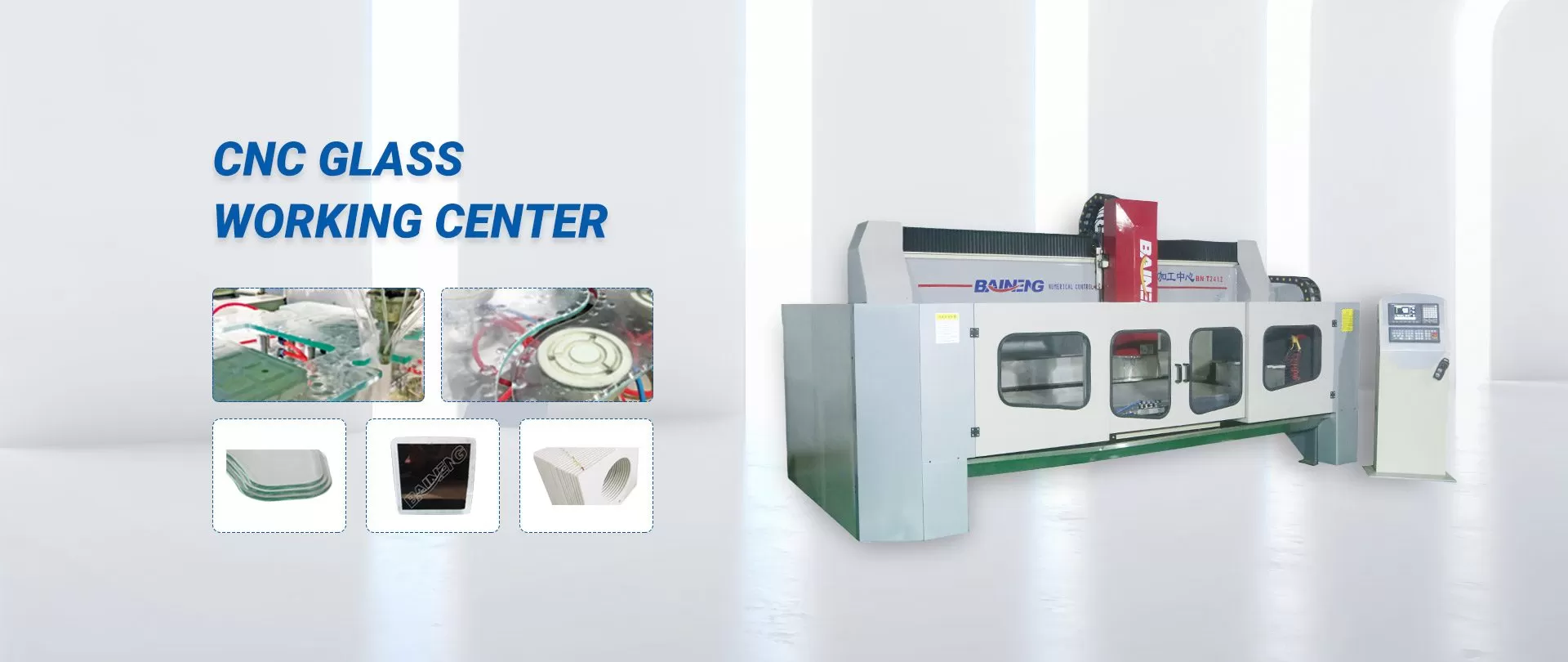
1. Defining the Two Processes: Material Removal Mechanisms
Understanding the distinction begins at the microscopic level of material interaction. CNC glass engraving is a mechanical chip-forming process, whereas industrial CNC glass etching is predominantly a surface erosion or chemical reaction process.
1.1 CNC Glass Engraving: Mechanical Milling on Brittle Substrates
This method utilizes a rotating spindle fitted with diamond-tipped or polycrystalline diamond (PCD) tooling. At spindle speeds ranging from 8,000 to 40,000 RPM, the tool physically penetrates the glass surface, shearing away microscopic particles to create V-grooves, flat-bottomed channels, or complex 3D reliefs. The depth of cut (DoC) typically exceeds 0.3 mm and can reach up to 5 mm on annealed glass, depending on tool geometry and feed rates. Key technical challenges include edge chipping (also known as "fritting"), tool wear management, and the generation of sub-surface micro-cracks that reduce flexural strength. Coolant flooding or mist lubrication is mandatory to flush debris and prevent thermal shock fracture.
1.2 CNC Glass Etching: Abrasive or Chemical Surface Satinizing
In a professional B2B context, "CNC etching" refers almost exclusively to computer-controlled abrasive jet machining (AJM) or, less commonly, resist-patterned acid etching. AJM systems accelerate aluminum oxide or silicon carbide abrasive particles (50–150 µm) through a CNC-controlled nozzle. Particle impact velocity (200–300 m/s) causes localized brittle fracture, producing a diffuse, frosted appearance. Unlike engraving, material removal is limited to 0.025–0.125 mm, preserving the original glass surface plane. Chemical etching involves CNC plotting of an acid-resistant mask, followed by submersion in hydrofluoric acid-based solutions, but this process is declining due to safety regulations and waste disposal constraints. Hence, modern CNC etching aligns with dry abrasive systems.
2. Technical Parameters and Performance Metrics
Selecting between the two technologies demands quantitative comparisons across five performance vectors: surface roughness, achievable tolerance, edge integrity, processing speed, and post-processing requirements.
Surface Roughness (Ra): Engraved surfaces typically yield Ra 1.6–3.2 µm due to tool marks. Etched (abrasive) surfaces achieve Ra 3.2–6.3 µm but with isotropic scattering properties, preferred for privacy glass.
Pattern Resolution: CNC engraving achieves minimum feature sizes of 0.2 mm (using micro-tools), while abrasive etching reaches 0.5–1.0 mm due to particle blast scatter. Chemical etching offers 0.05 mm resolution, but with lower throughput.
Depth Uniformity: Engraving provides ±0.05 mm depth consistency across large panels (2 x 4 m), essential for tactile surfaces. Etching depth varies by ±20% due to nozzle standoff and particle flow dynamics.
Edge Chipping Risk: Engraving on thin glass (<3 mm="">0.3 mm. Etching produces no directional chips, preserving edge strength.
Thermal Load: Engraving generates local hot spots (up to 400°C) requiring active cooling; etching is a cold process suitable for chemically strengthened or tempered glass (up to 120 MPa surface compression).
3. Application-Specific Workflows and Industry Pain Points
Each technology addresses distinct manufacturing pain points. Understanding these eliminates costly trial-and-error iterations.
3.1 Primary Use Cases for CNC Glass Engraving
Architectural feature panels: Deep incisions (≥1 mm) that cast shadows, used in luxury hotel partitions and elevator doors.
Instrumentation and scales: Precisely marked reference lines on laboratory equipment or medical devices requiring wear resistance.
Three-dimensional relief art: Multi-step toolpaths creating gradients of translucency in thick float glass (>10 mm).
Anti-skid surfaces: Grid or linear groove patterns achieving coefficient of friction >0.6 on wet glass steps.
A persistent industry pain point is the programming of smooth toolpaths that avoid tool dwelling—which causes crack propagation. Advanced CAM software with trochoidal milling strategies reduces stepover forces by 40%, minimizing fracture risk. BAINENG CNC integrates such adaptive toolpath generation directly in its post-processors, specifically calibrated for float and borosilicate glass grades.
3.2 Primary Use Cases for CNC Glass Etching
Mass-produced privacy strips: 50–200 mm wide frosted bands on office partition glass, processed at linear speeds of 200 mm/s.
Anti-glare display covers: Low-scatter matte finishes for medical monitors and industrial HMI panels.
Logo and brand marking: High-contrast opaque marks on tempered glass cooktops or wine chillers (zero micro-crack risk).
Light diffusion layers: Etched areas with controlled haze (30–85%) for LED lighting applications.
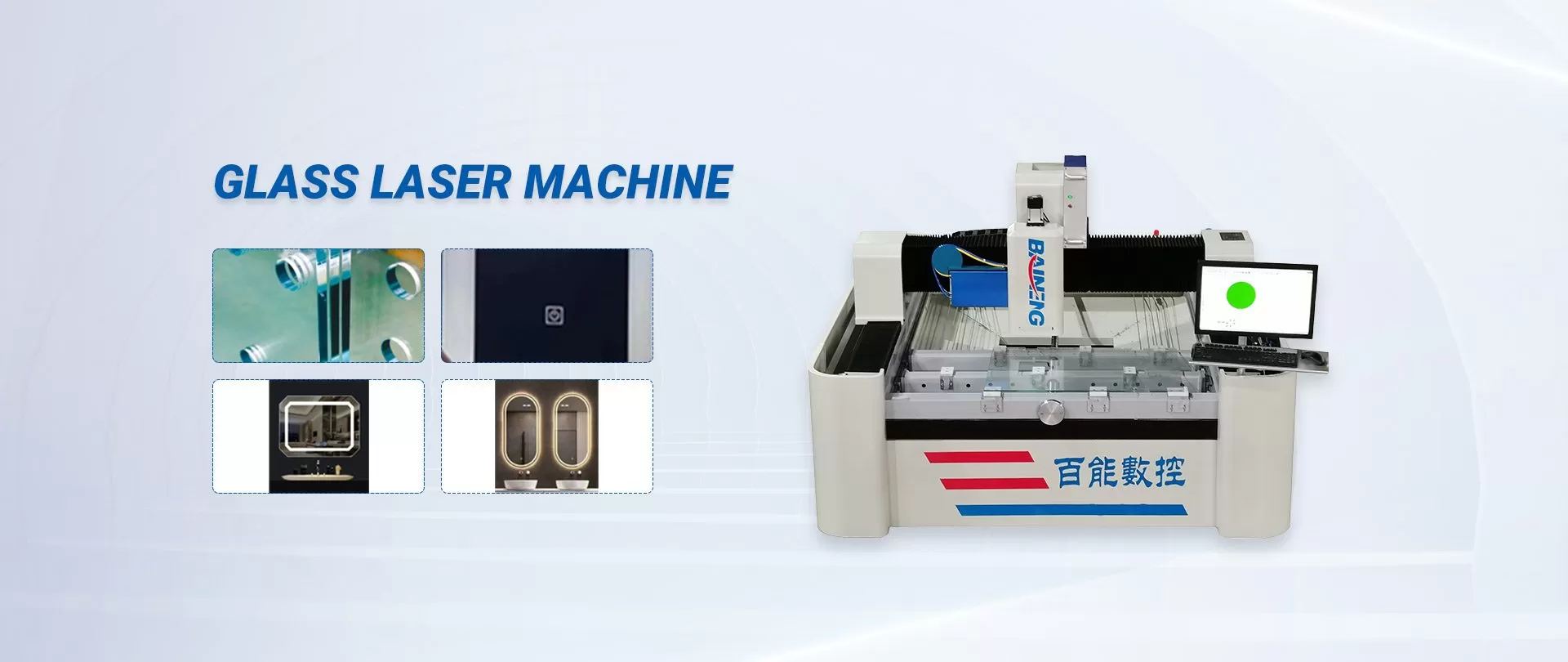
The main challenge for CNC etching is nozzle clogging and inconsistent abrasive flow, leading to streaky finishes. Closed-loop feedback systems with acoustic sensors, as implemented in certain high-end models, dynamically adjust feed rates to maintain uniform particle impact density. BAINENG CNC has resolved this using dual cyclone separators that maintain 99.5% abrasive particle size consistency across 8-hour production runs.
4. Comparative Analysis: Technical Trade-Offs
To facilitate an evidence-based decision, the table below contrasts 12 parameters critical for B2B production planning.
| Parameter | CNC Glass Engraving | CNC Glass Etching (Abrasive) |
|---|---|---|
| Max processing thickness | 2–25 mm annealed glass | 1–19 mm (any type, including tempered) |
| Typical material removal rate | 10–50 mm³/min | 200–800 mm³/min (area-based) |
| Tool/consumable life | 150–300 linear meters per diamond tool | 25–50 kg abrasive per 100 m² etched area |
| Minimum corner radius | 0.15 mm (using radius tools) | 0.5 mm (due to nozzle diameter) |
| Glass strength degradation | 25–40% reduction in flexural strength | <5% reduction=""> |
| Post-processing required | Edge polishing (if chipped), washing | Dry wiping or ionized air blow-off |
| Fixture complexity | Vacuum table + mechanical clamps | Vacuum table only (low cutting force) |
| Suitable for curved glass | Yes, with 5-axis CNC | Yes, with robotic nozzle positioning |
5. Combined Workflows: When to Hybridize Engraving and Etching
Several high-value products benefit from sequential engraving and etching on the same workpiece. For example, a deep engraved logo (providing tactile feedback) combined with an etched surrounding frost (visual contrast) is common in premium appliance panels. However, sequencing is critical: etching must be performed first to avoid abrasive particle infiltration into deep engraved grooves, which complicates cleaning. BAINENG CNC offers dual-head configurations—one spindle for diamond engraving, one abrasive jet nozzle—with automatic tool change and dust extraction switching. This reduces work-in-progress handling by 60% for manufacturers producing decorative glass tiles or shower enclosures with complex patterns.
6. Selecting the Right Technology: A Decision Matrix for Procurement Managers
When evaluating capital equipment for glass processing, use the following weighted scoring system based on your product specifications. Assign scores 1-5 for each criterion.
Criterion 1: Required depth perception. Need depths >0.3 mm? → Engraving. Only surface satinizing? → Etching.
Criterion 2: Glass type. Tempered or heat-strengthened glass prohibits engraving (high breakage risk). Etching is the only safe option.
Criterion 3: Throughput expectation. For more than 500 m²/week of simple frosting patterns, abrasive etching with a multi-nozzle array is significantly faster than engraving.
Criterion 4: Edge quality requirement. If the finished product requires no secondary edge polishing or if the pattern approaches within 5 mm of the glass edge, etching eliminates chipping.
Criterion 5: Maintenance infrastructure. Engraving requires precision tool setting and coolant management; etching requires abrasive media storage and dust collectors. Assess your existing workshop capabilities.
For manufacturers producing short runs of highly customized pieces (e.g., interior design studios), the flexibility of a single machine that performs both functions—like the hybrid systems—offsets the higher initial investment.
7. Frequently Asked Questions (FAQs)
Q1: Can CNC glass etching create a tactile (feelable) surface texture?
Q2: Does CNC glass engraving compromise the strength of thermally tempered glass?
Q3: What is the maximum achievable aspect ratio for engraved channels in glass?
Q4: How does CNC chemical etching differ from abrasive etching in industrial glass processing?
Q5: Can I use the same CNC machine for both engraving and etching without changing hardware?
Q6: Which process yields better optical clarity for reverse-side engraving (second surface marking)?
8. Optimizing Your Production Line with Purpose-Built Equipment
Decisions between CNC engraving and etching should never be based solely on initial quotes, but on total lifecycle suitability to your product mix. Evaluate sample processing: request that vendors produce your most complex part geometry on their machines, measuring edge quality with a 10x loupe and assessing cycle times. For glass processors looking to expand into high-value architectural or automotive components, hybrid-capable systems offer future-proofing against shifting market demands. BAINENG CNC provides application engineering support to analyze your glass types, pattern library, and volume forecasts, delivering a machine configuration matched to your specific technical requirements.
Ready to eliminate trial-and-error from your glass processing workflow?
Our engineering team at BAINENG CNC offers a complimentary technical consultation: submit your CAD drawings and production volume targets. We will return a process recommendation specifying engraving/etching parameters, estimated cycle times, and optimal machine architecture. No generic quotes—only data-driven solutions.
Send your inquiry to kobexu@bai-neng.com with subject line “Glass Processing Analysis” — include your maximum panel dimensions, glass type (annealed/tempered/borosilicate), and a sample pattern PDF. A senior applications engineer will respond within 2 business days.