



A Guide to the CNC Drilling and Milling Machine for Glass
A CNC drilling and milling machine for glass is a cornerstone of modern glass fabrication. This versatile, computer-controlled equipment automates the precise creation of holes and complex shapes within a glass sheet. It moves the industry beyond simple cutting and edging. It enables the production of sophisticated products for architectural, automotive, and decorative applications. This definitive guide provides an expert overview of this transformative technology. It explains how the machine works, its core components, its key benefits, and its vital role in creating high-value, precision-machined glass products.
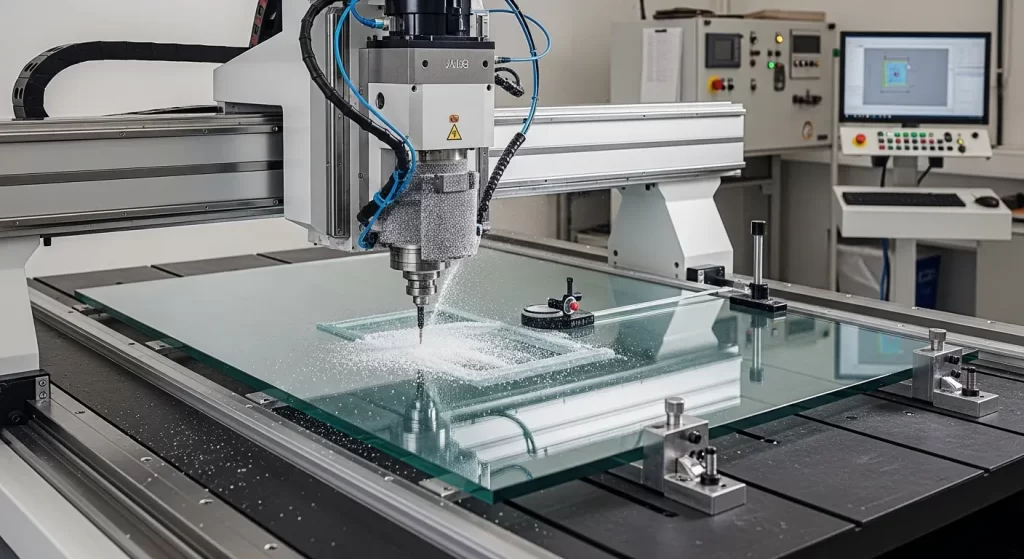
What is a CNC Drilling and Milling Machine for Glass?
A CNC drilling and milling machine for glass is a multi-functional piece of automated equipment. It uses computer numerical control (CNC) to precisely guide specialized diamond tools. This single machine can perform two distinct operations: drilling to create round holes and milling to create non-circular shapes and internal cutouts. It is a highly versatile and accurate solution for complex glass fabrication tasks.
This technology represents a significant leap in capability. It consolidates multiple manual or semi-automatic processes into one seamless, programmed operation. A full glass processing machine overview would place this machine at the center of any modern custom fabrication workshop. It is the tool that turns a simple sheet of glass into a finished component, ready for assembly.
How Does CNC Drilling for Glass Work?
CNC drilling for glass is an automated process for creating cylindrical holes. The machine uses a rotating, diamond-tipped core drill. It operates at high speeds with a continuous flow of coolant. The CNC controller precisely positions the drill and controls its feed rate. This creates clean, accurate holes without causing the glass to chip or crack.
This method is vastly superior to manual drilling. It eliminates human error in marking and alignment. The machine follows a digital program with micron-level accuracy. This ensures every hole is perfectly placed and consistent. The controlled process also results in a much higher quality finish on the internal walls of the hole.
How Does CNC Milling for Glass Work?
CNC milling for glass is a process that creates shapes other than simple round holes. It uses a rotating, diamond-tipped cutting tool called an end mill. The machine moves this tool along a programmed path in the X, Y, and Z directions. This allows it to carve out material, creating features like rectangular cutouts, notches, slots, and complex internal contours.
Milling is what gives the machine its incredible versatility. While drilling is limited to creating holes, milling can create almost any internal shape a designer can imagine. This is essential for creating cutouts for electrical outlets, notches for hardware, or complex mounting slots in technical glass components.
What Are the Core Components of This Machine?
The core components of a CNC drilling and milling machine are a system of precision-engineered parts. They work together to provide a stable, accurate, and automated platform. The quality and robustness of these components are the true measure of a machine's performance and longevity. Understanding these parts is key to appreciating how the technology functions.
What is the Role of the Machine Bed and Vacuum System?
The machine bed is the foundation of the work area. It is a heavy, rigid table upon which the glass is placed. To hold the glass perfectly still during processing, a powerful vacuum system is used. The operator places a series of rubber-sealed vacuum pods on the bed. A pump creates a strong suction through these pods, clamping the glass securely. A stable workpiece is absolutely critical for precision machining.
How Does the Gantry and Axis Drive System Function?
The gantry is a bridge-like structure that moves above the machine bed. It carries the main working head. This system provides the machine's motion in the three primary axes:
- X-Axis: Movement along the length of the machine.
- Y-Axis: Movement across the width of the machine.
- Z-Axis: Vertical up-and-down movement of the tool. These axes are driven by high-precision servo motors and ball screw drive systems. This ensures smooth, accurate, and repeatable positioning.
What Defines the High-Frequency Spindle?
The high-frequency spindle is the motor that holds and rotates the cutting tools. For glass work, these spindles must be capable of very high rotational speeds, often exceeding 20,000 RPM. This high speed is necessary for the diamond tools to abrade the glass cleanly and efficiently. A high-quality, water-cooled spindle is essential for its thermal stability and long-term reliability.
What is the Function of the Automatic Tool Changer (ATC)?
The Automatic Tool Changer (ATC) is a key feature for automation and efficiency. It is a carousel or magazine that holds a variety of pre-loaded drill bits and milling tools. When the program requires a different tool, the machine automatically returns the current tool and retrieves the next one. This allows a complex job with multiple hole sizes and cutouts to be completed in a single, uninterrupted cycle.
Why is the Coolant System So Critical?
The coolant system is one of the most critical components of the entire machine. The friction of drilling and milling glass generates intense heat. This heat would cause the glass to crack from thermal shock almost instantly. The coolant system continuously floods the tool and the cutting area with water or a specialized coolant. This cools the glass, lubricates the tool, and washes away the abrasive glass powder. A reliable coolant system is a non-negotiable requirement.
What Are the Primary Applications of This Technology?
The primary applications of a CNC drilling and milling machine for glass are found in industries that require complex, high-precision finished glass components. Its versatility makes it an indispensable tool for architectural glass, custom furniture, and various technical applications. It is the technology that enables the creation of sophisticated, modern glass products.
How is it Used in Architectural Glass?
In architectural glass, the machine is used to create the features needed for frameless glass assemblies. This includes:
- Drilling precise holes for the hinges and handles on frameless glass doors.
- Drilling mounting holes for standoffs and clamps in glass railing systems.
- Milling notches and cutouts in glass panels to fit around structural elements.
- Creating large openings in glass partitions for service windows. The precision of the CNC machine is essential for the perfect fit and finish required in high-end architectural projects.
What is its Role in Glass Furniture Manufacturing?
In the furniture industry, the machine provides the design freedom to create modern and innovative glass pieces. It is used to mill slots in a glass tabletop for the insertion of legs. It can create cutouts in a media console door for ventilation and cable. This ability to create complex features is what elevates custom glass furniture beyond simple rectangular shapes.
What Are Some Technical and Industrial Applications?
In technical and industrial applications, the machine's precision is paramount. It is used to create components for the electronics industry, such as display screens with precise cutouts for buttons and speakers. It is used in the automotive industry to shape specialty glass components. In laboratory equipment, it is used to create glass parts with precise openings for fittings and sensors. In these fields, the machine's ability to hold tight tolerances is its most valuable asset. The field of Precision glass moulding represents an even higher level of this precision.
What Are the Key Benefits of Using a CNC Machine?
The key benefits of using a CNC drilling and milling machine are a dramatic improvement in precision, a vast expansion of design freedom, and a significant increase in production efficiency. These advantages translate directly into higher-quality products, a wider range of capabilities, and a more profitable workshop. These are a subset of the broader automatic glass drilling machine benefits but are amplified by the addition of milling.
How Does it Achieve Unmatched Precision and Repeatability?
The machine achieves unmatched precision by eliminating human error. It is guided by a computer program, not a human hand. It can position a drill or a mill with an accuracy of a fraction of a millimeter. This ensures that every part is a perfect replica of the digital design. This repeatability is crucial for projects with multiple identical components. The impact of this precision on reducing errors and waste is substantial.
How Does it Increase Design Freedom and Complexity?
This technology increases design freedom by allowing architects and designers to specify almost any internal shape or hole pattern. They are no longer constrained by the limitations of manual tools. If a shape can be drawn in a CAD program, the CNC machine can produce it. This has led to more innovative and creative uses of glass in design. It empowers designers to push the boundaries of the material. This creative empowerment is a key driver of modern design trends.
What is the Impact on Production Speed and Efficiency?
The impact on production speed is significant. The machine can perform multiple operations (drilling different hole sizes, milling a cutout) in a single setup. The Automatic Tool Changer eliminates the time-consuming process of manually swapping tools. The high-speed movements between operations also reduce the total cycle time. This overall improvement in drilling, cutting, and grinding efficiency allows a workshop to increase its throughput and take on more work.
How Does it Improve Overall Workshop Safety?
The machine improves workshop safety by automating a high-risk process. Manual drilling and cutting of glass exposes the operator to sharp edges, high-speed tools, and the risk of glass breakage. A CNC machine performs these tasks within a fully enclosed and guarded work area. This isolates the operator from the primary hazards. It also contains the coolant splash and glass slurry, creating a cleaner and safer environment. Adherence to best practices, as outlined in our guide on safety tips for glass cutting and grinding, is still essential.
How Does a CNC Machine Compare to Other Glass Processing Methods?
A CNC drilling and milling machine is an incredibly versatile tool. However, it is important to understand how it compares to other specialized technologies for cutting and shaping glass. Each technology has its own set of strengths and weaknesses. The best choice depends on the specific requirements of the job.
CNC vs. Waterjet Cutting for Shapes
Waterjet cutting is another method for creating complex shapes in glass. A waterjet uses a very high-pressure stream of water mixed with an abrasive to erode the material.
- CNC Milling: Offers a better, smoother edge finish directly off the machine. It is also more precise for creating features with a specific depth that does not go all the way through the glass.
- Waterjet Cutting: Can be faster for cutting very thick glass. It is a cold cutting process, so there is zero risk of thermal stress. However, the edge finish is rougher and typically requires a secondary finishing process. The market for waterjet machines is significant, indicating its value in specific applications.
CNC vs. Laser Cutting for Holes
Laser cutting can also be used to create holes in some types of thin glass. It uses a high-powered laser to vaporize the material. The glass cutting laser vs traditional cutting debate is an important one.
- CNC Drilling: Produces a very clean, high-quality hole with a smooth internal wall. It is the standard for thicker glass and for applications where structural integrity is critical.
- Laser Cutting: Is a thermal process. It can induce stress in the glass, which can be a problem for some applications. It is extremely fast for thin glass, but its edge quality can be a concern. The guide on laser glass cutting vs mechanical methods provides a deeper comparison.
CNC vs. Specialized Vertical Drilling Machines
A specialized vertical drilling machine is designed for one task: drilling holes at high speed. As our guide on the vertical glass drilling machine explained shows, these machines are production powerhouses.
- CNC Machine: Offers ultimate flexibility. It can drill, mill, and sometimes even polish. It is the perfect tool for a custom shop with a wide variety of work.
- Vertical Drilling Machine: Offers unparalleled speed for drilling. It is the ideal choice for a high-volume manufacturer of products like shower doors that require many standardized holes. It sacrifices flexibility for raw throughput.
What Are Critical Operational Considerations for Quality?
Achieving the best possible results from a CNC drilling and milling machine for glass requires more than just good programming. It requires a professional approach to tooling, machine parameters, and maintenance. These operational details are what separate an average result from a flawless one.
How to Select the Correct Diamond Tooling?
Selecting the correct diamond tooling is a critical skill. For drilling, diamond core drills are the standard. They come in a wide range of diameters. For milling, diamond end mills are used. These come in different shapes, such as flat-end or ball-nose, for creating different profiles. The grit size of the diamond particles is also important. A coarser grit will remove material faster but leave a rougher finish. A finer grit will be slower but will produce a smoother edge. The guide on how to extend the life of glass grinding tools emphasizes the importance of using high-quality tooling.
How to Optimize Speeds and Feed Rates?
Optimizing the spindle speed (RPM) and the feed rate is a process of finding the perfect balance. A speed that is too fast or a feed rate that is too aggressive can cause chipping and excessive tool wear. A speed that is too slow can generate excess heat. The ideal parameters depend on the type of tool, the thickness of the glass, and the specific operation. Experienced operators often develop a library of proven settings for different jobs. This optimization is a key part of improving production with automatic glass machines.
What is the Importance of Tool and Machine Maintenance?
Proactive tool and machine maintenance is essential for consistent quality. Diamond tools must be kept clean and dressed regularly to ensure they are cutting efficiently. The machine itself requires a diligent maintenance schedule. This includes regular cleaning of the coolant system, lubrication of the motion components, and inspection of all mechanical parts. A well-maintained machine is a reliable and accurate machine. The guide to glass grinding machine maintenance outlines many of these essential tasks.
Conclusion
The CNC drilling and milling machine for glass is the versatile heart of the modern custom fabrication workshop. Its unique ability to combine the precision of CNC drilling with the flexibility of CNC milling in a single, automated platform is a game-changer. This technology empowers workshops to move beyond simple flat glass. It enables them to create complex, high-value components with unmatched accuracy and design freedom. For any business looking to compete in the demanding world of architectural and decorative glass, this machine is not just a tool; it is a strategic investment in capability, quality, and innovation.