



Automation in Glass Processing Industry: A Comprehensive Trend Analysis
The automation in the glass processing industry represents a fundamental shift in manufacturing. This evolution moves workshops from manual limitations toward digital precision. Automation integrates advanced robotics, software, and machinery. It creates a streamlined workflow from raw glass to finished product. The core drivers are the increasing demands for complex designs, higher quality, and improved operational efficiency. This transition is not merely an upgrade. It is a necessary response to modern market pressures. It enables fabricators to meet sophisticated architectural and industrial demands.
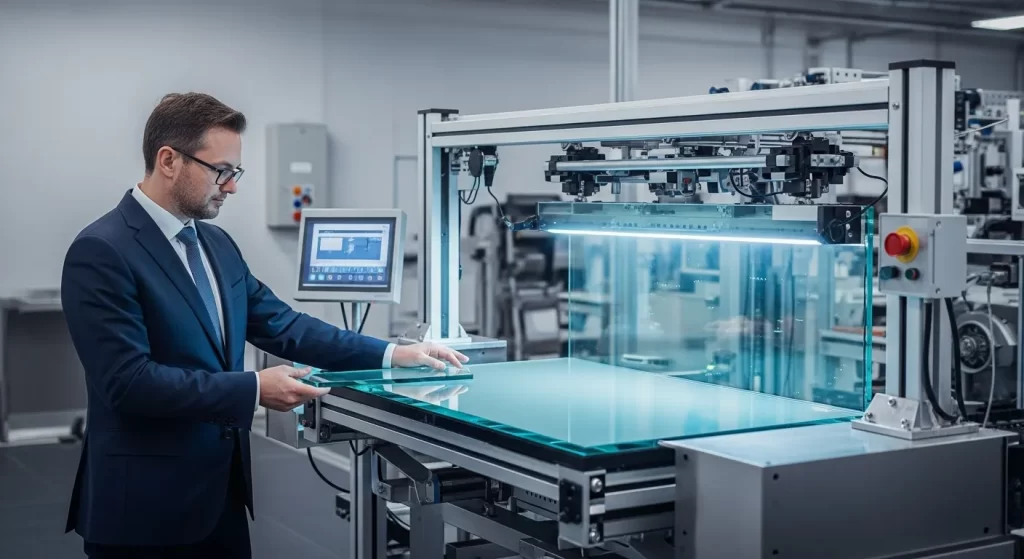
What is Driving the Shift Towards Automation in Glass Processing?
The primary drivers for automation are the market's demand for higher precision, improved worker safety, and greater production efficiency. Manual processing cannot consistently meet the tight tolerances required for modern architectural glass. Automation removes human error. It also mitigates the significant safety risks associated with handling large, sharp glass sheets. Finally, it enables faster, more reliable production cycles. This helps businesses remain competitive in a fast-paced global market.
How Does Automation Address the Need for Higher Precision?
Automation addresses the need for precision by replacing human variability with machine accuracy. Computer Numerical Control (CNC) machines execute digital designs with tolerances measured in micrometers. This ensures every cut, drill, and polish is identical. Such consistency is crucial for projects involving multiple matching glass panels. These include curtain walls and balustrades. Manual methods cannot replicate this level of exactness. The digital-to-physical process is detailed in our guide on how CNC glass machines work. This ensures every piece conforms perfectly to the design specifications. Machine precision directly translates to higher product quality. It also reduces fitment issues during final installation. Industry benchmarks show that automated processing can reduce dimensional errors by over 90% compared to manual methods.
What is the Role of Automation in Improving Workshop Safety?
Automation significantly improves workshop safety by minimizing direct human contact with glass. Robotic arms and automated loaders handle heavy, dangerous sheets. This reduces the risk of cuts, strains, and catastrophic breakage. Enclosed CNC work centers contain glass dust and coolant slurry. This protects workers from respiratory hazards and slips. By automating the most hazardous tasks, workshops create a safer environment. This leads to fewer workplace accidents and lower insurance premiums. According to labor safety reports, automated handling systems can decrease serious injuries in glass fabrication by up to 70%. The focus on safety is a key component of modern workshop design.
How Does Automation Increase Overall Production Efficiency?
Automation increases production efficiency by enabling continuous, high-speed operation. Automated systems can work around the clock with minimal supervision. They reduce cycle times for complex tasks. An Automatic Tool Changer (ATC) can switch from a grinding to a polishing wheel in seconds. This eliminates lengthy manual setup changes. This integration of tasks is central to the concept of CNC automation in glass processing. The result is a dramatic increase in throughput. This allows workshops to take on larger orders and meet tighter deadlines. The increased output directly boosts revenue and profitability.
What Are the Key Automation Technologies Transforming the Industry?
The key technologies are Computer Numerical Control (CNC) machinery, industrial robotics, and integrated software systems. CNC machines form the foundation, performing precise physical work. Robotics automate the handling, loading, and unloading of glass. Integrated CAD/CAM software creates a seamless digital thread from design to production. These three pillars work together. They create a highly efficient, interconnected, and automated production environment.
How Do CNC Machines Form the Core of Modern Automation?
CNC machines are the core of automation because they translate digital designs into precisely finished glass products. These machines are incredibly versatile. They can perform a wide range of tasks within a single setup. A modern CNC glass working center can cut, drill, mill, and polish. This consolidation of processes minimizes handling and improves accuracy. The technology of Computer Numerical Control (CNC) allows for complex shapes and designs. These would be impossible to create with manual tools. The reliability and repeatability of CNC machines make them indispensable for any modern glass fabricator.
What is the Role of Robotic Arms in Glass Handling and Loading?
Robotic arms play a crucial role in automating the physical movement of glass. They handle tasks that are dangerous and strenuous for human workers. Robots equipped with specialized vacuum grippers can lift large, heavy sheets. They load them onto cutting tables or CNC machines with precision. They also unload finished pieces and place them onto transport racks. This automation reduces the risk of breakage during handling. It also speeds up the transition between different processing stages. The integration of robotics is a key trend. It creates a more fluid and efficient production line. The market for industrial robotics in manufacturing is projected to grow significantly over the next five years.
How Does Integrated Software (CAD/CAM) Streamline the Workflow?
Integrated Computer-Aided Design (CAD) and Computer-Aided Manufacturing (CAM) software streamline the entire workflow. It creates a direct link between the design and the machine. Designers create precise models in CAD software. This digital blueprint is then sent to the CAM software. The CAM program translates the design into G-code. This is the language the CNC machine understands. This process eliminates manual programming errors. It also allows for complex toolpaths to be generated automatically. Furthermore, nesting software can optimize the layout of parts on a large glass sheet. This maximizes material yield and significantly reduces waste. The efficiency gained from this digital workflow is a primary benefit of automation.
How Has Automation Impacted Specific Glass Processing Tasks?
Automation has fundamentally transformed specific glass processing tasks. It has replaced slow, inconsistent manual labor with fast, precise machine operations. Automated cutting lines produce cleaner breaks. CNC machines create perfectly polished edges and intricate shapes. Automated drilling provides chip-free holes. These technological advancements have elevated the quality and complexity of finished glass products across the board.
What is the Automation Trend in Glass Cutting and Breaking?
The trend in glass cutting is toward fully automated cutting lines. These systems integrate loading, scoring, and breaking. A robotic arm or automated loader places a jumbo sheet of glass onto the cutting table. The CNC-controlled cutting head, often with a carbide wheel, scores the glass according to the optimized nesting pattern from the software. Immediately following the score, an automated breakout bar cleanly snaps the glass along the line. This process is faster and produces a much cleaner edge than manual cutting. It also significantly reduces the risk of off-cut errors. Modern systems can process hundreds of square meters of glass per hour.
How is CNC Technology Revolutionizing Glass Edging and Polishing?
CNC technology is revolutionizing edging and polishing by enabling flawless, consistent finishes on any shape. Unlike straight-line edgers, a CNC machine can create a perfect pencil, flat, or ogee edge on circles, ovals, and complex curves. The machine uses a sequence of wheels. It moves from aggressive grinding to fine polishing in one continuous operation. Understanding the difference between CNC glass edging and grinding is key to appreciating this automated process. The final stage often involves advanced CNC glass polishing techniques using cerium oxide. This produces a brilliant, optically clear edge. This quality is highly sought after for frameless shower doors, glass furniture, and architectural applications.
What Are the Advances in Automated Glass Drilling and Milling?
Advances in automated drilling and milling focus on speed, precision, and chip reduction. Modern CNC machines use diamond-tipped core drills with internal coolant feeds. This minimizes thermal stress and prevents chipping around the hole. The development of CNC vertical drilling machines has further increased throughput for high-volume applications like balustrade panels. Beyond simple holes, CNC drilling and milling for glass allows for complex internal cutouts. These are needed for things like electrical outlets or hardware fittings. This is all performed with exceptional accuracy.
How Has Automation Enhanced Decorative Processes like Beveling and Engraving?
Automation has unlocked new levels of creativity in decorative glasswork. The benefits of a CNC glass beveling machine are most evident on custom shapes. A 5-axis machine can create a perfect, consistent bevel around tight curves. This would be impossible to do by hand. Similarly, automation has refined the choice between CNC glass engraving vs. CNC glass etching. A high-speed CNC router for glass engraving can carve intricate logos or artistic patterns with photographic detail. This has opened up high-margin markets for personalized glass products and architectural art. The market for decorative glass is expected to see steady growth, driven by these technological capabilities.
What Are the Economic and Business Benefits of Adopting Automation?
The economic benefits of adopting automation are substantial. They include reduced operational costs, increased productivity, and enhanced market competitiveness. Automation lowers labor expenses and minimizes material waste. This directly improves profit margins. The ability to produce higher quality, complex products faster allows businesses to take on more lucrative projects. It also helps them to meet the evolving demands of the modern construction and design industries.
How Does Automation Lead to Significant Labor Cost Reduction?
Automation leads to labor cost reduction by allowing a single operator to manage a process that once required multiple skilled workers. A CNC machine can run complex programs with minimal supervision. Robotic loaders operate continuously without breaks or fatigue. This reduces the number of man-hours required per finished piece. While automation requires skilled programmers and technicians, it reduces the overall wage bill. It also helps businesses overcome challenges related to skilled labor shortages. A study on manufacturing automation showed that businesses can reduce direct labor costs by 15-25% after implementing CNC and robotic systems.
What is the Impact of Automation on Material Waste and Yield?
Automation has a profoundly positive impact on material yield. It significantly reduces waste. Nesting algorithms in CAM software arrange parts on a raw glass sheet in the most efficient way possible. This minimizes the amount of scrap material. The high precision of CNC cutting also eliminates costly errors and rejected parts. Reducing waste not only saves money on raw materials but also has environmental benefits. It lowers the energy consumption associated with producing and transporting glass. Some workshops report a reduction in material waste of over 50% after adopting automated cutting and optimization software.
How Does Automation Allow Workshops to Enter New Markets?
Automation allows workshops to enter new, higher-margin markets by expanding their capabilities. The ability to create complex shapes, perfect polished edges, and intricate decorative patterns opens doors to architectural projects, high-end furniture manufacturing, and custom artistic installations. A workshop with advanced automation is better equipped to bid on demanding contracts. These often require tight tolerances and high-volume production. The decision on how to choose a CNC glass machine for a workshop is therefore a strategic one. It directly influences a company's potential for growth and market diversification.
What is the Role of Data and a Connected Workshop (Industry 4.0)?
The role of data and the connected workshop, or Industry 4.0, is to create a smart, self-optimizing production environment. It involves integrating machinery with IoT sensors, software, and data analytics platforms. This allows for real-time monitoring of the entire production process. Data from machines can be used to improve efficiency, predict maintenance needs, and provide valuable insights for business decisions. The connected workshop is the next frontier in manufacturing automation.
How Are IoT Sensors Being Integrated into Glass Machinery?
Internet of Things (IoT) sensors are being integrated into glass machinery to monitor a wide range of operational parameters in real time. Sensors can track spindle temperature, vibration levels, coolant flow, and tool wear. This data is continuously sent to a central control system. It provides a live dashboard of the machine's health and performance. If a parameter deviates from the norm, the system can alert an operator or even stop the machine to prevent damage. This real-time feedback loop is essential for maintaining optimal performance and quality. The industrial IoT market is growing at a rapid pace.
What is Predictive Maintenance and How Does It Reduce Downtime?
Predictive maintenance is a proactive strategy that uses data analysis to predict when a machine component might fail. By analyzing data from IoT sensors, algorithms can detect subtle signs of wear and tear long before a failure occurs. The system can then schedule maintenance at a convenient time, such as during a planned shutdown. This approach is a significant improvement over reactive maintenance (fixing things after they break) or preventative maintenance (replacing parts on a fixed schedule). By preventing unexpected breakdowns, predictive maintenance drastically reduces costly downtime. It also extends the life of the machinery. This is a crucial part of any long-term plan for maintenance tips for CNC glass machinery.
How Does Data Analytics Optimize the Entire Production Chain?
Data analytics optimizes the production chain by transforming raw operational data into actionable insights. By analyzing data from multiple machines and production stages, managers can identify bottlenecks and inefficiencies. They can track job progress, monitor material usage, and calculate the true cost of production for each part. This information allows for smarter scheduling, better inventory management, and more accurate job quoting. Over time, historical data can be used to refine processes, improve best practices, and make more informed strategic decisions about future investments in technology.
What Challenges Must Be Addressed When Implementing Automation?
The primary challenges when implementing automation are the high initial capital investment, the need for a skilled workforce, and the complexities of integrating new systems. The cost of advanced machinery can be substantial. Workshops also need personnel with the skills to program, operate, and maintain this technology. Integrating new automated equipment with existing legacy systems can also present technical hurdles. These challenges require careful planning and a strategic approach.
What is the Scale of the Initial Capital Investment?
The initial capital investment for automation can be significant. A sophisticated CNC glass working center or a robotic handling system can represent a major financial commitment. The cost varies widely depending on the machine's size, capabilities, and features. However, it is crucial to evaluate this cost not as an expense but as an investment. Businesses should perform a thorough Return on Investment (ROI) analysis. This calculation should factor in the long-term savings from reduced labor, lower waste, and increased productivity. Financing options and government incentives for technology adoption can help mitigate the initial financial burden.
How Can Workshops Address the Skills Gap for Operating Advanced Machinery?
Workshops can address the skills gap through a combination of training and strategic hiring. Manufacturers of automated equipment typically offer comprehensive training programs for operators and maintenance staff. Investing in upskilling the existing workforce is often more effective than hiring new staff. Creating a culture of continuous learning is essential. Workshops can also partner with local technical colleges or vocational schools. This helps to develop a pipeline of future talent with the necessary CNC programming and robotics skills. The demand for skilled manufacturing technicians is high across all sectors.
What Are the Challenges of Integrating New and Old Equipment?
Integrating new automated machinery with older, legacy equipment can be a significant challenge. Different machines may use different communication protocols or software systems. This can create "islands of automation" that do not communicate effectively with each other. Achieving a seamless, connected workflow often requires the help of systems integrators. These specialists can develop custom software solutions or use middleware to bridge the gap between different generations of technology. Careful planning during the procurement phase can help to ensure that new equipment is compatible with existing systems.
What Does the Future of Automation in Glass Processing Look Like?
The future of automation in glass processing is trending toward hyper-automation, driven by artificial intelligence (AI) and machine learning. This will lead to smarter, more autonomous systems that can self-optimize and operate with even less human intervention. The concept of the "lights-out" factory, where production runs fully automated overnight, is becoming a tangible reality. Sustainability will also be a major driver, with automation playing a key role in minimizing energy consumption and waste.
How Will Artificial Intelligence (AI) Influence Machine Operations?
Artificial intelligence will influence machine operations by enabling them to make smart decisions in real time. AI-powered CAM software could automatically adjust toolpaths and cutting speeds based on the specific properties of a piece of glass, detected by sensors. Machine learning algorithms could analyze performance data to optimize energy consumption or predict tool failure with even greater accuracy. AI could also power advanced vision systems for quality control. These systems would be able to spot microscopic defects that are invisible to the human eye. The integration of AI represents the next leap forward in manufacturing intelligence.
What is the Potential for "Lights-Out" Glass Fabrication?
The potential for "lights-out" fabrication, where a workshop can run fully automated overnight without human staff present, is immense. This concept combines robotic handling, advanced CNC work centers, and a sophisticated central control system. A lights-out operation could dramatically increase a workshop's production capacity and asset utilization. While the technology is still evolving, many of the foundational elements are already in place. As systems become more reliable and self-correcting, fully autonomous production shifts will become increasingly common in the glass processing industry.
How Will Sustainability Trends Drive Further Automation?
Sustainability trends will drive further automation by creating demand for more efficient and less wasteful processes. Automation is key to achieving sustainability goals. Optimized cutting patterns reduce glass waste. Efficient machine operations lower energy consumption per unit produced. Precise process control can reduce the use of consumables like coolant and polishing compounds. As environmental regulations become stricter and customers demand more sustainable products, the ability of automation to create a lean, green manufacturing process will become an even stronger competitive advantage.
Conclusion
The trend towards automation in the glass processing industry is irreversible and accelerating. From core technologies like CNC machinery and robotics to the advanced concepts of the connected workshop and AI, automation is redefining every aspect of glass fabrication. The benefits in precision, safety, efficiency, and quality are undeniable. While challenges in investment and skills remain, they are surmountable with strategic planning. For workshops looking to thrive in a competitive future, embracing automation is not just an option; it is an essential strategy for growth, profitability, and innovation.