
 FAQs
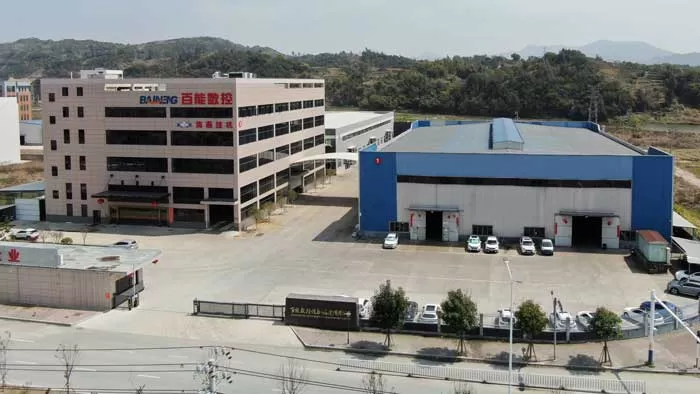
FAQs Factory Tour



Industrial glass processing has transitioned significantly from traditional mechanical scribing to advanced laser-based separation. While mechanical methods involving diamond wheels or tungsten carbide cutters have served the industry for decades, they introduce micro-fractures, chipping, and significant residual stress along the cut edge. These imperfections require extensive secondary processing, including grinding, washing, and polishing. Laser technology addresses these challenges by offering contact-free cutting, which preserves the structural integrity of the glass substrate. However, when procurement managers and production engineers evaluate this technology, the initial glass laser cutting machine price is often the primary point of discussion.
Understanding the value structure behind this technology requires a detailed look at the internal components, the physics of laser-glass interaction, and the operational savings achieved over time. The capital cost of these systems is not a singular figure but a reflection of the precision engineering, laser source integration, and motion control systems required to achieve micron-level accuracy. By evaluating these technical specifications, production facilities can select a system that aligns with both their technical requirements and their operational budget.
The Physics of Laser Glass Cutting and Its Cost Implications
Glass is a challenging material to process due to its brittleness, low thermal conductivity, and transparency to visible light spectra. Different laser wavelengths and pulse widths interact with glass in distinct ways, which directly impacts both the processing quality and the glass laser cutting machine price. The selection of the laser source represents the largest variable in the overall equipment cost.
CO2 Laser Processing (Thermal Stress Cutting)
CO2 lasers operate at a wavelength of 10.6 micrometers, which is highly absorbed by the surface of silica glass. This absorption generates localized heating. To cut the glass, the laser heats the surface along the cut path, followed immediately by a localized cooling jet of gas or liquid. This rapid temperature drop induces a controlled thermal shock crack that propagates through the depth of the material.
Lower initial laser source cost compared to ultrafast options.
Suitable for straight lines and simple geometries in thicker glass.
Creates a heat-affected zone (HAZ) that may require minor edge finishing.
Ultrafast Laser Processing (Filamentation and Ablation)
For precision applications, such as ultra-thin glass used in consumer electronics, automotive displays, and medical devices, ultrafast lasers (operating in the picosecond or femtosecond pulse duration regimes) are required. These lasers operate via non-linear absorption. The pulse duration is so short (measured in trillionths or quadrillionths of a second) that the energy is deposited into the material before thermal diffusion can occur, resulting in cold ablation or filamentation.
Extremely clean cut edges with zero micro-cracking and high bending strength.
Ability to cut complex curved geometries and micro-holes.
Higher laser source cost, which increases the glass laser cutting machine price.
Core Technological Drivers of the Glass Laser Cutting Machine Price
Beyond the laser source itself, several high-grade components make up the total build of a CNC glass laser cutting system. Manufacturers like BAINENG CNC engineer these systems to withstand the continuous dynamics of industrial environments, meaning every subsystem must be matched to prevent performance bottlenecks.
Laser Source Specifications and Pulse Control
The origin of the laser source is a major pricing factor. Highly stable, industrial-grade laser tubes and resonators from recognized optical manufacturers command a premium due to their power stability, beam profile quality, and expected lifespan. A laser source with poor power stability will cause inconsistent cutting depths and rough edge finishes, leading to rejected parts. High-peak-power lasers capable of operating in burst modes—where multiple sub-pulses are delivered in rapid succession—add complexity and cost to the control electronics but greatly improve processing speed and edge quality.
Optical Delivery Systems and Galvanometer Scanners
Delivering the laser beam from the resonator to the glass surface requires high-precision optics. In high-speed cutting applications, 2D or 3D galvanometer scanners are used to steer the beam using microscopic, motor-driven mirrors. These scanners must possess exceptionally low drift, high thermal stability, and fast response times. Telecentric f-theta lenses, which ensure the laser beam strikes the glass surface perpendicularly across the entire working field, are made from premium optical materials designed to resist thermal deformation, adding to the system configuration cost.
Motion Control and Frame Stability
High-speed laser cutting is ineffective without an equally precise motion system. The physical structure of the machine must dampen all high-frequency vibrations caused by fast accelerations and decelerations. This requires a heavy machine frame, often constructed from precision-ground granite or stress-relieved steel weldments.
Linear Motors: Systems utilizing linear motors instead of traditional ball screws offer superior velocity control and position repeatability down to single-digit microns. They also eliminate mechanical wear, though they represent a higher initial component cost.
Feedback Encoders: Closed-loop control systems with high-resolution optical linear encoders continuously verify the actual position of the cutting head, compensating for any thermal expansion during long production shifts.
Material Thickness and Composition Requirements
The type and thickness of the glass being processed dictate the optical configuration, gas delivery systems, and power levels required, which in turn influences the glass laser cutting machine price. Industrial glass falls into several distinct categories, each requiring different handling characteristics.
Soda-lime glass, commonly used in architecture and automotive windows, is highly sensitive to thermal gradients. Processing this material with lasers requires careful thermal management, often using dual-beam setups or CO2 lasers combined with precise cooling systems. Borosilicate glass and fused silica, known for their low thermal expansion coefficients, require higher energy densities but are less prone to thermal cracking during the cut, making them ideal candidates for high-speed laser filamentation.
Ultra-thin glass (UTG), with thicknesses below 100 microns, is increasingly used in foldable displays. Cutting UTG requires sub-picosecond lasers and highly specialized optical beam-shaping components to create a Bessel beam. A Bessel beam maintains a long, narrow focus spot through the depth of the glass, allowing single-pass cutting with minimal edge stress. Implementing these advanced beam-shaping optics naturally affects the overall configuration cost of the machinery.
Calculating the Return on Investment (ROI) Against Mechanical Methods
When purchasing managers focus solely on the glass laser cutting machine price, they may overlook the operational savings that modern laser systems provide over traditional CNC glass cutting tables. A complete financial analysis must balance the initial capital expenditure against the daily running costs and yield improvements.
Mechanical glass cutting processes require continuous replacement of diamond scoring wheels and cutting fluids. Additionally, the physical contact between the tool and the glass causes mechanical stress, leading to edge chipping. To resolve this, factories must run separate grinding and polishing machines, which consume significant amounts of water, electricity, and floor space, while requiring additional operators. These secondary processes also generate glass sludge, which presents disposal and environmental challenges.
In contrast, a laser-based solution from BAINENG CNC provides non-contact cutting, which eliminates consumable tool wear entirely. The edge quality achieved by laser cutting is often smooth enough to bypass secondary grinding and polishing steps completely. By reducing or eliminating post-processing machinery, a factory can reduce its floor space requirements, lower overall power consumption, and lower labor costs. Yield rates also improve, as laser cutting minimizes edge defects that cause glass breakage during subsequent thermal tempering or assembly phases.
.webp?t=1783326948711 "ScreenShot_2026-05-11_155453_491 (1)")
Evaluating Operational and Maintenance Costs
While the initial purchase cost of a laser system is higher, the ongoing maintenance profile is highly predictable. Understanding these long-term operational variables is a key part of evaluating a glass laser cutting machine price before finalizing a procurement decision.
| Cost Category | Traditional Mechanical CNC Table | Laser Cutting System (BAINENG CNC) |
|---|---|---|
| Consumables | High (Cutting wheels, coolant, grinding belts) | Low (Assist gases, protective window slides) |
| Labor Intensity | High (Requires operators for post-cut grinding/polishing) | Low (Often fully automated with direct-to-temper edge quality) |
| Power Consumption | Moderate (Table plus high-horsepower grinding motors) | Moderate to High (Chiller unit and laser source) |
| Floor Space Required | Large (Cutting table + washing machine + grinders) | Compact (Integrated laser cell with small footprint) |
| Material Yield | 80% - 90% (Due to edge fractures and handling damage) | 95% - 99% (Consistent, non-contact thermal processing) |
The cooling system, typically an industrial water chiller, is an essential auxiliary component that must run constantly to maintain the temperature of the laser resonator and the internal optics. Proper chiller maintenance, along with keeping the processing enclosure free from fine glass dust, is key to protecting the optical components from premature wear.
Selecting the Ideal System Configuration
Firms looking to integrate laser cutting should not simply select the lowest glass laser cutting machine price available. System configuration must be directly matched to production volumes and technical specifications. An underpowered system will fail to meet throughput targets, while an over-engineered ultrafast system may not be necessary for simple, thick-glass cutting applications.
For high-volume, continuous production lines, automated material handling systems, such as robotic arm loading or conveyer systems, must be integrated. These additions increase the initial system cost but maximize the duty cycle of the laser source, ensuring the equipment is actively cutting glass rather than waiting for manual loading and unloading. BAINENG CNC offers modular configurations, allowing factories to select the level of automation that fits their current operations while preserving the ability to scale up as demand grows.
Connect with BAINENG CNC for Detailed Engineering Assessments
Selecting the appropriate laser glass processing equipment requires a careful balance between component specifications and production goals. Our engineering team is available to assist your technical department in evaluating your production parameters, testing sample materials, and identifying the optimal configuration for your facility.
Please contact BAINENG CNC to submit your glass specifications, drawing files, and daily production target requirements. We will provide a comprehensive technical proposal along with a detailed glass laser cutting machine price quotation tailored to your operational budget and production demands.
Frequently Asked Questions
Q1: Why is there such a wide variation in the glass laser cutting machine price across different suppliers?
A1: The price variation is primarily driven by the type of laser source, the quality of the motion control systems, and the overall build quality. A system using a basic CO2 laser and belt-driven gantry will cost significantly less than a system featuring an ultrafast picosecond or femtosecond laser combined with linear motors and granite stabilization. The latter configuration provides much higher precision, edge strength, and longevity.
Q2: Can a lower-priced CO2 laser system cut ultra-thin glass for electronics?
A2: Generally, no. CO2 lasers utilize thermal stress cutting, which creates a larger heat-affected zone and is difficult to control on ultra-thin glass substrates (under 0.5 mm). This often results in cracking or melting of the edges. For ultra-thin glass, an ultrafast laser utilizing cold ablation or filamentation is necessary to maintain edge strength and prevent structural failure.
Q3: What are the primary consumables associated with a glass laser cutting machine?
A3: The primary consumables are low-cost components, such as protective window optics that shield the focusing lens from ablation debris, and assist gases like compressed air, nitrogen, or oxygen. Unlike mechanical cutting tables, there are no cutting wheels, grinding wheels, or polishing belts to regularly replace, which lowers the ongoing running costs.
Q4: How does the thickness of the glass affect the laser power requirements?
A4: Thicker glass requires either a higher-power laser source to achieve single-pass cutting or multiple passes at lower speeds, which reduces overall production throughput. For example, cutting 10 mm thick soda-lime glass requires a high-power CO2 laser, whereas a 1 mm piece of borosilicate glass can be processed rapidly with a lower-power, high-frequency pulsed laser.
Q5: Does a laser-cut glass edge require grinding and polishing?
A5: In many industrial applications, a laser-cut edge does not require any subsequent grinding or polishing. The laser filamentation or controlled thermal fracture process produces a clean, micro-crack-free edge with high bending strength. This allows the glass to proceed directly to thermal tempering or chemical strengthening, reducing production steps and costs.